Top Causes of a Check Engine Light
Top Causes of a Check Engine Light
Top Causes of a Check Engine Light (And How We Narrow It Down)
When your check engine light comes on, it can create instant uncertainty.
You may wonder whether the issue is minor, whether it is safe to keep driving, or whether a larger failure is developing.
The most important thing to understand is this:
the check engine light is an alert, not a diagnosis.
It tells you the vehicle has detected abnormal operating data. It does not tell you the exact root cause by itself.
That is why the right next step is a structured diagnostic process grounded in one principle: truly having the customer’s best interest at heart.
That means:
- No guessing
- No unnecessary parts replacement
- No pressure-based recommendations
- No unclear explanations
Just evidence-driven testing, transparent communication, and a practical path forward.
If you drive in Universal City, Live Oak, Schertz, Converse, Cibolo, Selma, Northeast San Antonio, or nearby communities, this guide explains the top causes of a check engine light and how we narrow it down correctly.
What the Check Engine Light Actually Means
Your vehicle’s onboard system constantly monitors performance across critical categories, including:
- Ignition and combustion quality
- Fuel delivery and fuel correction
- Airflow and load calculations
- Emissions performance
- Catalytic converter efficiency
- Engine temperature control
- Electrical circuit and sensor integrity
When one or more values move outside expected parameters, the system stores diagnostic trouble information and may turn on the check engine light.
Important:
A trouble code usually identifies
the affected system, not automatically
the first failed component.
Solid vs Flashing Check Engine Light
Solid light
Usually indicates a fault that should be diagnosed soon. The vehicle may still operate, but delaying can lead to additional issues.
Flashing light
Often indicates an active misfire severe enough to risk catalyst damage. This should be treated as urgent.
Top Causes of a Check Engine Light
1) Ignition System Problems
Spark plugs, ignition coils, and ignition circuits are among the most common causes.
Typical symptoms
- Rough idle
- Engine shake at stops
- Hesitation during acceleration
- Reduced power
Why accurate diagnostics matter
A misfire code may suggest ignition, but similar patterns can come from fuel, vacuum, injector, compression, or wiring issues.
2) Vacuum Leaks / Unmetered Air
Leaks in intake pathways can cause lean operation and unstable drivability.
Typical symptoms
- Unstable idle
- Surging at low speed
- Hesitation on throttle tip-in
- Lean-related fault patterns
Correct process
Small leaks are best confirmed through smoke testing and live fuel-trim analysis.
3) MAF Sensor Performance or Circuit Issues
The mass airflow sensor helps determine fuel strategy. Inaccurate signal input can trigger drivability and emissions faults.
Typical symptoms
- Sluggish response
- Inconsistent acceleration
- Occasional stalling
- Mixture-related codes
Best-interest approach
Verify sensor behavior and circuit integrity before replacement recommendations.
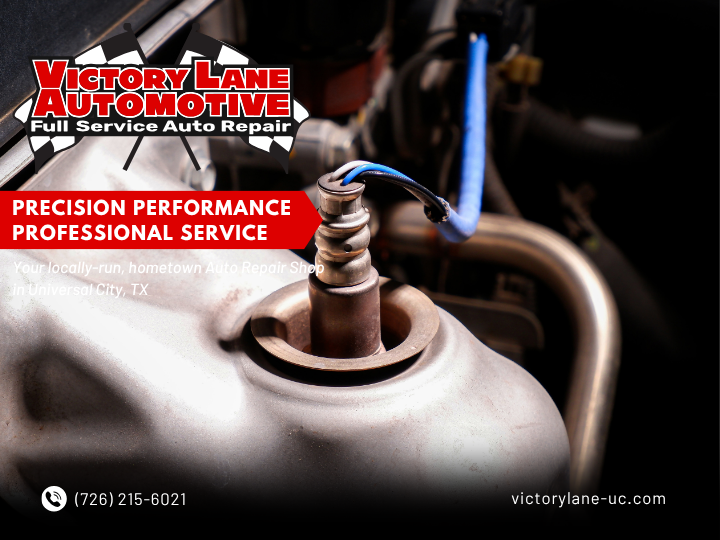
4) Oxygen Sensor / Air-Fuel Sensor Faults
These sensors are essential for fuel correction and emissions control.
Typical symptoms
- Irregular drivability behavior
- Emissions monitor readiness issues
- Catalyst-related fault patterns
- Fuel trim instability
Proper method
Use live data and sensor response analysis, not code descriptions alone.
5) Catalytic Converter Efficiency Codes
Catalyst-related codes are common but can be caused by upstream performance issues.
Typical symptoms
- Reduced response
- Persistent emissions-related warnings
- Changes in exhaust behavior
Root-cause discipline
Upstream misfire, fuel control, and exhaust integrity are validated before confirming converter failure.
6) EVAP System Leaks or Purge/Vent Valve Issues
The EVAP system captures fuel vapor and routes it through controlled paths. Leaks or valve faults can illuminate the check engine light with minimal drivability symptoms.
Typical symptoms
- Warning light with normal everyday drivability
- Recurring EVAP codes
- Intermittent light return
Why precision matters
EVAP diagnosis requires smoke/pressure testing and command-based valve verification.
7) Fuel Delivery / Injector Performance Issues
Fuel pressure behavior and injector function directly affect combustion stability.
Typical symptoms
- Hard starting
- Hesitation under load
- Intermittent misfire
- Lean condition faults
Correct approach
Fuel system recommendations should follow verified pressure and injector performance testing.
8) Engine Temperature Regulation Faults
Thermostat and coolant temperature behavior influence fuel and emissions strategies.
Typical symptoms
- Extended warm-up time
- Inconsistent operation in changing temperatures
- Temperature-related codes
- Gradual drivability changes
Why it matters
Temperature regulation faults can impact multiple systems and should be diagnosed early.
9) Wiring, Ground, and Connector Integrity Faults
Electrical interruptions can mimic major component failures and create intermittent warnings.
Typical symptoms
- Random or recurring codes
- Multiple unrelated system faults
- Issues that vary with heat, vibration, or moisture
Best-interest diagnostics
Circuit loading, voltage-drop checks, and connector/harness inspection help avoid misdiagnosis.
10) Module Communication / Calibration-Related Faults
Some check engine warnings involve communication logic or calibration behavior rather than a single mechanical failure.
Typical symptoms
- Persistent faults with inconsistent symptoms
- Recurring warnings after incomplete repairs
- Communication-related diagnostic data
Responsible diagnostic order
Mechanical and electrical fundamentals are confirmed first, then module-level causes are evaluated when supported by evidence.
How We Narrow It Down the Right Way
A reliable process should be systematic and transparent.
Step 1: Verify concern and symptom pattern
- Solid vs flashing light
- Conditions when symptoms occur (idle, cold start, highway, load)
Step 2: Full-system scan and freeze-frame review
- Active, pending, and history data
- Fault-set operating conditions
Step 3: Live data analysis
- Fuel trims
- Airflow/load trends
- Sensor behavior
- Temperature patterns
- Misfire counters
Step 4: Targeted testing
- Intake/EVAP smoke tests
- Ignition and fuel delivery validation
- Circuit/connector checks
- Exhaust/catalyst verification
Step 5: Root-cause confirmation
- Confirm what failed
- Confirm why it failed
- Assess related downstream effects
Step 6: Clear recommendation plan
- What needs action now
- What should be monitored
- What supports long-term reliability
Why a Code Reader Alone Is Not a Diagnosis
A code reader provides clues.
Diagnosis provides proof.
A customer-first process focuses on confirming cause before recommending repair, reducing repeat visits and avoiding unnecessary replacement work.
Local Driving Conditions Around Universal City That Can Influence Fault Patterns
Regional driving and climate patterns can influence how check engine issues appear.
Common local conditions include:
- Stop-and-go traffic through Universal City and nearby commercial corridors
- Mixed commuting between Universal City, Live Oak, Schertz, Converse, Cibolo, Selma, and San Antonio routes
- Frequent highway transitions on I-35, Loop 1604, and nearby connector roads
- High heat and extended A/C load conditions through much of the year
- Short-trip cycles that can interrupt emissions monitor completion
These factors can amplify:
- Idle-related misfires
- Fuel trim instability
- EVAP-related monitor faults
- Intermittent electrical concerns
- Temperature-related performance warnings
A complete diagnostic process should always pair scan data with real-world driving context.
What To Do When the Check Engine Light Comes On
- Stay calm.
- Check whether the light is solid or flashing.
- Note symptoms: rough idle, hesitation, power loss, stalling, vibration, unusual odor.
- Avoid hard acceleration if drivability feels unstable.
- Schedule a professional diagnostic inspection.
If the light is flashing, treat it as urgent.
Final Takeaway
A check engine light is not a final answer—it is your vehicle asking for accurate attention.
The best outcome comes from:
- Evidence-based diagnostics
- Root-cause confirmation
- Clear communication
- Recommendations aligned with your best interest
If you are in Universal City or nearby communities like Live Oak, Schertz, Converse, Cibolo, Selma, and Northeast San Antonio, choose a diagnostic path built on clarity and precision.
That is how you make confident, long-term repair decisions.
Victory Lane Automotive
264 Kitty Hawk Rd, Universal City, TX 78148
(726) 222-1264
https://www.victorylane-uc.com/
You can watch the video