Truly having the customers best interest at heart
Truly having the customers best interest at heart
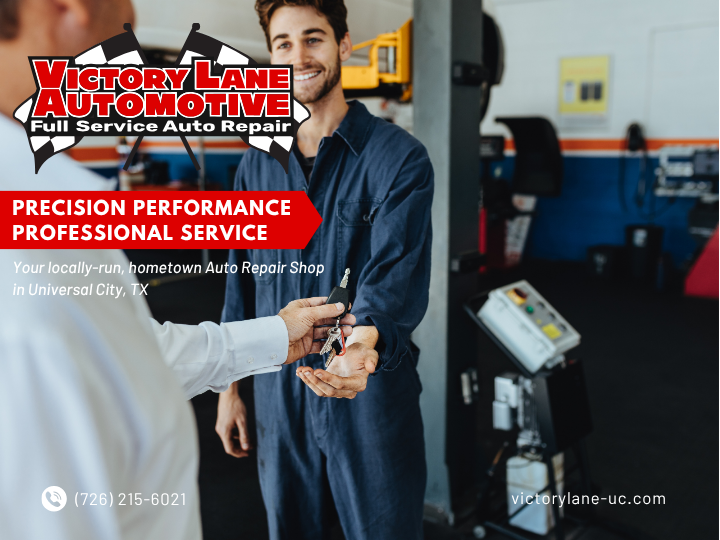
When Your Auto Shop Is Genuinely Working for You: What It Really Means to Put the Customer First
There is a version of automotive service that arrives looking exactly right. The shop is clean and well-lit. The advisor greets you with confidence and speaks with the kind of measured authority that sounds like expertise. The inspection report is detailed and delivered quickly. Every visible element of the experience has been carefully constructed to produce one feeling in the customer: you are in good hands.
But producing a feeling and earning it are two fundamentally different things.
Sometimes the list of recommended services is longer than the vehicle's actual condition warrants. Sometimes the urgency attached to certain items feels engineered to move a decision rather than inform one. Sometimes the explanation of what was found leaves the customer holding a dollar figure without a genuine understanding of what is actually happening with their vehicle — and without the confidence to know whether what they are being told is truly in their interest or quietly in the shop's.
When a customer drives away from that interaction, a question often rides with them. It does not always surface clearly. It settles in somewhere beneath the transaction, a quiet uncertainty about whether what just happened was genuinely about their vehicle or about the shop's need to perform against a revenue number. That uncertainty is one of the most consequential things a vehicle owner can experience in the service relationship — and it is far more common than it should be.
The gap between a shop that performs customer care and a shop that has genuinely committed to delivering it is not always visible on the surface. But it is real. It shapes every aspect of the relationship between a shop and the people it serves. And understanding what closes that gap — what the commitment actually requires, how it shows up in practice, and what it produces over time — is worth careful attention from every driver who depends on their vehicle and wants to know the shop they trust is actually worthy of that trust.
How the Automotive Industry Built a Trust Problem It Did Not Have to Have
The defensiveness that most drivers carry into a shop was not invented. It was earned — by the industry, through behavior that accumulated over decades into a reputation that now precedes every shop, regardless of how that individual operation actually runs.
It was built one unnecessary service recommendation at a time. One estimate that expanded between the quote and the pickup without a satisfying explanation. One interaction that left the customer feeling managed rather than served — not sure exactly what happened or why, but quietly convinced that the person across the counter was not entirely on their side.
Those experiences do not stay contained to the shop where they occurred. They travel through conversations, through community networks, through the stories people tell when someone in their circle is looking for a mechanic. They become the lens through which every subsequent automotive service interaction is evaluated — including the interactions at shops that are genuinely trying to do right by the customer.
The result is a structural problem that harms everyone. The customer who arrives on guard declines legitimate recommendations because they cannot distinguish them from unnecessary ones. The shop with real integrity is working against skepticism it did not create. The interaction that should be collaborative — two parties working together toward a shared goal of keeping the vehicle safe and reliable — is complicated by an undercurrent of wariness that serves no one.
There is one way out of that cycle. It requires a shop to make a decision — not as a promotional position, not as a script for advisors, not as a seasonal campaign — but as a genuine, embedded, daily operational commitment. The decision that the customer's actual best interest is the non-negotiable starting point for every inspection, every recommendation, every conversation, and every choice made at every level of how the business runs. Without exception. Without variation based on the pressure of the moment. Every time, for every customer, without compromise.
What Genuine Customer-First Service Actually Looks Like in Practice
This principle does not live comfortably in the abstract. It is not demonstrated through friendly language or a well-designed waiting room experience. It is demonstrated through specific, observable behaviors that either exist in a shop's daily operation or they do not — and customers, across enough interactions, develop a reliable ability to sense the difference even when they cannot fully articulate what they are responding to.
An honest inspection that exists to serve the customer's right to accurate information. Every vehicle that enters a genuinely customer-first shop receives a thorough, honest, documented inspection — not because it creates opportunity for additional billing, but because the customer has a fundamental right to know the actual condition of their vehicle. What is working well. What requires attention now. What is developing and should be addressed within a defined timeframe. What simply needs to be monitored going forward. That kind of honest, complete assessment is a service in itself — independent of whether it generates any additional work that day. It produces the accurate information the customer needs to make sound decisions about their vehicle, and it establishes the shop as a source of trustworthy guidance rather than managed pressure.
Communication that educates rather than steers. The service advisor at a shop built on genuine integrity is not a salesperson operating behind the cover of technical authority. They are an educator — someone whose primary responsibility is to take the technician's findings and translate them into language the customer can actually understand, connect those findings to real-world consequences, and present a clear recommendation without pressure or manipulation. That kind of communication treats the customer as a capable adult making important decisions about their own life. It produces clarity and genuine confidence rather than confusion and compliance. And it is felt immediately and distinctly by every customer who experiences it — often in sharp contrast to what they have received elsewhere.
Honesty about what is urgent and what is not. A shop with genuine customer-first values communicates clearly that not every finding demands immediate action. It distinguishes honestly between what represents a present safety concern, what is a developing issue to be addressed within a reasonable window, and what simply needs to be noted and monitored. It does not manufacture urgency to accelerate a same-day decision. It does not use safety language as a psychological lever designed to override the customer's natural deliberation. It trusts that honest communication about genuine priorities will build better relationships and produce better long-term outcomes than any pressure-based approach — because it always does.
Respect that holds firm when the customer says no. A customer who receives a clear, honest explanation of a recommended service and decides to wait or decline has exercised exactly the kind of informed autonomy that a genuinely customer-first shop is designed to support. The correct response is complete and unconditional: document the concern accurately, communicate any relevant safety implications clearly and without emotional pressure, and send the customer on their way with the same warmth and genuine care they received when they walked in. No guilt. No subtle shift in tone. No follow-up designed to manufacture second-guessing. The customer who is respected in that moment is the customer who returns. And who brings others with them.
The professional discipline to say when nothing additional is needed. This is the single most powerful trust-building statement in the automotive service relationship — and the one that costs the most in the short term. When a vehicle comes in and the honest assessment is that it is in solid condition and does not require anything beyond what the customer originally scheduled, the shop that communicates that clearly and without pressure — without appending unnecessary work to justify the interaction — has just made one of the most significant investments in customer loyalty available to it. The customer who hears that their vehicle is genuinely fine and receives no pressure beyond that does not forget the experience. And they do not keep it to themselves.
Two Operating Philosophies, Two Trajectories, One Clear Choice
Every automotive service business is making one of two fundamental choices about how it operates. The first treats customer interactions as transactions — bounded revenue events to be maximized before the customer walks out the door, with no deep expectation of or real investment in what comes after. The second treats customer interactions as chapters in an ongoing relationship — a partnership that will compound in value over months and years in ways that no individual transaction could replicate.
The transactional model can produce numbers that look strong in the short term. Repair order averages may run high. Weekly revenue may appear healthy on the performance report. But the foundation beneath those metrics is quietly eroding — because customers who feel sold to do not continue returning indefinitely. They leave. They leave quietly, without confrontation, and they tell people in their community why when asked.
The relational model moves more slowly in its early stages. The shop that honestly tells a customer their vehicle is in good shape and does not need additional work today does not see that integrity rewarded on the same afternoon's report. But over a year, over three years, over a decade of consistent operation, that shop builds something the transactional model cannot produce: a stable, deeply loyal, organically growing customer base that returns without prompting, refers without incentive, and remains committed through every disruption and imperfection that every business encounters.
The shops that build genuine, lasting presences in their communities — that outlast competitors, weather economic pressures, and grow through reputation rather than marketing spend alone — are the ones that chose the relational model and built their entire operation around it. Not as a philosophy they discuss but as a standard they live, in every interaction, without exception.
The Culture That Makes the Commitment Real
A genuine commitment to customer-first service is only as durable as the culture that holds it in daily practice. Culture is not a mission statement. It is not a set of framed values on the wall of the waiting room. Culture is what happens in the service bay at the end of a demanding week when the numbers are not where anyone wants them and the convenient path leads away from integrity.
The shops that build and sustain genuine customer-first cultures do so through deliberate structural choices embedded in how the operation actually runs.
Technicians trusted and expected to report what is actually there. The technician's inspection is the source of all information that reaches the customer. Their findings drive every recommendation and every conversation that follows. A shop genuinely committed to customer-first service creates an environment where technicians are trusted and expected to report accurately — where the culture rewards finding nothing when there is nothing to find just as much as it recognizes identifying genuine concerns. That environment produces the kind of diagnostic integrity that customers can sense, even when they cannot fully articulate what they are responding to.
Advisors measured on the relationships they build, not only the transactions they generate. The metrics a shop uses to define advisor success communicate precisely what the organization actually values. A shop that evaluates advisors purely on repair order averages is structurally incentivizing behavior that may serve the shop's short-term interest at the customer's expense. A shop that evaluates advisors on customer retention, return rates, referral generation, and the depth of long-term relationships is incentivizing the behaviors that build what the shop genuinely needs to thrive. Those metrics shape daily decisions. Daily decisions shape culture. Culture shapes every outcome the shop produces.
Leadership that lives the standard it expects from everyone else. The most powerful cultural force in any organization is the behavior of its leaders when the standard is tested by real pressure. When an owner or manager makes a decision that costs the shop a repair order because the alternative would compromise a customer's trust, every person in the building receives an unmistakable signal about what the organization genuinely stands for. That signal shapes behavior across the team in ways that training programs and policy documents alone cannot produce. The standard must be lived before it can be expected from others.
A shared conviction that the customer's trust is the shop's most valuable asset. The customer-first cultures that sustain themselves over time and through every organizational pressure are those where every person on the team — at every level and in every role — genuinely understands that the trust of the people who walk through the door is more valuable than any individual repair order, any week's revenue, or any short-term metric. When that conviction is authentically shared and consistently reinforced, it becomes self-sustaining. People hold each other to the standard not because they are required to, but because they understand what is at stake if it slips.
Universal City, Texas and What the Roads Here Actually Demand
The drivers of Universal City and the surrounding communities of the greater San Antonio metro area navigate a specific and demanding set of conditions that make honest, thorough automotive service a genuine priority for the safety and long-term reliability of every vehicle on these roads.
Kitty Hawk Road and the surrounding corridors of Universal City sit within one of the most rapidly growing regions of South-Central Texas — a region where vehicle dependability is essential to daily life. Interstate 35, which runs through the heart of the greater San Antonio metro and connects Universal City drivers to the commercial and employment centers of the region, carries heavy mixed traffic in patterns that place consistent and significant demands on braking systems, tires, and drivetrain components. The stop-and-go transitions that characterize I-35 through this corridor — particularly during the morning and afternoon commute windows — create specific, identifiable wear patterns on transmission systems, cooling components, and brake assemblies that a thorough, honest inspection should be actively evaluating.
Loop 1604, which arcs through the northern and eastern edges of the San Antonio metro and connects Universal City to the communities of Schertz, Converse, Live Oak, Selma, and the broader Bexar County area, represents a significant daily reality for many local drivers — highway mileage at the kind of steady speeds that build specific wear on tires, suspension, and wheel bearings over time. Highway 218 and FM 78 serve as additional primary connectors between Universal City and the surrounding communities of Randolph Air Force Base, Converse, Kirby, and the eastern San Antonio suburbs.
The climate of South-Central Texas creates its own set of significant and specific demands on every vehicle operating in the region. The intense summer heat that defines San Antonio and the surrounding communities from May through September — regularly producing ambient temperatures that push vehicle cooling systems, belts, hoses, air conditioning components, and fluid integrity to their operational limits — is one of the most demanding environmental conditions that any vehicle in the continental United States regularly faces. Heat-related component degradation is real, it is accelerated in this climate, and it is the kind of thing that a genuinely thorough, honest inspection should be proactively identifying and communicating clearly before it becomes a roadside failure.
The drivers of Universal City, Schertz, Converse, Live Oak, Selma, Kirby, Randolph, and the broader northeast San Antonio corridor deserve a shop that understands what those specific, real-world conditions actually demand of their vehicles — and that has the professional integrity and genuine care to communicate that honestly, with the customer's actual best interest as the only agenda.
What Happens When a Community Finds a Shop Built on Real Integrity
Trust in an automotive shop travels through a community through the most credible and durable channels available — organic, personal, experience-based recommendation. Not advertising. Not promotional campaigns or loyalty card programs. The direct recommendation from a neighbor whose judgment carries genuine weight. The response in a community forum from someone who has actually been there. The offhand mention from a coworker that holds more persuasive power than any marketing message because it comes from a real person with no stake in the answer.
When a driver in Universal City has an experience with a shop that genuinely stands out from what they expected — when they leave feeling clearly informed, authentically respected, and fully confident that the shop was working for them rather than at them — they share that experience. Not because they were asked to. Not because they received a referral incentive. Because it was meaningfully different from what they had come to expect, and because they want the people they care about to have access to the same quality of care.
That kind of organic trust-building compounds over time. Each customer who becomes a genuine advocate generates referrals that become advocates of their own. The reputation deepens with each interaction that reinforces it. And it produces a quality of customer loyalty that no promotional campaign or pricing strategy can replicate — because it is rooted in real experience and real relationships, not manufactured impression.
The shops that invest consistently in earning that trust — through honest inspections, clear and patient communication, genuine respect for the customer's autonomy, and the daily discipline to always operate in the customer's actual best interest — become something that advertising money alone cannot buy: a trusted institution in the community they serve. The shop people mention without being asked. The shop that earns relationships that span years. The shop whose reputation is the most durable and most valuable competitive asset in its market.
The Distance Between Claiming It and Living It
Every automotive shop communicates some version of the customer-first message. It appears in taglines, on websites, in the language advisors use at the counter. The claim is nearly universal across the industry. The consistent daily reality of it is not — and customers know it, even when they cannot point to the specific moment where the performance diverged from the principle.
The distance between the claim and the practice is exactly where the industry's trust problem lives. And it is where the opportunity lives for the shops willing to genuinely close that distance — the opportunity to distinguish themselves in a way that matters to customers, builds loyalty that lasts, and produces a community reputation that no competitor can easily displace.
Closing that distance requires more than good intentions and better communication training. It requires inspection systems structured around accurate reporting. It requires advisor evaluation frameworks that measure relationship quality rather than only transaction size. It requires leadership that models the standard in the moments that test it. And it requires the organizational willingness to consistently make the harder choice — to place the customer's genuine best interest above every short-term operational pressure — because the long-term value of what it builds is clearly understood and genuinely believed.
That is demanding work. It does not always produce the same short-term performance numbers as a more transactional approach. But it produces something those numbers cannot: a business built on a foundation that strengthens with time, and a reputation in the community that becomes the most defensible long-term asset the shop possesses.
Victory Lane Automotive: Where the Customer's Best Interest Is Always the Starting Point
Located at 264 Kitty Hawk Rd in Universal City, Texas, Victory Lane Automotive serves drivers throughout Universal City and the surrounding communities of the greater San Antonio metro — including those navigating I-35, Loop 1604, Highway 218, and FM 78, commuting through Schertz, Converse, Live Oak, Selma, Kirby, Randolph, and the broader northeast San Antonio and Bexar County corridor — with a commitment to automotive service built entirely around what is genuinely best for the customer.
That commitment is not a tagline or a marketing strategy. It is the operational standard that shapes every inspection performed, every conversation held, every recommendation made, and every interaction Victory Lane Automotive has with the drivers who trust the shop with their vehicles, their safety, and their peace of mind.
Victory Lane Automotive brings that standard to every service it provides — from comprehensive diagnostics and full mechanical repair to routine maintenance, brake service, tire care, and everything in between — with a team that understands the specific demands that South-Central Texas roads, summer heat, and the daily driving realities of the San Antonio metro place on vehicles, and the integrity to communicate honestly about what each vehicle actually needs to meet those demands safely and reliably.
If you are looking for an automotive partner in Universal City or the surrounding northeast San Antonio communities that will tell you the truth, respect your decisions without pressure, communicate with genuine clarity and patience, and work completely in your corner every single time you bring your vehicle in, Victory Lane Automotive is ready to earn and keep that trust.
Call (726) 222-1264 or visit victorylane-uc.com to schedule your appointment today.
The Only Standard Worth Building Toward
There is a version of automotive service that extracts value from the customer relationship rather than investing in it — that produces metrics that look strong briefly and deteriorate over time, because it consumes the trust it depends on rather than cultivating it.
And there is a version that builds slowly, consistently, and with genuine integrity — grounded in honest inspections, clear and patient communication, unconditional respect for the customer as a person making real decisions about their real life, and the daily unwavering discipline to place the customer's actual best interest above every other operational consideration the shop faces.
That version produces customers who stay. Who return without being prompted. Who refer without being asked. Who trust without hesitation and advocate without incentive. Who become the kind of community relationships that sustain a business through every challenge it will face — and that represent something genuinely worth being proud of.
The choice between those two versions is not made once. It is made daily — in every inspection, every conversation, every recommendation, and every moment when doing right by the customer and doing what is operationally convenient are not the same thing.
The shops that consistently choose what is right for the customer are the shops that build something lasting. And that is the only thing in this business worth building toward.
You can watch the video