Why is My Car Overheating if I Have Coolant?
Why is My Car Overheating if I Have Coolant?
Why Is My Car Overheating If I Have Coolant?
What a Full Reservoir Doesn’t Tell You | Victory Lane Automotive – Universal City, TX
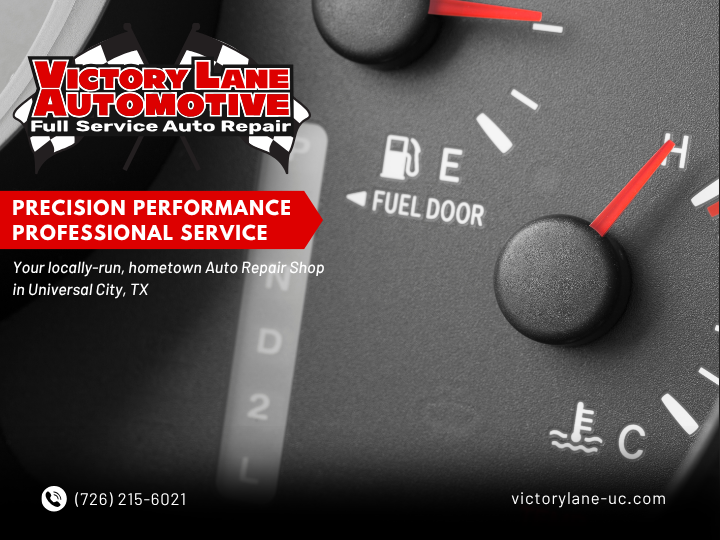
You’re driving through Universal City. It’s warm, maybe you’re idling in traffic or pulling into a parking lot—and suddenly, your temperature gauge climbs. You check the coolant—it’s full. No leaks, no obvious problems. But your car is still overheating.
So what’s going on?
At
Victory Lane Automotive, we diagnose this exact issue all the time. And the truth is:
Just because you have coolant doesn’t mean your cooling system is working.
Let’s walk through what’s really happening under the hood—and why acting fast could save your engine from costly damage.
1. The Coolant Isn’t Circulating
Coolant must flow through the engine, radiator, and back again to remove heat. If circulation stops, your system overheats—even if the tank is full.
Common causes include:
- Stuck thermostat – Coolant stays trapped in the engine
- Failed water pump – Coolant stops moving completely
- Clogged radiator – Internal blockages from corrosion or debris
- Collapsed or soft hoses – Block flow invisibly from inside
We perform flow, pressure, and temperature testing to identify where the blockage or failure is—and fix it at the source.
2. Cooling Fans Aren’t Engaging
At low speeds or while idling, your cooling fans must activate to draw air through the radiator. If they don’t, the system can’t cool the fluid—even if there’s plenty of coolant.
Why fans fail:
- Burned-out motors
- Faulty temperature sensors
- Blown relays or fuses
- Wiring or connector damage
Victory Lane technicians test not just whether fans work, but whether they turn on when they should—based on actual engine conditions.
3. Air Pockets in the System
Coolant flow depends on a sealed, air-free environment. If air pockets form, they block fluid from reaching critical engine components—causing overheating despite proper levels.
How air gets in:
- Improper refill after coolant flush
- Leaks in hoses, gaskets, or seals
- Head gasket failure introducing exhaust gases
We use vacuum fill and system sealing procedures to remove air and verify integrity—ensuring coolant flows where it needs to.
4. Radiator Cap Isn’t Holding Pressure
Your radiator cap plays a critical role in system pressure and fluid boiling point. If it’s weak or damaged, coolant can boil too early, and air or vapor can disrupt circulation.
Signs of cap failure:
- Bubbling or overflow in reservoir
- Collapsing hoses
- Random temperature spikes
- Coolant loss with no visible leak
We pressure-test radiator caps and check for early boiling conditions—so you’re not misled by an otherwise “quiet” part that’s creating big problems.
5. Head Gasket Damage
A blown or leaking head gasket allows gases to enter the cooling system—or coolant to escape internally. This creates random overheating, bubbling, and hidden fluid loss.
Warning signs:
- White smoke from exhaust
- Bubbles in coolant reservoir
- Milky oil or coolant discoloration
- Unexplained coolant drop
- Engine running hot with no external leaks
We use chemical tests and combustion leak detection tools to confirm or rule out this serious internal failure.
Why “Coolant Is Full” Isn’t a Diagnosis
This is where most drivers—and even some technicians—get it wrong. A full reservoir doesn’t guarantee:
- Circulation
- Pressure
- Temperature control
- Air-free operation
- Internal engine integrity
Overheating is a system failure, not just a fluid problem. If any component fails, the whole system suffers—coolant or no coolant.
Victory Lane’s Full Cooling System Diagnostic
We go beyond surface-level inspections to protect your engine and wallet. Our cooling system diagnostic service includes:
- Pressure and circulation testing
- Radiator cap pressure validation
- Thermal imaging of radiator, block, and hoses
- Fan circuit testing and heat-load simulation
- Air pocket evacuation and vacuum refill
- Head gasket integrity inspection
When you bring your car to Victory Lane, you get real answers, not guesses—and real repairs, not just a temporary fix.
Don’t Let Overheating Ruin Your Engine
One overheat incident can crack a head, warp a block, or destroy your engine. If your vehicle is running hot—even with coolant in the tank—do not keep driving.
Call or visit Victory Lane Automotive in Universal City. We’ll find the problem, explain it clearly, and restore your vehicle to safe, reliable operation.
Schedule Your Cooling System Service Today
Victory Lane Automotive
264 Kitty Hawk Rd, Universal City, TX 78148
(726) 222-1264
https://victorylane-uc.com
For more information please watch the video