October 26, 2026
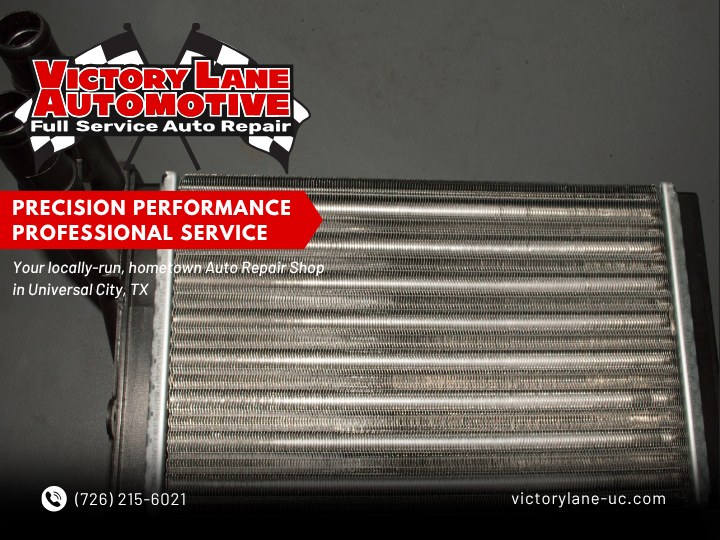
Car Heater Not Working in Universal City? Why a Texas Cold Front Is the Real Test Yesterday afternoon it was seventy-five degrees, and you drove home with the windows down. Overnight, a cold front blew through, the wind turned hard out of the north, and by morning it's in the thirties. You start the truck, head up Pat Booker Road, and turn the heat on for the first time in months. The fan roars, and the air stays cold. A car heater not working in Universal City is easy to forget about most of the year. When a strong norther drops the temperature forty degrees overnight, it becomes the only thing you can think about. Here's the short version. Your heater uses hot coolant from your engine, so most heater problems come down to low coolant, a thermostat stuck open, air trapped in the cooling system, a clogged heater core, or a problem with the fan, blend doors, or controls. South Texas adds a twist. Because heaters sit idle most of the year, problems that develop during the long hot months stay hidden until the first cold snap. And because the same coolant protects your engine from Texas heat, a heater problem is often your first warning about cooling system wear. At Victory Lane Automotive, we're proud to be the hometown shop for Universal City and the communities around JBSA-Randolph. We take care of working families, commuters, truck owners, and military households. This guide explains what's going on behind your dashboard and how to make the right call on the repair. South Texas Winters Are Mild, Until They Aren't Most winter days around northeast San Antonio are pleasant. But our winters are known for sharp swings. Strong cold fronts can sweep through and drop temperatures dramatically within hours. Every so often, a hard freeze or a round of freezing rain catches the area off guard. Anyone who lived here during the February 2021 winter storm remembers how quickly a mild climate can turn dangerous. When freezing rain or sleet arrives, elevated roadways and overpasses tend to ice up first, and northeast San Antonio has plenty of them along Loop 1604 and I-35. A defroster that can melt ice off the windshield and keep the glass clear is essential on those mornings. So is a heater that can keep your family warm if you're stuck in a long backup while crews deal with icy bridges. Because these events are rare, many drivers don't think about their heater until one arrives. That's exactly when a weak or failed system causes the most trouble. How Your Heater Works On gasoline and diesel vehicles, the heat comes from your engine. As the engine runs, coolant absorbs its heat. The water pump circulates that coolant through the engine, out to the radiator at the front of the vehicle, and through the heater core, a small radiator behind your dashboard. A blower fan pushes air across the heater core and into the cabin. Blend doors inside the dash control how much air passes over the heater core, and that's how you set the temperature. On most newer vehicles, small electric motors called actuators move those doors. The thermostat keeps coolant inside the engine until it warms up, then opens to send coolant to the radiator. Your defroster usually adds help from the air conditioning. On most vehicles, selecting defrost turns on the A/C compressor automatically to dry the air before it's heated. Dry, warm air clears fog from the glass much faster than humid air. The Heater That Hasn't Been Used Since Last Winter In colder states, people use their heaters for months on end and notice right away when something changes. In South Texas, the heater may sit unused from late winter until the next cold front. That long rest is when problems quietly develop. Blend door actuators that haven't moved toward the heat side in months can fail the first time you ask them to. A slow coolant leak that began in the summer heat may have left the heater core short of coolant. A cabin air filter loaded with summer dust and pollen can choke airflow. Air may have worked into the cooling system without anyone noticing. It's normal to notice a brief dusty smell the first time you run the heat after months of disuse. What isn't normal is cold air after a reasonable warm-up, heat on only one side, clicking behind the dash, a sweet smell, or a windshield that fogs and won't clear. Those are signs the system needs a look. The Most Common Causes of a Heater Not Working Low Coolant When coolant runs low, the heater core is often one of the first places to go without. A telltale sign is heat that fades at idle and returns when you accelerate. If coolant is low, it's leaking somewhere, and that leak matters far more to your engine than to your comfort. A Thermostat Stuck Open If the thermostat sticks open, the engine runs cooler than designed. The heat stays lukewarm, the temperature gauge reads low, and the cabin cools off on longer highway runs. Many vehicles will set a check engine light. It's not an emergency, but it affects fuel economy and engine wear. Air in the Cooling System Air pockets block coolant from reaching the heater core and can cause a gurgling sound behind the dashboard. Many vehicles need a specific bleeding procedure to remove the air. Topping off the reservoir isn't always enough. A Restricted Heater Core Coolant that has broken down allows scale and deposits to build inside the heater core's narrow passages. The heat gets weaker over time even though the engine is fully warm. Blend Door and Actuator Problems If you hear clicking behind the dash, or one side of the cabin is warm and the other cold, an actuator has likely failed. These problems often look like a coolant issue from the driver's seat, which is why proper diagnosis matters. Blower and Cabin Filter If the air is warm but barely moving, check the cabin air filter first. A fan that only works on high usually points to a failed blower resistor. A fan that's weak on every setting may mean the blower motor is wearing out. Texas Heat Ages Your Heater, Even When You Never Use It Here's something many drivers don't realize. On many modern vehicles, hot coolant flows through the heater core all year long, even in July, when you've never touched the heat. The temperature you feel is controlled by the blend doors, not by shutting off the coolant. That means your heater core lives through every Texas summer right alongside your engine. Our long, hot summers are tough on the whole cooling system. Coolant breaks down faster when it runs hot day after day. Rubber hoses harden and crack from the inside. Plastic parts like radiator tanks and fittings become brittle. Heater cores collect deposits from worn-out coolant. None of this is obvious while you're running the A/C all summer. It shows up when the first cold front arrives and the heat isn't what it used to be. That timing is useful. A heater problem discovered in winter gives you the chance to fix a cooling system weakness before next summer, when an overheated engine on I-35 in hundred-degree heat is the last thing you need. Trucks, Diesels, and Fleet Vehicles Around Universal City, trucks do a lot of the work, and some of them have their own heating patterns. Diesel engines are very efficient, and they produce less waste heat at idle than a gasoline engine. That means a diesel truck can take noticeably longer to produce warm air, especially when idling on a cold morning. Some slow warm-up is normal. Heat that never arrives, even after a long drive, points to the same causes as any other vehicle, such as a stuck thermostat, low coolant, or trapped air. Larger trucks and SUVs also have bigger cabins to heat, so a marginal heater is more noticeable. High-mileage work trucks often have cooling systems that have been topped off many times, sometimes with mismatched coolant. That's worth checking before it causes a larger problem. For fleet operators, a heater problem is also a downtime problem. Drivers who can't clear their windshields or stay warm can't work safely. Catching heater and cooling issues during routine service keeps vehicles on the road and drivers protected. Learn more on our [fleet services page] and our [truck repair page]. Military Families: Vehicles From Colder Places Many families around JBSA-Randolph have lived in places with real winters, so they know what a properly working heater should feel like. They also sometimes bring vehicles with a history that matters. A vehicle that spent several winters at a northern duty station may have been exposed to road salt. Salt can corrode radiator seams, hose connections, and metal coolant lines, and some of that damage takes time to show up as leaks. If your vehicle came from a snow-belt state, a cooling system inspection after you arrive is a smart step. Moves can also mean a vehicle's maintenance history gets scattered across several shops in several states. Keeping a complete service record helps protect you if a warranty question comes up. It also helps when it's time to sell before your next move. Driving Universal City and Northeast San Antonio How you drive around our area shapes how heater problems show up. Military commuters on Pat Booker Road heading toward Randolph, and local drivers on Kitty Hawk Road and O'Connor Road, deal with a lot of stop-and-go traffic. If your heat fades at every light and comes back when you accelerate, low coolant or trapped air is a strong possibility. Commuters on Loop 1604 toward Live Oak and Selma, or on I-35 toward Schertz and into San Antonio, spend steady time at highway speed. That's when a thermostat stuck open shows itself, as a cabin that grows cooler the longer you drive. Drivers on FM 78 heading toward Converse and Cibolo see a mix of both. Families out in Garden Ridge often have longer drives into town, which gives a weak heater more time to reveal itself. On freezing mornings, the highway overpasses along Loop 1604 and I-35 are where conditions often turn first. That's when a clear windshield matters most. When a Heater Problem Is Really an Engine Warning Some heater problems are purely about comfort. A failed blower resistor or a stuck actuator on one side won't hurt your engine. If your windshield stays clear, those repairs can often be scheduled when it suits you. Others are warnings. If the heat is gone because coolant is leaking, your engine is losing its protection, and in South Texas that protection matters enormously. Overheating can warp a cylinder head or damage a head gasket, which are among the most expensive engine repairs. A leak that costs you heat in January can cost you an engine in August. Watch for these signs: A temperature gauge that reads above normal Coolant you need to add regularly A sweet smell inside the cabin A greasy film on the inside of the windshield Damp carpet on the passenger side If your temperature gauge climbs toward hot, pull over safely and shut the engine off. Victory Lane Automotive has towing available, so you don't have to risk driving an overheating vehicle. What a Proper Diagnosis Looks Like A good diagnosis follows the heat from the engine to your vents: Understand the symptoms. When does the heat fail? Is it at idle, on the highway, or on one side? Are there any smells or fogging? Check the coolant. That covers its level, type, and condition, plus a pressure test to find leaks, including slow ones. Scan for data and codes. We check engine temperature readings, stored codes, and climate control operation, including whether the actuators respond. Compare the heater core hoses. If both are hot and the air is cold, the issue is airflow or the blend doors. If one is cooler, flow through the core is restricted. Check the airflow side. That includes the blower motor, its speed control, and the cabin air filter. Inspect for age and heat damage. We look closely at hoses, plastic parts, and the radiator. Then we explain what we found and what we recommend in plain terms. Learn more on our [general repair page]. What Affects the Cost of Heater Repair The cost of a heater repair depends almost entirely on the cause, which is why diagnosis comes first. A cabin air filter, thermostat, or blower resistor is typically a modest repair. Actuators vary depending on where they're mounted. A heater core is often one of the more labor-intensive repairs, because on many vehicles much of the dashboard has to come out to reach it. Vehicle size and design also matter. Trucks, SUVs, and diesel vehicles can differ quite a bit in how their cooling and heating components are laid out, which affects labor time. Quality parts and the correct coolant cost far less than doing the same job twice. The most important factor is timing. A small coolant leak fixed in winter is a fraction of the cost of an overheated engine in summer. For high-mileage trucks and family vehicles alike, keeping the cooling system healthy is one of the most cost-effective ways to extend the vehicle's useful life, and every extra dependable year lowers your cost per mile. Getting Ready Before the First Norther The simplest step is to test your heater and defroster in the fall, before the first cold front arrives. Run the heat on full, try every vent setting, and turn on the front and rear defrosters. Make sure the A/C kicks on in defrost mode. If anything seems off, you'll have time to fix it on your schedule. We base our recommendations on your vehicle's condition and how it's used, not on a one-size-fits-all mileage chart. Coolant can be tested for its protection and condition. A work truck that idles on job sites, a commuter car that sits in summer traffic, and a vehicle that tows all put more strain on the cooling system than easy highway driving does. Between visits, check your coolant reservoir monthly with the engine cold, and never open a hot radiator cap. Learn where your temperature gauge normally sits. Use the coolant your vehicle requires. If your vehicle is under warranty, keep a record of every service, including the date, mileage, and work done. Those records protect you if a warranty question ever comes up. You can also check for open recalls free through NHTSA's online recall lookup. How Victory Lane Automotive Handles Heater Problems Victory Lane Automotive is proud to be part of the Universal City community. We work on domestic, Asian, and European cars, SUVs, and trucks, including light-duty diesels and fleet vehicles. When your heat isn't working, we start with a careful diagnosis and explain what we find in plain language, along with clear priorities: what needs attention now, what can wait, and what doesn't need to be done. We know car trouble rarely comes at a convenient time, especially on the morning after a cold front. That's why we offer shuttle service, loaner and rental vehicles, and towing when you need it. Our goal is simple: keep your vehicle safe, dependable, and ready for whatever South Texas weather brings next. When you're ready, give us a call or [schedule your appointment online]. Frequently Asked Questions Why did my heater stop working the first time it got cold this year? Heaters in South Texas often sit unused for months. During that time, a slow coolant leak, a failing actuator, or a clogged cabin filter can develop without anyone noticing. The first cold front is simply when you find out. Testing your heater in the fall gives you time to fix it before you need it. Why does my heat get weaker on Loop 1604 or I-35? Heat that fades on long highway stretches usually means a thermostat stuck open. The engine runs too cool, and the air rushing through the radiator pulls even more heat away. It's typically a modest repair that can also improve fuel economy. Is it normal for my diesel truck to take a long time to blow warm air? Some delay is normal, because diesel engines produce less waste heat, especially at idle. If the heat never gets warm even after a long drive, have the thermostat, coolant level, and heater core checked. I just moved here from a colder state. Should I have my cooling system checked? It's a smart idea. Vehicles from snow-belt states may have been exposed to road salt, which can corrode cooling system parts over time. A quick inspection can catch small issues before South Texas summer heat puts them to the test. How much does it cost to fix a car heater? It depends on the cause. A thermostat, cabin filter, or blower resistor is usually a modest repair, while a heater core is often a bigger job because of the dashboard work involved. A careful diagnosis is the most cost-effective first step, because it keeps you from paying for parts you didn't need. Do I need to fix my heater if it only gets cold a few days a year? If the cause is a comfort issue, you may choose to wait. But if your heater stopped working because of a coolant leak, that same leak threatens your engine during our hot summers. A working defroster also matters on icy mornings. A diagnosis tells you which situation you're in. What should I do if my temperature gauge starts rising? Pull over safely and turn off the engine. Driving an overheating engine can cause serious damage. Don't open the radiator cap while it's hot. Victory Lane Automotive can arrange towing if you need it. Be Ready for the Next Cold Front A car heater not working in Universal City is easy to brush off, until a norther blows through or freezing rain coats the overpasses. Often the fix is straightforward. Sometimes it's your cooling system's early warning, arriving in time to protect your engine before summer. Either way, an honest diagnosis is the right place to start. Whether you commute on Pat Booker Road to Randolph, drive Loop 1604 or I-35 for work, or keep a fleet of trucks moving across northeast San Antonio, the team at Victory Lane Automotive is ready to help. Give us a call, schedule online, or stop by the shop. Victory Lane Automotive 264 Kitty Hawk Rd, Universal City, TX 78148 (726) 222-1264 https://www.victorylane-uc.com/ You can watch the video https://youtu.be/U0ahBlkQFVI