My check engine light is on
My check engine light is on
The Amber Warning: A Comprehensive Guide to Understanding Your Check Engine Light
A Customer-First Guide for Drivers in Universal City, Live Oak, Schertz, Selma, Converse, Cibolo, and Northeast San Antonio
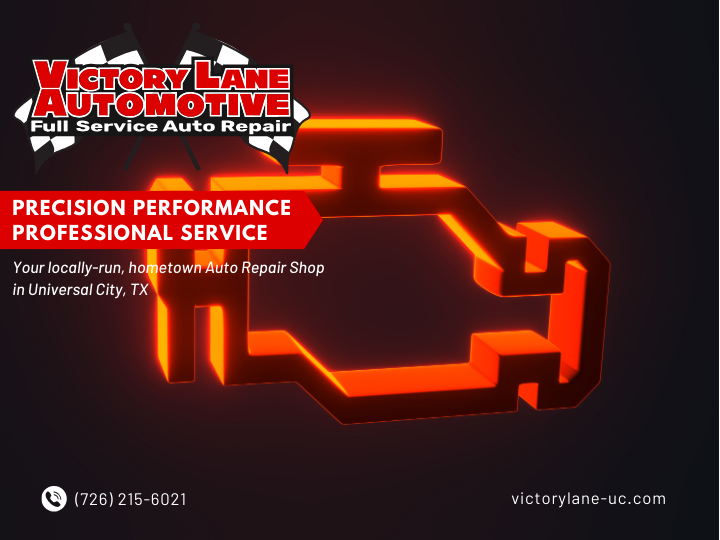
It often happens when you are least expecting it. You might be driving down I-35, merging onto Loop 1604, cruising Pat Booker Road, or heading down Kitty Hawk Road on the way to work or the grocery store. Suddenly, a small amber silhouette of an engine block illuminates on your dashboard. Sometimes it is accompanied by the words “CHECK ENGINE” or “SERVICE ENGINE SOON.”
For most drivers, that light triggers an immediate physiological response: stress.
Unlike a low oil pressure warning or an overheating indicator, the Check Engine Light is ambiguous. It gives no plain-English explanation, no timeline, and no clear severity rating. Is it safe to drive? Is the engine about to fail? Or is it something minor like a loose gas cap?
That uncertainty often produces two extreme reactions:
- Panic: pulling over immediately, convinced a breakdown is imminent.
- Avoidance: ignoring the light for weeks, hoping it disappears on its own.
Neither approach is the best path.
The Check Engine Light is not a random annoyance. It is a communication tool from your vehicle’s onboard computer. When you understand what it is really saying, you can replace anxiety with clear, informed action.
What the Check Engine Light Really Means
The Check Engine Light is also called the Malfunction Indicator Lamp (MIL). When it illuminates, it means the vehicle’s computer (commonly called the ECM, ECU, or PCM) has detected a condition that is outside normal operating parameters.
Modern vehicles are rolling computer networks. Dozens of sensors constantly report data such as:
- Air entering the engine
- Engine temperature
- Oxygen content in the exhaust
- Fuel trim (how much fuel is being added or reduced)
- Crankshaft and camshaft position
- Misfire activity
- Evaporative emissions integrity (fuel vapor containment)
When the system detects a fault, it stores a Diagnostic Trouble Code (DTC). That code is not the answer. It is the starting point.
Think of a code like a zip code. It tells you the neighborhood of the problem, not the exact address.
The Evolution of On-Board Diagnostics (OBD-II)
In the early days of automotive service, diagnosing issues depended heavily on the technician’s senses and mechanical intuition.
But as emissions regulations tightened and engines became more electronically controlled, the industry needed a standardized system for monitoring and reporting faults. That led to OBD-II in 1996, which required:
- A standardized diagnostic port
- A universal code system
- Continuous monitoring of emissions-related systems
This is why the Check Engine Light is so closely tied to emissions: your vehicle is constantly trying to run cleanly and efficiently, and it turns the light on when it cannot do so within its programmed limits.
The Most Important Skill: Steady Light vs. Flashing Light
Before you think about causes, learn this rule. The behavior of the light itself tells you how urgent the situation is.
1) Steady Illumination (Solid Light)
A steady light usually indicates a stored fault that needs attention soon, but it is typically not an immediate emergency.
In many cases, the vehicle will shift to a fallback strategy to keep running. You can often continue driving to your destination as long as there are no additional red flags like:
- Overheating
- Loss of power severe enough to be unsafe
- Harsh shaking
- Smoke, fuel smell, or loud mechanical noises
A steady light still matters. Driving for weeks or months can lead to:
- Reduced fuel economy
- Increased emissions
- Collateral damage to more expensive components
2) Flashing Light (Blinking)
A flashing Check Engine Light is a critical warning. It commonly indicates an active misfire.
A misfire means one or more cylinders are not burning fuel properly. When that happens, raw fuel can enter the exhaust. That raw fuel overheats the catalytic converter quickly and can destroy it.
If your light is flashing:
- Reduce speed immediately
- Avoid heavy acceleration
- Pull over as soon as it is safe
- Towing is the safest option
This is one of those moments where doing the “right thing fast” can prevent a much bigger repair.
The Big Ten: The Most Common Reasons the Light Comes On
There are thousands of possible codes, but most Check Engine Lights come from a familiar group of systems.
1) Oxygen (O2) Sensors
O2 sensors measure oxygen in the exhaust stream so the computer can adjust fuel mixture precisely. They work in a harsh environment and degrade over time.
When they fail or slow down, the engine may:
- Run rich or lean
- Burn more fuel than necessary
- Trigger emissions faults
2) Catalytic Converter Efficiency
The catalytic converter reduces harmful pollutants. When the computer detects the converter is not doing its job, it sets a code.
Important truth: converters often fail because of upstream issues such as:
- Misfires
- Oil consumption
- Coolant leaks
- Long-term rich fuel mixtures
Replacing the converter without fixing the root cause usually leads to repeat failure.
3) EVAP System (Fuel Vapor Control)
The EVAP system seals and stores fuel vapors so they do not vent into the air. A loose gas cap is the most famous trigger, but the real list is broader:
- Cracked vapor hoses
- Faulty purge valve
- Faulty vent valve
- Leaking charcoal canister
- Filler neck issues
The computer tests this system by checking whether it can hold pressure or vacuum. Tiny leaks can set codes.
4) Mass Airflow (MAF) Sensor
The MAF measures incoming air so the engine can calculate fuel delivery.
Contamination from dust, debris, and certain aftermarket air filter oils can cause incorrect readings, leading to:
- Hesitation
- Rough idle
- Stalling
- Lean or rich codes
5) Spark Plugs and Ignition Coils
Ignition problems are a leading cause of misfires. Spark plugs wear and coils can fail under load.
Symptoms often include:
- Shaking at idle
- Loss of power under acceleration
- Flashing Check Engine Light (when severe)
6) Vacuum Leaks
A vacuum leak introduces unmetered air into the engine, creating a lean condition because the computer does not know that extra air is there.
Common sources:
- Cracked hoses
- Intake gasket leaks
- PCV system failures
- Broken fittings
Symptoms:
- Rough idle
- Hissing sound
- Stumble on acceleration
7) EGR System Faults
EGR lowers combustion temperatures to reduce NOx emissions. Carbon buildup can cause valves to stick open or closed.
- Stuck open can mimic a vacuum leak
- Stuck closed can cause pinging or knock under load
8) Thermostat and Cooling System Monitoring
Engines are designed to operate within a specific temperature range. If the thermostat sticks open, the engine may not warm up properly and the computer will set a code.
Running too cool can cause:
- Poor fuel efficiency
- Higher emissions
- Accelerated engine wear over time
9) Fuel Injectors (Clogged or Failed)
Injectors are precision components. Deposits can clog spray patterns and cause misfires or lean codes. Electrical failure can also shut down an injector completely.
10) Transmission and Powertrain Communication
Modern transmissions communicate constantly with the engine computer. A transmission fault can trigger the Check Engine Light, often placing the vehicle into a protective mode.
Why “Free Code Scans” and Cheap Readers Mislead People
Pulling a code is useful. But a code is not a diagnosis.
Example:
A code like P0171 (“System Too Lean”) tells you the computer is adding fuel because it believes the mixture is too lean. Many people replace the O2 sensor because the code references mixture issues.
But the O2 sensor might be doing its job perfectly by reporting a real lean condition caused by:
- A vacuum leak
- Low fuel pressure
- A dirty MAF sensor
- An injector flow problem
Professional diagnosis is not guessing. It is a test-driven process:
- Verify the complaint and read freeze-frame data
- Perform visual inspection and basic checks
- Analyze live sensor data and fuel trims
- Run pinpoint tests with proper equipment
- Confirm the repair with a drive cycle and monitor readiness
That method is how you fix the cause, not just clear the symptom.
The Cost of Ignoring the Light
A steady Check Engine Light often does not stop the car from running, so it is tempting to delay. The problem is that delay usually creates higher cost.
Reduced Fuel Economy
When the system cannot control mixture precisely, it often defaults rich to protect the engine. That means you burn more fuel every day.
Collateral Damage
Small issues become larger issues when ignored. One simple example:
- Thermostat stuck open
- Engine runs cooler than designed
- Computer stays in warm-up strategy longer
- Mixture trends richer
- Carbon loads increase
- Converter efficiency declines over time
What started as a manageable fault can become a chain reaction.
A Technical Deep Dive (In Plain English): What the Computer Is Watching
This is where “professional diagnostics” becomes more than plugging in a scanner.
The Closed-Loop Feedback System
The engine computer commands fuel, then checks the exhaust for results.
If it sees rich, it subtracts fuel.
If it sees lean, it adds fuel.
When a fuel trim code triggers, it often means the computer has reached the limit of how much it can compensate. At that point, the issue is usually physical (air leak, fuel delivery issue, restriction) rather than simply a bad sensor.
Misfire Monitoring
The computer detects misfires by monitoring tiny changes in crankshaft speed. Each combustion event slightly accelerates the crankshaft. A missing combustion event causes abnormal deceleration.
That is why misfire diagnosis can be extremely precise, and also why a trained technician matters when interpreting what the data is actually saying.
EVAP Leak Detection
EVAP faults are often impossible to locate visually. Small leaks can trigger codes. This is where smoke testing becomes important: it reveals leaks you cannot see.
Why This Matters in South Texas Driving Conditions
Universal City and the surrounding Northeast San Antonio area create a specific set of conditions that accelerate certain failures:
- Heat and long idle times in traffic on I-35 and Loop 1604
- Rapid temperature swings from hot days to cooler nights
- Dust and pollen that load air filters and contaminate MAF sensors faster
- Stop-and-go driving that stresses ignition systems and fuel trims
- Humidity that contributes to connector corrosion and intermittent electrical issues
The point is not to scare you. The point is to explain why the same code can behave differently depending on environment and use.
Preventative Maintenance That Helps Keep the Light Off
Electronic failures can happen, but many Check Engine Light triggers are preventable or catchable early.
- Oil service: modern engines use oil pressure for variable valve timing and other control systems
- Air filtration: keeps MAF readings accurate
- Spark plug intervals: protects coils and prevents chronic misfires
- Fuel quality and injector care: helps prevent misfire and lean conditions
- Gas cap seal health: prevents EVAP leaks
- Cooling system upkeep: supports correct operating temperature and emissions efficiency
The goal is not perfection. The goal is reducing preventable faults and catching small issues before they become expensive ones.
What You Should Do When the Light Comes On
Here is the customer-first decision tree:
- Is it flashing?
- Treat as urgent. Reduce speed. Pull over safely. Tow if needed.
- Is it steady and the vehicle feels normal?
- You can usually drive short term, but schedule a diagnostic soon.
- Is it steady but the vehicle is running poorly?
- Avoid long drives, avoid hard acceleration, and get it checked quickly.
- Is it accompanied by overheating, smoke, fuel smell, or major shaking?
- Stop driving and have it towed.
This is not about fear. It is about protecting your engine, your converter, and your reliability.
Your Partner in Automotive Health in Universal City and the Surrounding Area
A Check Engine Light can feel like a threat because it is unclear. The right shop turns that uncertainty into clarity.
At Victory Lane Automotive, the standard is simple: truly having the customer’s best interest at heart.
That means:
- We do not guess
- We do not “parts-swap”
- We do not clear codes and send you away
- We diagnose the root cause and explain it in plain language
Whether you are commuting from Schertz, heading through Live Oak, driving in from Converse or Selma, or navigating the daily flow into Northeast San Antonio, you deserve answers that are accurate and decisions that are grounded in truth.
Victory Lane Automotive
264 Kitty Hawk Rd, Universal City, TX 78148
(726) 222-1264
https://www.victorylane-uc.com/
You can watch the video here:
https://youtu.be/BQD8qAdd9YM