Pre-Purchase Used Car Inspection Universal City, TX
Pre-Purchase Used Car Inspection Universal City, TX

The Used Car You Almost Bought: Why an Inspection Beforehand Is Worth More Than Every Repair Afterward
There's a particular kind of quiet that fills a car when the driver realizes they made a mistake.
It usually shows up around week three. The excitement has burned off. The satisfaction of driving something new-to-you has thinned out. And now there's a sound — a tick, a shudder, a hesitation when the transmission reaches for third gear — that wasn't there during the test drive. Or maybe it was, and it got explained away. That's just how these run. It'll smooth out once you put some miles on it. Every used car makes a little noise.
The quiet comes when the driver stops believing that explanation.
If you're reading this, you're probably somewhere before that moment. You're looking at a used vehicle. Maybe it's a private listing that photographs suspiciously well. Maybe it's a trade-in sitting on a lot with fresh tire shine and a vacuumed interior. Maybe it belongs to someone you know, and asking hard questions feels almost rude.
Here's the truth, stated plainly: you are about to make one of the largest purchases of your year, and the person selling that vehicle knows far more about it than you do.
That gap isn't necessarily malicious. It's structural. The seller has lived with that car. They know what it does on the one cold morning a year. They know what noise it makes backing out of their driveway. They know why the check engine light got cleared six weeks ago.
You don't. And you won't — unless someone who does this professionally puts that vehicle on a lift and takes a serious, systematic look before the title changes hands.
That is what a pre-purchase inspection is. It's not a formality. It's not a courtesy step. It is the highest-leverage decision available to a used-car buyer, and the overwhelming majority of buyers skip it entirely.
The Problem Isn't the Car. It's Everything You Cannot See.
Let's be precise, because vagueness helps nobody here.
A vehicle is a system of systems. Engine. Transmission. Cooling. Braking. Steering and suspension. Charging and electrical. Emissions and aftertreatment. Body structure and unibody geometry. Restraints. Fuel delivery. Each of those systems contains dozens of individual components, and every one of those components has a finite service life.
When you stand in a driveway looking at a used car, you are seeing roughly four percent of it.
You're seeing paint. You're seeing an interior. You're seeing a dashboard with no warning lights illuminated — which tells you far less than you assume, because codes can be cleared, bulbs can be pulled, and many of the most expensive impending failures don't trigger a light at all until they've already damaged something else.
What you cannot see, standing there:
- Whether the timing components are approaching the end of their service life
- Whether the transmission fluid has ever been serviced, or has been running dark and burnt for years
- Whether the coolant is contaminated, improperly mixed, or showing the early chemical signature of an internal leak
- Whether the unibody has been pulled and straightened after a collision that never made it onto any history report
- Whether the suspension geometry is compromised in a way that will quietly destroy a set of tires every eight months for as long as you own the car
- Whether the catalytic converter is actually functioning or simply hasn't thrown a code yet
- Whether there's an oil leak that was cleaned and degreased two days before you showed up
- Whether the rotors have been resurfaced past minimum thickness specification
- Whether stored fault codes were erased last week and are quietly counting back toward re-illumination
- Whether hail damage was cosmetically repaired, or whether the vehicle was totaled, rebuilt, and quietly retitled
Every item on that list is invisible to the naked eye.
Every item on that list is entirely visible to a trained technician with a lift, a scan tool, and the experience to know what he's looking at.
That gap is where used-car regret lives.
The Test Drive Is a Demonstration, Not a Test
Buyers place enormous faith in the test drive. It feels thorough. You drove it. You listened. It seemed fine.
Here's what a typical test drive actually is: fifteen minutes, on roads chosen by the seller, at speeds chosen by the seller, in a vehicle that's been idling for twenty minutes before you got there — which means the cold-start behavior, the single most diagnostic moment in a vehicle's entire daily cycle, has been completely hidden from you.
Think about what a warm engine conceals. Cold-start knock. Timing chain rattle from a worn tensioner. Blue smoke on initial fire that clears in fifteen seconds. Rough idle that smooths out once the fuel system goes closed-loop. A seller who warms the car up before you arrive isn't necessarily lying to you. But functionally, they have edited the evidence.
Then there's the route. If a seller takes you on a flat loop through a quiet subdivision and back, you've learned almost nothing about how that vehicle behaves under real load. You haven't merged onto I-35 or Loop 1604 at highway speed. You haven't sat in the stop-and-go crawl on Pat Booker Road or FM 3009 during the evening rush on a hundred-and-two-degree August afternoon — which is precisely the condition that exposes a marginal cooling system, and precisely the condition every driver in this area faces for a third of the year. You haven't run it out Highway 218 or along Kitty Hawk toward Schertz with the A/C at full load, where a tired compressor and an overworked radiator finally tell the truth. You haven't crossed the patched and heaving stretches along Universal City Boulevard or the older sections of Randolph Boulevard, where a worn strut mount or failing sway bar link announces itself instantly.
Route matters. Load matters. Heat matters. Cold start matters.
Fifteen minutes on a seller-selected loop isn't a test. It's a curated demonstration.
What a Real Pre-Purchase Inspection Actually Involves
Let's demystify this, because many buyers imagine a pre-purchase inspection as someone popping the hood, nodding, and saying "looks alright to me."
That is not it.
A proper pre-purchase inspection is a structured diagnostic evaluation performed by a trained technician with the vehicle on a lift. It is methodical. It is documented. And it is performed by someone whose only stake in the outcome is telling you the truth — which is the exact opposite of the seller's incentive structure.
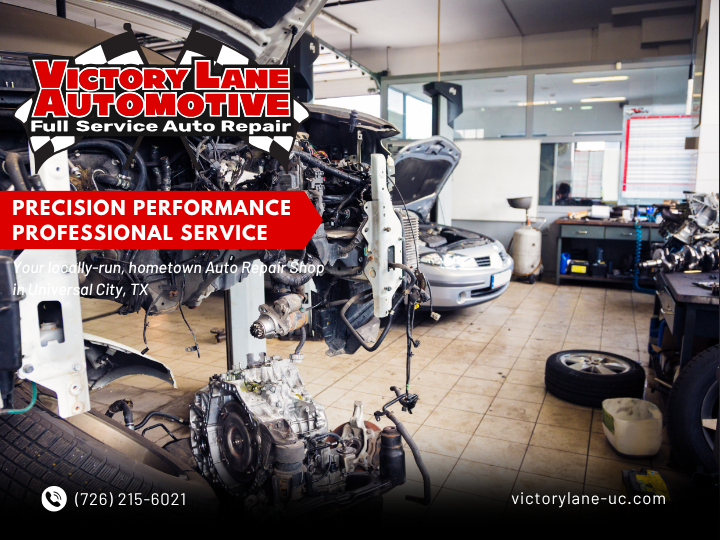
Under the vehicle. This is where the real story lives. On a lift, a technician sees the underside — the part of the car that no buyer, however careful, will ever properly examine in a driveway. Fluid leaks and their actual point of origin. Exhaust condition and hanger integrity. Suspension bushings, ball joints, tie rod ends, control arms, sway bar links. CV boots. Differential and transfer case seals. Undercarriage impact damage from caliche roads, ranch access, and unpaved use.
Frame and structural integrity. Evidence of prior collision repair. Welds that don't belong. Overspray inside wheel wells and door jambs. Panel gaps that don't align. Crush zone deformation. A vehicle can be repaired after a serious collision and remain perfectly safe — or it can be repaired badly, in a way that means the engineered crumple zones will never perform as designed in a future impact. That distinction does not appear in a listing photo, and it is not always disclosed on a history report.
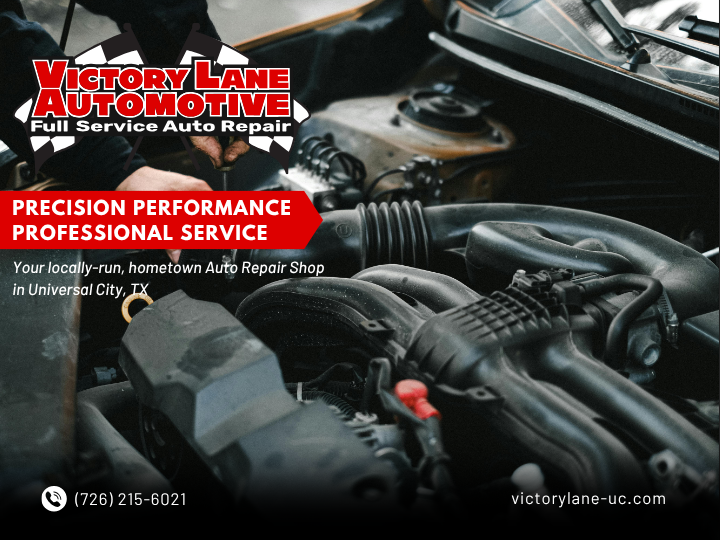
Full-system scan diagnostics. Not merely "is the light on." A technician pulls stored codes, pending codes, permanent codes, and freeze frame data across every module — powertrain, transmission, ABS, restraints, body control, climate. Just as revealing: readiness monitors. If the emissions monitors show as incomplete, codes were recently cleared. Possibly the day before you arrived. In Bexar County, that matters — emissions testing is part of the annual state inspection here, and a vehicle with incomplete monitors will not pass.
Fluid analysis. Oil condition and level. Transmission fluid color, odor, and level. Coolant condition and pH — and critically, whether combustion gases are present in the cooling system, which is the earliest signature of a head gasket problem that hasn't fully declared itself yet. Brake fluid moisture content. Differential and transfer case fluids where applicable.
Cooling and A/C system evaluation. In this climate, these are not secondary systems. Radiator condition. Fan clutch or electric fan function. Hose integrity under pressure. Coolant reservoir contamination. Compressor function, refrigerant charge, condenser airflow. An A/C system that "blows cool enough" in March is a system that will surrender in July, and the buyer who didn't check will find out at the worst possible moment.
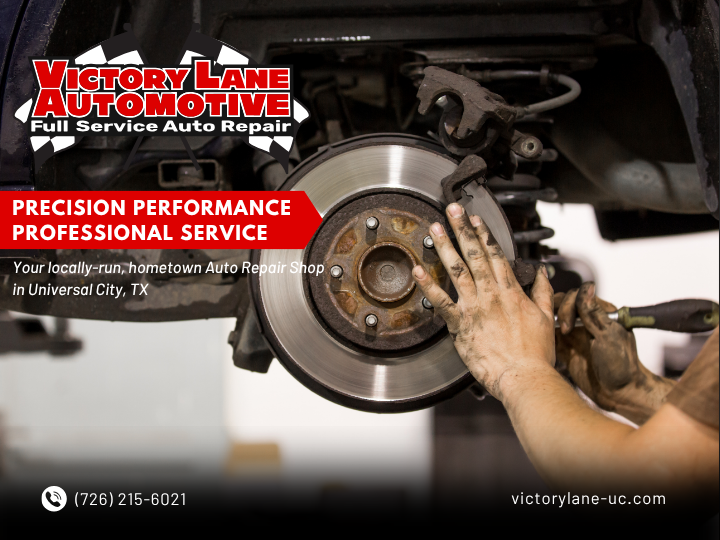
Brake system evaluation. Pad thickness measured, not estimated. Rotor thickness measured against minimum specification. Caliper function and slide pin condition. Brake lines and flex hoses inspected for swelling and cracking. Parking brake function.
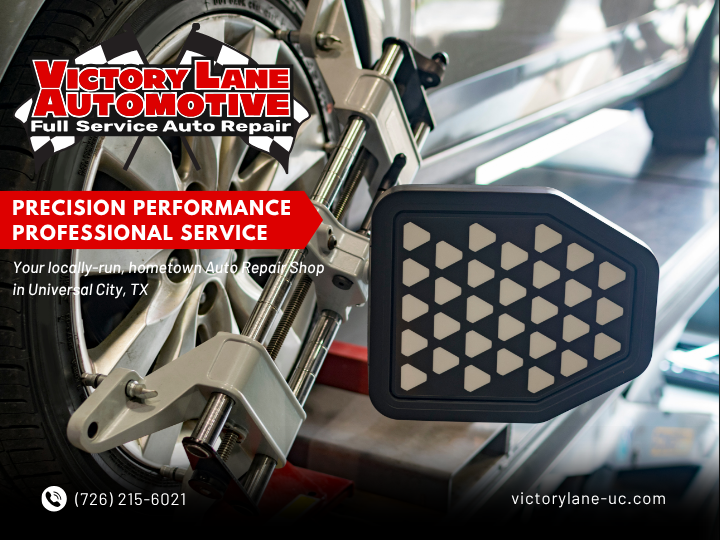
Tires and alignment indicators. Tread depth measured on all four. But far more revealing: wear pattern. Uneven wear tells you about alignment, suspension condition, and whether this vehicle has an underlying geometry problem that will keep destroying tires no matter how many new sets you buy. Date codes are checked — and in Central Texas, that matters more than most people realize. Sustained heat and brutal UV exposure degrade tire rubber from the outside in. A tire with deep tread and an eight-year-old date code is a tire with compromised sidewall integrity running on hundred-degree asphalt.
Steering and suspension. Play in the steering rack. Ball joint and tie rod movement under load. Shock and strut function and evidence of leakage. Wheel bearing condition. Strut mount integrity.
Electrical and charging. Battery state of health, not just state of charge — and in this heat, batteries die young and without warning. Alternator output under load. Starter draw. Parasitic draw. Lighting function throughout.
Road test — by the technician, on the technician's route. Cold start whenever possible. Acceleration under load. Braking under load. Highway speed for vibration analysis. Steering feel and tracking. Transmission shift quality through every gear, including downshifts and torque converter lockup. Sustained running at temperature with the A/C loaded — because in South Texas, a cooling system that seems adequate for ten minutes tells a very different story at thirty.
A written report. Not a verbal shrug in the parking lot. A documented, itemized findings report that tells you exactly what is wrong right now, what will be wrong soon, and what is genuinely fine.
That report is the entire point. That report converts you from a hopeful buyer into an informed one.
The Real Math: Inspection Versus Consequence
Here's the comparison that gives this article its title — and the differential is not close.
A pre-purchase inspection is a single, contained, predictable event. It happens once. It takes a couple of hours. It resolves before you've committed to anything.
Buying blind carries an open-ended liability. And the reason it's open-ended is that inherited failures rarely arrive alone.
Consider the cascade.
A neglected cooling system doesn't simply mean a water pump. It means an overheat event — and sitting on 1604 in August with the A/C running, that overheat event isn't hypothetical. It's an appointment you don't know you've made. An overheat event warps a cylinder head. A warped head takes the head gasket with it. Now you're inside the engine — and once you're inside the engine of a vehicle with unknown maintenance history, the technician performing that work will almost certainly find more, because a car neglected in one system was rarely maintained scrupulously in the others.
A transmission that was never serviced doesn't just need fresh fluid. By the time it declares itself with a shudder or a flare between gears, clutch material has already contaminated the valve body and circulated through the torque converter. The fluid service that would have prevented it is no longer the fix. The rebuild is.
A suspension geometry problem from an undisclosed collision doesn't just mean an alignment. It means premature tire wear, repeatedly, and an alignment that never fully holds — because the mounting points themselves are out of specification. You are now paying a permanent, recurring tax for a repair someone else performed incorrectly and never disclosed.
And in Texas, there's an additional dimension worth naming plainly: rebuilt and salvage titles are everywhere in this market. Hail events, flood events, and major collisions total enormous numbers of vehicles in this state, and a meaningful share of them get repaired, retitled, and resold. Some of those rebuilds are done properly. Many are not. A rebuilt vehicle can hide compromised structural integrity, deployed and improperly replaced restraint systems, and water damage that will produce electrical faults for the rest of its life. You cannot see any of that in a driveway. A technician can.
The structural difference between the two paths is this:
The inspection is a known, bounded, one-time expense that occurs before commitment.
The consequence is an unknown, compounding, unbounded expense that occurs after you own the problem — and after the seller is gone.
That last part matters enormously. The instant the title transfers, every dollar of every one of those repairs is yours. The seller has no obligation. The private sale was almost certainly as-is. Your recourse is precisely zero.
The inspection doesn't just save you the difference. It relocates the decision to the one moment when you still have leverage: the moment before you sign.
Leverage: The Part Almost Nobody Considers
A pre-purchase inspection isn't only protective. It's a negotiating instrument.
Picture two buyers evaluating the same vehicle.
Buyer One likes the car, likes the seller, and makes an offer based on the listing and a feeling. When the seller holds firm, Buyer One has nothing to push against. Just optimism.
Buyer Two arrives with an inspection report. That report documents that the rear brakes are at minimum specification and will require service within months. It documents leaking front struts. It documents two tires outside the date code window regardless of tread depth. It documents a marginal A/C compressor, a valve cover gasket seep, and an incomplete readiness monitor that will fail state inspection.
Buyer Two is not guessing. Buyer Two is holding a document, prepared by a technically credentialed neutral third party, itemizing specific deferred maintenance backed by specific evidence.
That is an entirely different conversation. It is no longer "I feel like it should be worth less." It is "Here is the documented condition of this vehicle, and here is what it will take to bring it to the standard your listing described."
Some sellers adjust. Some handle the repairs themselves before closing. Some hold firm — and that's fine, because now you're deciding with complete information, and you can walk away knowing exactly what you're walking away from.
And sometimes — this is the outcome that saves people the most — the report comes back and says: this car is genuinely solid. Original panels. Clean fluids. No stored codes. Even wear across all four tires. Cooling system in good order. Undercarriage in better shape than expected for its age.
That report didn't cost you a deal. It bought you confidence. It lets you sign and drive home without the low-grade anxiety that trails nearly every used-car purchase made in the dark. It converts a leap of faith into an informed decision.
For most people, that is the entire point.
The San Antonio Area Makes This Harder, Not Easier
Every region imposes its own stressors on a vehicle. This one imposes several, and they're worth naming directly.
Extreme, sustained heat. Summer here isn't a season — it's a siege. Months of triple-digit heat are relentless on cooling systems, on rubber, on plastic, on batteries. Hoses harden and crack from the inside out. Serpentine belts glaze. Radiator end tanks fatigue and split. Coolant that hasn't been serviced loses its corrosion inhibitors and starts eating the system from within. Batteries that would last five years in a mild climate give up in two or three. A cooling system that seems perfectly adequate in February will fail in July, and it will not be polite about it.
A/C as a safety system. In Central Texas, air conditioning isn't a comfort feature — it's functionally essential. And it's one of the most commonly deferred systems on a used vehicle, because a seller can hand you a car in March that "cools okay" and be technically honest while knowing the compressor is on its last legs. A technician measures it. A buyer feels it.
UV degradation. The intensity of the sun here does real, measurable damage that has nothing to do with faded paint. It degrades tire sidewalls. It hardens weatherstripping. It cracks dashboards and cooks wiring insulation. A vehicle that's spent its life parked outside in Universal City has aged in ways an odometer will never reveal.
Hail and storm damage. This region takes serious hail, and hail totals vehicles. Many of those vehicles are repaired, retitled, and resold. Cosmetic hail repair can be done well or done badly — and roof, hood, and panel damage that was filled and painted rather than properly addressed will announce itself eventually. So will the moisture intrusion that follows a poorly sealed repair.
Flash flooding. South Central Texas floods, fast and hard. Flood-damaged vehicles circulate through this used market with more regularity than most buyers realize. Flood damage is among the most insidious problems a car can carry, because it doesn't fail immediately. It fails eighteen months later, when corrosion finally reaches a wiring harness connector and starts producing electrical faults nobody can trace. A technician who knows where to look — under carpet, in the spare tire well, at seat rail bolts, at connector corrosion patterns — can identify flood exposure that a history report will never show.
High turnover and thin documentation. With Randolph AFB right here and a constant flow of military rotations through the area, vehicles change hands frequently and service records are often fragmented or gone entirely. Which means an independent inspection is frequently the only meaningful information available about a given vehicle's actual condition.
State inspection requirements. Texas requires annual inspection, and Bexar County requires emissions. Which means a vehicle's mechanical condition has a legal deadline attached to it. Buying a car that's months from failing inspection isn't an inconvenience — it's a bill with a due date.
The point isn't to alarm you. The point is that regional conditions produce regional wear patterns — and a technician who lifts South Texas vehicles every working day knows exactly where to look on a car that's survived six Central Texas summers.
The Objections, Answered Honestly
"The seller seems honest. They said they'd tell me if anything was wrong."
They may well be honest. Most people are. But sincerity is not the same as knowledge. Plenty of sellers genuinely believe their vehicle is in excellent shape — because nobody has ever put it on a lift and told them otherwise. They're not deceiving you. They're passing along their own incomplete picture. An inspection doesn't accuse anyone of anything. It simply replaces belief with verification.
"It came with a clean vehicle history report."
History reports are useful. They are not diagnostic. A history report shows what was reported — insurance claims filed, title events recorded. It does not show collision damage repaired out of pocket. It does not show deferred maintenance. It does not show current mechanical condition, a marginal A/C system, or a transmission on borrowed time. A clean report and a healthy vehicle are two entirely separate claims, and only one of them can be verified by a technician.
"The dealer already inspected it."
Possibly. But consider whose interest that inspection serves. A seller's inspection is designed to make a vehicle sellable. Your inspection is designed to tell you the truth. Those are not the same objective — and when incentives diverge, you want the report from the party with no stake in whether you buy.
"I don't have time. Someone else is going to take it."
That's the pressure tactic, and it works on almost everyone. Recognize it for what it is. Urgency is the enemy of judgment. Any seller unwilling to allow two hours for an independent inspection is telling you something worth hearing. The car you lose because you insisted on due diligence is almost always a car you were fortunate to lose.
"I'll just repair whatever comes up."
Then find out what's coming up first. That is the entire proposition. You aren't avoiding repairs — you're choosing whether to walk into them with information or without it.
What "Done Right the First Time" Actually Means
That phrase gets used loosely in this industry. It deserves a precise definition, because it isn't marketing language — it's an operational standard.
Doing it right the first time means the diagnosis is correct before any part gets replaced. It means identifying the cause, not chasing the symptom. It means the repair addresses the underlying condition rather than the presenting complaint. And it means that when the vehicle leaves, the problem is actually solved — not deferred, not masked, not partially addressed in a way that brings it back through the door in six weeks.
The opposite of that standard is the parts cannon. Guess, replace, hope, repeat.
And the parts cannon is exactly what a buyer signs up for when they purchase a vehicle with unknown history and unknown problems. Because now the problems surface one at a time, disconnected from each other, with no coherent picture — and each one gets addressed in isolation, reactively, under pressure, usually at the worst possible moment.
A pre-purchase inspection is the anti-parts-cannon. It builds the complete picture first. It sequences the work correctly. It tells you what's urgent, what's coming, and what's genuinely fine — so that if you do buy the vehicle, you're operating from a plan instead of lurching between emergencies.
That is what having the customer's best interest at heart looks like in practice. Not a pitch. A complete, honest, documented picture of what you're actually considering — delivered before you commit, while the information can still change your decision.
Because here's the thing worth understanding: a shop that talks you out of a bad car hasn't lost a customer. It has earned one for life.
The Decision in Front of You
Strip away everything else, and it reduces to a single question:
Do you want to know, or do you want to hope?
Hope is comfortable. Hope lets you skip the inconvenient step, avoid the awkward conversation with the seller, and get to the enjoyable part faster. Hope tells you it looked clean, the seller seemed decent, and it'll probably be fine.
Knowing is less comfortable. Knowing requires you to slow down, ask for something the seller may not want to give, and possibly hear an answer you don't want.
But only one of those two protects you.
Every driver who has sat in that particular quiet — three weeks in, listening to a noise that wasn't there before — had a moment, earlier, when they could have chosen to know. They chose hope instead. Not because they were foolish, but because hope was easier, and nobody ever told them plainly what was at stake.
You've now been told plainly.
Victory Lane Automotive performs comprehensive pre-purchase inspections for buyers throughout Universal City and the surrounding communities — Schertz, Cibolo, Live Oak, Selma, Converse, Garden Ridge, Randolph AFB, and Northeast San Antonio. Every vehicle goes on a lift. Every system gets evaluated. Every finding is documented in a written report you keep, whether you buy the car or walk away from it.
We have no stake in whether you purchase that vehicle. We have a stake in whether you make the decision with your eyes open.
Victory Lane Automotive
264 Kitty Hawk Rd, Universal City, TX 78148
(726) 222-1264
https://www.victorylane-uc.com/
Bring us the car before you sign. It's the smartest hour you'll ever spend.
You can watch the video