Why Trust Your Car to the Empty Shop
Why Trust Your Car to the Empty Shop
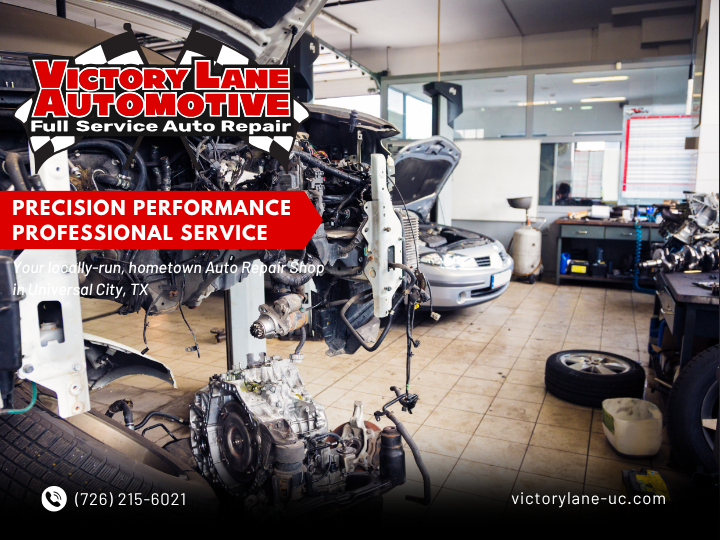
You Wouldn't Eat at the Empty Restaurant. So Why Trust Your Car to the Empty Shop?
It's a Friday night at the Pearl in San Antonio. The sun has finally gone down, the heat is easing off, and the courtyard is full of people deciding where to eat. One restaurant has a crowd out front, every patio table taken, and a host checking names off a long list. Not far away, another restaurant has open tables, a quiet patio, and staff waiting for someone to walk in.
You already know which one you'll choose. You give your name at the busy place and wait. Somewhere along the way, you learned that a full room usually means the food is good, the service holds up, and people keep coming back.
Now jump ahead to Monday afternoon. It's 104 degrees, you're heading north on Loop 1604 toward Universal City, and your air conditioning starts blowing warm while the temperature gauge creeps upward. By the time you reach Pat Booker Road, you're calling shops. One says they can get you in Wednesday morning. Another says, "Bring it in now, we've got a bay open."
You take the open bay.
It's the same person making the opposite decision. The driver who would never trust dinner to an empty restaurant just trusted their car to the first shop with nobody waiting. This article explains why that happens and how drivers in Universal City, Converse, Live Oak, Schertz, Selma, Cibolo, Windcrest, and across northeast San Antonio can make a better choice the next time their vehicle needs care.
The Crowd Is Its Own Review
When you're choosing a restaurant, nothing is wrong. You're relaxed, you have time, and you're picking how to spend an evening. In that state, you're good at reading signals, and a crowd is one of the strongest signals there is.
Psychologists call it social proof. When we're unsure, we look at what other people chose and assume they had good reasons. A busy restaurant tells you people tried it, trusted it, and came back with friends. It's word of mouth you can see from across the courtyard.
An empty restaurant at the height of a Friday night tells a different story. There might be a reasonable explanation, but your instinct is to wonder what the regulars already figured out.
A restaurant fills its tables one meal at a time. A repair shop fills its schedule the same way: one honest diagnosis, one repair that holds through a brutal Texas summer, one customer who comes back and tells a neighbor. The difference is that you rarely see a shop's crowd, and you're almost never calm when you need one.
Pressure Changes the Question
Car trouble never picks a cool, quiet morning. It shows up in stop-and-go traffic on I-35 near the construction zones, on Pat Booker Road on the way to the Randolph gate, or in a parking lot on a 105-degree afternoon with the kids in the back seat. When it shows up, you aren't choosing an experience. You're trying to get out of a problem fast.
Stress narrows your attention. It locks onto whatever feels most urgent, and the most urgent question becomes: who can take my car right now? The questions that actually protect you get pushed aside. Will they find the real cause? Will they fix it right the first time? Will they be honest about what needs attention now and what can safely wait?
That isn't a character flaw. It's how people respond under pressure. But it means a decision about your safety and your vehicle often gets made in the worst possible frame of mind. Urgency makes the choice, and then we call it practical.
Here's the honest part: an AC that quits and an engine that runs hot usually give warnings first. Air that's a little less cold than last summer, a gauge that sits slightly higher in traffic, or a faint sweet smell from the engine bay can all show up weeks before the breakdown. The feeling of "I need this fixed now" is real, but it shouldn't be the only thing deciding who works on the car your family depends on.
Quick Tip: Choose your shop while your car is running well. Save the name and number in your phone today. When something goes wrong in the middle of a hot afternoon or a busy week, the most important decision will already be made with a clear head.
The Crowd You Never See
At a restaurant, you can see the crowd. At a repair shop, it's invisible.
You don't see the Universal City families who have trusted the same shop for years. You don't see the commuters from Converse, Live Oak, and Schertz who drive past closer options because a neighbor pointed them in the right direction. You don't see the military families from Randolph who were told by a coworker exactly where to go the week they arrived. All you hear is one sentence: "Our next opening is Wednesday."
Without the crowd in view, that sentence feels like an inconvenience. In reality, it often means exactly what a packed patio means. People chose this shop, and they keep choosing it.
When a shop can take any car the moment it pulls in, especially in the middle of a Texas summer when heat is pushing vehicles to their limits, it's fair to ask why the bays are empty.
You Can't Taste a Repair
There's another reason the restaurant comparison breaks down, and it may matter most.
When you eat a meal, you're the judge. A few bites tell you whether it was worth the wait.
Auto repair doesn't work that way. Most drivers can't tell whether a problem was diagnosed correctly, whether the right part was replaced, or whether the root cause was found. The truth usually shows up later, when the AC fades again on FM 78, the engine runs hot again on Loop 1604, or the same warning light comes back the following week.
When people can't judge quality, they rely on what they can easily compare: how soon a shop can see them and what they hear over the phone. Those are exactly the areas where a struggling shop competes hardest, because it can't compete on reputation.
That's the trap. The easiest things to compare tell you the least about how the repair will turn out. Speed and a quick answer say nothing about diagnostic skill, honesty, or whether your car will leave truly fixed.
Quick Tip: When a shop recommends a repair, ask, "Can you show me what you found?" Photos, test readings, or the old part should be easy for an honest shop to share. A shop that welcomes your questions respects your right to make your own decision.
A Fair Word About Open Schedules
It wouldn't be honest to say every shop with an opening is a bad shop.
A newer shop may be doing excellent work while it builds its customer base. A shop may have a slower week after a holiday. A well-run shop may keep time open for breakdowns, overheating vehicles, and safety concerns because it knows a South Texas summer brings plenty of all three. In any of those cases, you could get in quickly and still be in excellent hands.
So the lesson isn't to avoid every shop that can see you today. The lesson is this: availability is not a qualification. An open slot doesn't prove a shop is good, and a full schedule doesn't prove it's great. What a steady, full schedule usually shows is that customers trust the shop enough to plan around it.
It also tells you something about how that shop can afford to treat you. A shop that stays busy doesn't need to get the most out of every car that comes in. It isn't under pressure to sell you something you don't need just to keep the doors open. Its business depends on people coming back, and people only come back when they've been treated honestly.
The real question isn't "Who's open?" It's "Who has earned the right to work on my car?"
Northeast San Antonio Driving Is Hard on Vehicles
Driving around Universal City may look simple on a map. Flat roads, wide lanes, and quick access to the city. In reality, the conditions here put serious stress on vehicles.
Think about a normal week. Heavy traffic on I-35 between Schertz, Selma, Live Oak, and San Antonio, where years of major construction mean lane shifts, sudden slowdowns, and uneven pavement. Stop-and-go driving on Loop 1604 through Universal City and toward Converse. Busy local routes like Pat Booker Road, Kitty Hawk Road, FM 78, FM 3009, Toepperwein Road, and Judson Road, with constant lights, turn lanes, and school zones. Shopping trips to the Forum in Live Oak and traffic around the Randolph gates at shift change. Short errands where the engine barely warms up before it's shut off again.
Then add the climate. South Texas summers bring long stretches of triple-digit heat, and that's hard on nearly every system in a vehicle. Heat is one of the biggest enemies of car batteries, often shortening their life far more than cold. Cooling systems, belts, and hoses work overtime in slow traffic on scorching days. Air conditioning systems run nearly nonstop for months. Hot pavement raises tire pressure and puts extra stress on tires that are already worn or underinflated. Sudden spring storms can bring hail and flash flooding, and low-water crossings in the region can become dangerous within minutes. Winter brings cedar pollen that clogs cabin filters, and on rare occasions, ice storms that leave drivers completely unprepared. The clay soil in this area shifts with drought and rain, cracking pavement and creating potholes that damage tires and knock alignments out of spec.
Many families in this area also drive long distances. Military families moving to or from Joint Base San Antonio-Randolph often put thousands of miles on their vehicles in a short time, and weekend trips to the Hill Country, the coast, or family across the state add more.
All of this connects. Summer heat weakens a battery that finally fails on a cool morning. A worn cooling hose holds up until a slow crawl through the I-35 construction zone pushes it past its limit. A pothole on FM 78 throws the alignment off, which wears a tire unevenly, which becomes a blowout risk on hot pavement. The symptom you notice is often not where the problem began.
That's why careful diagnosis matters here. A shop that guesses may replace the part closest to the symptom and send you back out with the real cause still there. A shop that diagnoses carefully traces the problem to its source, explains what it found, and helps you plan ahead.
Quick Tip: In summer, check your tire pressure in the morning before you drive, when the tires are cool. Hot pavement raises pressure during the day, and underinflated tires build up more heat, which raises the risk of a blowout on Loop 1604 or I-35.
What the Fastest Appointment Can Really Cost
Taking the first available slot feels like you're saving time. Often you aren't.
When a problem isn't diagnosed correctly, it comes back. That means another call, another drop-off, another ride from a friend or coworker, another day rearranged, and another stretch of wondering whether your car will make it through the next heat wave. The quick option turns into several trips.
There's also a quieter cost: confidence. Each time a repair doesn't hold, you trust your car a little less and the people who worked on it even less. You start watching the temperature gauge on every drive. You think twice before a road trip to the coast or a long drive to see family. That doubt rides with you every time you merge onto I-35.
A shop that takes the time to get it right gives you something an early appointment can't: peace of mind. You know what was wrong, why it happened, what was done, and what to watch for next. That's worth waiting a day for.
Five Questions That Tell You More Than an Open Slot
If availability doesn't tell you whether a shop is right for you, these questions will.
1. How do you confirm the cause before recommending a repair?
A good shop tests before it replaces. Listen for a clear explanation of how the problem will be confirmed, not a guess about what usually fails.
2. Will you show me what you found?
Shops that share photos, readings, and old parts want you to understand your car. That openness is one of the clearest signs a shop truly has your best interest at heart.
3. How often do your repairs come back, and how do you handle it?
No shop is perfect. A good one tracks its comebacks, takes them seriously, and can explain how it keeps them rare.
4. What warranty stands behind your work?
A shop confident in its repairs will explain its warranty clearly. Ask what's covered, for how long, and how a claim is handled, especially if you travel often or may be relocating.
5. Will you help me plan, not just fix what broke today?
The best shops look at the whole vehicle. They explain what needs attention now for safety, what should be planned soon, and what can be watched, so you can decide based on how you drive and how long you plan to keep the car.
"How soon can you take it?" isn't on this list. That question helps with scheduling. It doesn't tell you anything about the result.
Quick Tip: If you have a long road trip or a military move coming up, schedule a full inspection a week or two before you leave. That gives time to handle anything that needs attention without rushing, so you aren't stuck on a highway hundreds of miles from home.
How Victory Lane Automotive Approaches Your Car
At Victory Lane Automotive on Kitty Hawk Road in Universal City, we don't measure success by how quickly a car leaves our shop. We measure it by whether the repair lasts, whether you understood your options, and whether you felt respected along the way.
That starts with diagnosis. We'd rather take the time to find the real cause than replace parts and hope. When we find something, we show you. We explain in plain language what's wrong, why it matters, and what could happen if it waits. Then the decision is yours. You know how you drive, how long you plan to keep your vehicle, and what matters most to you. Our role is to give you clear, honest information so you can choose with confidence.
We serve drivers from Universal City, Converse, Live Oak, Schertz, Selma, Cibolo, Windcrest, Kirby, Garden Ridge, and the families of Joint Base San Antonio-Randolph. Many of them pass other shops to reach us. They come because they've learned they'll hear the truth and get a repair that holds up through every South Texas season.
When our schedule is full, we'll be honest about it and help you find the best time to come in. When something is a safety concern, we'll tell you right away and work with you on the safest next step. We want to earn your trust by doing the right thing every time, not by being the first ones to pick up the phone.
Decide Before the Pressure Arrives
The best way to avoid choosing a shop in a stressful moment is to choose one before the stress begins.
Build a relationship with a shop while your car is running well. Schedule regular inspections based on how and where you actually drive, not a generic schedule built around mild weather and easy highway miles. Triple-digit heat, I-35 construction traffic, flash floods, hail, shifting clay roads, long road trips, and short errands around town all call for a plan that fits life in northeast San Antonio. A shop that knows your vehicle and your driving can catch small problems early, explain your options ahead of time, and help you plan instead of react.
With that relationship in place, the stressful afternoon looks completely different. The AC starts fading, and you already know who to call. You already trust the answer you'll get. Even if you wait a day, you wait knowing the job will be done right.
That's the same reason you'll wait for a table at the busy restaurant at the Pearl. You don't enjoy waiting. You just know the right meal is worth it.
Your car deserves that same judgment, and so do the people who ride in it.
The Bottom Line
You already know how to read a crowd. You do it every time you choose where to eat. What changes when your car breaks down is the pressure, and pressure is a poor advisor.
The next time your vehicle needs help, slow down long enough to ask the right questions. Look past who can see you fastest and focus on who will tell you the truth, find the real cause, and stand behind the work. A shop worth waiting for is usually one you won't have to go back to.
If you live or work in Universal City or anywhere in northeast San Antonio and want a shop that puts your best interest first, call Victory Lane Automotive at (726) 222-1264 or visit victorylane-uc.com to schedule your visit. We'll take the time to get it right.
You can watch the video