How do I get my car ready for winter Universal City TX
How do I get my car ready for winter Universal City TX
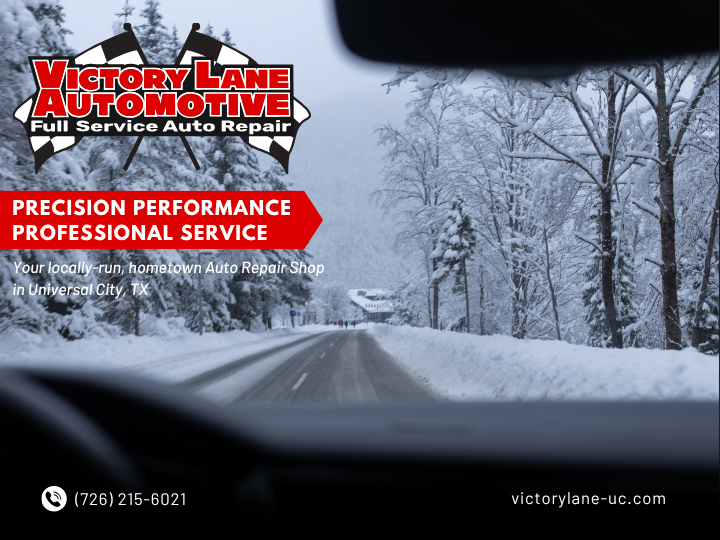
How Do I Get My Car Ready for Winter in Universal City, TX?
Winter preparation begins before the first cold morning, slow engine start, or windshield that refuses to clear. It starts with understanding your vehicle’s condition and addressing the things that could interfere with safe, dependable transportation when the weather changes.
For drivers in Universal City, Texas, getting ready for winter does not usually mean preparing for months of heavy snow. It means being ready for cooler mornings, rain, shorter daylight hours, and occasional freezing conditions. It also means considering whether holiday travel will take you somewhere colder.
Whether you drive around Universal City, commute through Live Oak, visit family in Schertz, or travel beyond the San Antonio area, preparation should reflect where you actually go.
The goal is straightforward: help your car start reliably, maintain traction, respond predictably, and give you a clear view of the road.
That does not mean replacing every part or approving every possible service. It means inspecting carefully, testing appropriately, and building a maintenance plan around what your vehicle actually needs.
Doing the work right the first time protects more than your car. It protects your schedule, your confidence, and the people who depend on you.
Start With Your Driving Routine, Not a Generic Checklist
Two Universal City drivers can own similar vehicles and have very different winter needs. One may make short trips around town. Another may commute to San Antonio before sunrise. A third may regularly travel into colder regions for work or family visits.
Those differences matter. Your route, mileage, parking arrangements, and travel plans should help shape the inspection.
Before scheduling winter maintenance, think about what has changed since last year. Have you noticed a slower start? Does the windshield take longer to clear? Has a tire needed air repeatedly? Are you hearing a new noise when braking or turning?
Write down those observations rather than assuming they are simply part of owning an older car. Useful details include when the symptom happens, how often it occurs, and whether it changes with temperature or vehicle speed.
Quick tip: Keep a short list of vehicle concerns on your phone. A specific observation can give a technician a much better starting point than “something feels different.”
Have the Battery and Starting System Tested
A battery that starts the engine today is not necessarily ready for colder weather. Lower temperatures reduce available battery power while a gasoline or diesel engine needs more power to start.
A proper evaluation should consider the battery and the related starting and charging systems. Slow cranking deserves investigation, especially if it has become more noticeable recently.
Simply replacing a battery without checking why it struggled can leave the underlying problem unresolved. A connection issue or charging concern may still be present after a new battery is installed.
Tell the shop if your vehicle has needed a jump-start, sits unused for extended periods, or has recently developed intermittent starting problems. The history matters alongside the test results.
Ask what the testing showed and whether replacement is supported by the findings. The objective is reliable starting based on evidence, rather than replacing something solely because winter is approaching.
Give Your Tires More Than a Passing Glance
Tires deserve careful attention because they connect your vehicle to the road. Check inflation, wear, damage, and suitability for your winter driving conditions.
Use the vehicle’s recommended cold tire pressure, usually found on the driver’s door label or in the owner’s manual. The maximum pressure shown on a tire’s sidewall is not the recommended setting for your vehicle. Check pressure before driving, after the tires have rested for at least three hours.
A professional inspection can help identify uneven wear, sidewall damage, or a recurring leak that adding air will not fix. If one tire repeatedly loses pressure, ask for the cause to be investigated.
The right tire choice also depends on where you travel. Someone who regularly drives through snow and sustained cold may need a different conversation than someone whose vehicle mainly stays on local roads.
All-wheel drive does not eliminate the need for appropriate tires. It can help the vehicle move, but it does not create additional tire grip when braking on ice.
Quick tip: Check the spare tire or learn how your vehicle’s tire repair kit works before you need it. Discovering missing equipment beside the road adds an avoidable complication.
Address Brake Concerns Before Conditions Become Difficult
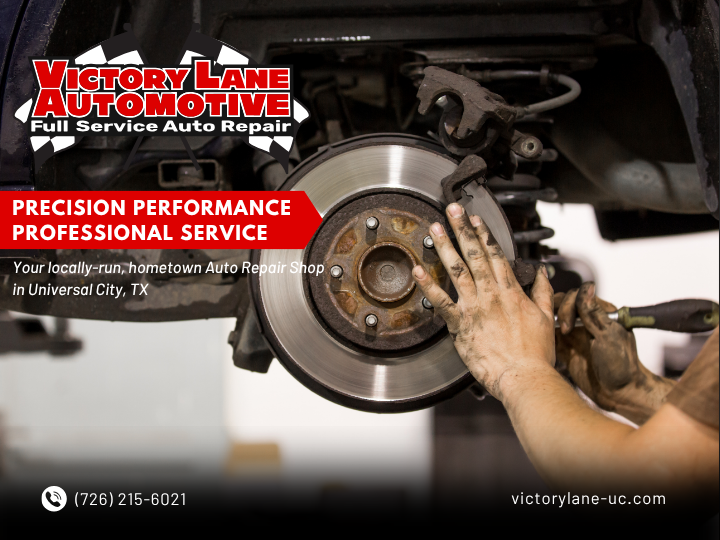
Winter is a poor time to leave a braking concern unexplained. A new grinding sound, vibration, pulling sensation, or change in pedal feel deserves attention.
Describe what you experience without trying to name the failed part. “The steering wheel shakes when I slow down from highway speed” is more useful than assuming the vehicle needs one particular component.
Ask the technician to explain the inspection findings and the recommended correction. If work is needed, understand which components are affected and how the repair will be verified.
Replacing a visible part without evaluating the system can leave a second issue behind. Professional service should connect the symptom, the inspection, the repair, and the final check.
Even a well-maintained vehicle needs extra stopping distance on slippery roads. Mechanical readiness supports careful driving; it cannot remove the effects of ice or poor traction.
Check Coolant Protection and Cooling System Condition
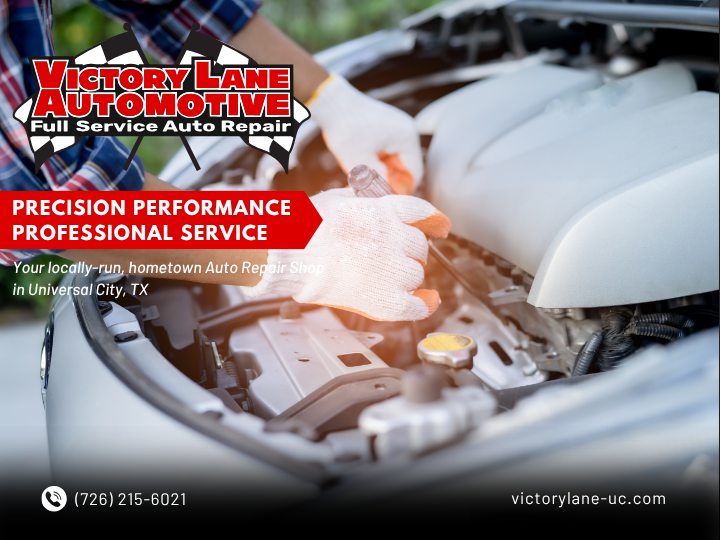
Your cooling system matters throughout the year, including winter. The coolant needs to meet your vehicle’s specifications and provide appropriate protection for the temperatures you expect to encounter.
A reservoir that appears full does not tell the whole story. A technician can evaluate coolant condition and concentration, look for leaks, and determine whether service is needed.
Do not assume that matching coolant color means matching coolant specifications. The correct product and service procedure depend on the vehicle.
If the coolant level keeps dropping, topping it off repeatedly is not a complete solution. Ask why it is low. The cause needs attention before dependable operation can be restored.
Never open a hot cooling system. If you are uncertain about a fluid or its correct handling, leave the work to a qualified professional.
Quick tip: Tell the shop about repeated fluid top-offs. A pattern that seems minor at home may be an important clue during diagnosis.
Make Sure You Can Clear the Windshield
A running engine does little good if you cannot see clearly. Test the heater, front defroster, rear defogger, and windshield wipers before the season demands them.
Pay attention to streaking, skipping, or areas the blades no longer clear effectively. Use windshield washer fluid rated for the freezing temperatures you may encounter, particularly when traveling into colder regions.
If the windshield stays foggy or the heater has changed noticeably, have the concern evaluated instead of relying on a temporary workaround.
Clear visibility also requires clean glass. Interior film can make glare more distracting during nighttime driving. Clean the inside of the windshield along with the exterior windows and mirrors.
If you encounter ice or snow, give yourself enough time to clear the vehicle before leaving. Starting a trip while looking through a small cleared patch limits the information you need to drive safely.
Check Lighting Before Your Commute Gets Darker
Walk around the vehicle and check the headlights, turn signals, brake lights, and other exterior lighting. Have someone help you check lights you cannot easily see from the driver’s seat.
If a light repeatedly fails, mention the pattern rather than treating each failure as an isolated event. If nighttime visibility seems poor, ask whether the lenses, lamps, or alignment need evaluation.
Avoid choosing lighting modifications simply because an advertisement promises greater brightness. The useful question is whether the equipment is correct for the vehicle and works properly in its intended housing.
For drivers leaving Selma, Converse, or Cibolo before sunrise, dependable lighting is part of everyday winter preparation, even when freezing weather is not expected.
Quick tip: Check exterior lights while parked safely. A brief walk around the car can reveal an issue you would never notice from behind the wheel.
Review Maintenance Without Approving Unnecessary Work
Winter preparation is a good opportunity to review your vehicle’s service history. What has already been completed? What is coming due? What concerns were previously noted but never addressed?
Bring available records, especially if different shops have maintained the vehicle. Clear history helps avoid duplicate work and gives the technician useful context.
A thorough conversation should include both time and mileage, along with the vehicle’s requirements and actual condition. Ask whether recommended work is due maintenance, a response to a verified problem, or something that can reasonably be monitored.
You should be able to understand the reason for each recommendation. “It is winter” is not, by itself, a complete explanation for replacing a component or servicing a system.
Customer-focused maintenance gives you a plan. It helps you address meaningful needs while keeping track of what does not require immediate action.
Why Doing It Yourself Can Create Much More Work
Some owners comfortably handle basic tasks such as checking tire pressure, cleaning glass, or replacing an accessible wiper blade. Those activities can be useful when performed correctly.
The trouble begins when a repair requires diagnosis, specialized equipment, or a procedure the owner does not fully understand. A short video can show someone completing a task without showing every condition that made the repair appropriate.
There is no honest universal answer to how much more an unsuccessful repair attempt can cost. The consequences depend on what went wrong. But the additional burden can become substantial: repeated labor, wasted parts, towing, secondary damage, missed commitments, and more time without the vehicle.
Consider the difference between replacing a suspected part and proving the cause of a problem. If the first replacement does not solve anything, the original diagnosis still needs to happen. Now the owner has also added another intervention for the technician to evaluate.
The intended shortcut can become a longer route back to a dependable car.
A Few Ways a Small Mistake Can Grow
Imagine a driver responding to a slow start by installing a battery without testing the charging system. If the battery was not the root cause, the starting problem may return. The driver has completed work, but has not resolved the concern.
Or consider someone topping off coolant without confirming the correct specification or investigating a recurring loss. The reservoir looks better, but the underlying issue remains unanswered.
A brake repair can create an even more serious problem if the owner lacks the necessary procedure, tools, or verification. Finishing installation is not the same as confirming the vehicle is safe to operate.
These are illustrative scenarios, not predictions that every home repair will fail. The point is that doing a task and solving a problem are different achievements.
When the work is beyond your training or equipment, professional help can prevent uncertainty from spreading into additional systems and additional decisions.
Quick tip: Before starting a repair, ask yourself whether you can diagnose the cause, complete the correct procedure, and verify the result. If any step is uncertain, get qualified help.
What Professional Service Should Deliver
Professional auto repair should offer more than access to tools. It should provide a reasoned process that connects your concern to a verified result.
That process begins with listening. A technician needs the vehicle’s history and your description of the symptom. Inspection and testing should then guide the recommendation.
The repair should use appropriate parts, fluids, and procedures. Afterward, the shop should verify the work and explain what was corrected, what remains, and whether follow-up is needed.
You can ask simple questions: What did you find? How does it explain the symptom? Why is this repair recommended? How will you check that it worked?
A good explanation helps you make an informed decision. It also reduces the chance that you leave with a completed invoice but unanswered concerns about the vehicle.
Build a Winter Plan Around Your Priorities
At Victory Lane Automotive in Universal City, the winter maintenance conversation should start with how you use your car and what you have noticed.
For drivers in Live Oak, Schertz, Selma, Converse, Cibolo, and nearby communities, the useful outcome is a clear understanding of the vehicle’s condition and the next appropriate steps.
Ask for recommendations to be organized around safety concerns, reliability needs, and longer-term maintenance. A worn or damaged component may require prompt attention. Other findings may be suitable for monitoring or a future appointment.
That distinction matters. Taking care of customers means helping them understand urgency without turning every observation into an emergency.
If you are planning holiday travel, mention the destination and departure date. Allowing time for inspection, any needed repair, and verification makes preparation easier to manage.
Prepare Yourself Along With the Vehicle
Keep travel supplies accessible: warm clothing or blankets, a flashlight, a phone charger, drinking water, and other essentials appropriate for your passengers and route. Add an ice scraper and suitable winter equipment when traveling into colder areas.
Check the forecast before leaving and allow extra time. If conditions are hazardous, postponing a nonessential trip may be the best decision.
Electric and hybrid vehicle drivers traveling into cold weather should account for reduced range and follow their vehicle’s winter charging guidance. Travel planning should include an appropriate energy reserve.
If snow blocks the exhaust, do not run the engine until it is cleared. Never idle a vehicle in an enclosed space. Winter readiness includes understanding risks that a mechanical inspection alone cannot remove.
Quick tip: Put emergency supplies where you can reach them without unpacking the entire vehicle. Preparation is most useful when the equipment is accessible.
Get Ready Before Winter Makes the Decision for You
The best time to prepare your car for winter is while you can still choose the appointment, ask questions, and address findings thoughtfully.
You do not need to become a technician. You need to notice changes, keep useful records, handle appropriate basic care, and seek professional help when diagnosis or repair goes beyond your ability.
Doing the work right the first time means identifying the real concern, correcting it properly, and checking the result. That approach can prevent repeat work and protect the reliability you depend on every day.
Victory Lane Automotive is located at 264 Kitty Hawk Rd, Universal City, TX 78148. Whether you drive locally or travel throughout the greater San Antonio area, start your winter preparation with a conversation about your vehicle’s needs.
Visit Victory Lane Automotive or call (726) 222-1264 to arrange an appointment. Bring your questions, describe your concerns, and ask for a plan that supports safe, dependable driving through the season ahead.
You can watch the video