Why is my car leaking coolant?
Why is my car leaking coolant?
Why Is My Car Leaking Coolant?
A Complete, High-Authority Guide for Drivers in Universal City and Northeast San Antonio
A coolant leak is one of the most dangerous problems a vehicle can develop, not because it always starts big, but because it usually starts small. Most drivers first notice a little puddle under the car, a sweet smell after shutting the engine off, a heater that does not seem to work quite as well, or a temperature gauge running a little higher than normal. Because the vehicle still runs, the issue gets pushed off.
That is where the real danger begins.
A coolant leak is not a minor inconvenience. It is not normal wear that should be ignored. It is not something that usually fixes itself. A coolant leak means the system responsible for controlling engine temperature, protecting internal components, and preventing catastrophic failure is no longer sealed.
When coolant leaks, the engine loses more than fluid. It loses pressure. It loses thermal stability. It loses corrosion protection. It loses lubrication inside critical cooling-system components. And the longer that condition continues, the greater the risk becomes.
Drivers across Universal City, Schertz, Cibolo, Live Oak, Selma, Converse, and the Randolph area often deal with cooling system issues because South Texas heat, stop-and-go traffic, daily commuting, and older vehicle populations create the perfect environment for coolant leaks to develop.
This guide explains:
- What coolant actually does
- The most common causes of coolant leaks
- The early signs drivers should never ignore
- Why coolant leaks are especially serious in Texas heat
- What happens when leaks are ignored
- How a professional technician finds the true source
- When to stop driving
- What to do next
This is written to educate clearly, protect the customer, and help drivers avoid preventable engine damage.
What Coolant Actually Does (And Why Losing It Is a Serious Problem)
Most people think coolant only keeps the engine from overheating. That is true, but it is only part of the story. Coolant does several critical jobs inside your vehicle.
1. It Regulates Engine Temperature
The engine creates extreme heat every time it runs. Coolant circulates through the engine, absorbs that heat, and transfers it to the radiator so the heat can be released safely.
2. It Prevents Boiling and Freezing
Coolant raises the boiling point of the fluid and lowers the freezing point. Even in warmer climates, boiling protection matters tremendously because Texas heat places heavy demands on the cooling system.
3. It Protects Against Corrosion
Coolant contains additives that protect the radiator, heater core, water pump, metal passages, and seals from internal corrosion and chemical breakdown.
4. It Lubricates Cooling System Components
The water pump and seals rely on coolant for lubrication and protection. When coolant quality degrades or leaks out, internal wear increases.
This is why a coolant leak is such a major issue. Once coolant escapes, the system begins losing the protection the engine depends on every second it runs.
The Most Common Reasons a Car Leaks Coolant
Coolant leaks generally happen in one of two ways:
External leaks — coolant drips or sprays outside the engine and cooling system
Internal leaks — coolant enters the engine, oil, or combustion chamber where it may not be visible right away
Both are serious. Internal leaks are often more destructive because they can damage the engine before the driver fully understands what is happening.
Below are the most common causes.
1. Radiator Hose Leaks
Radiator hoses carry hot, pressurized coolant between the engine and radiator. Over time, heat, age, and pressure make them brittle, swollen, cracked, or soft.
Common signs:
- Puddles under the vehicle
- Sweet coolant smell
- Steam from under the hood
- Visible hose cracks or bulges
In hot climates, hose wear often accelerates because the cooling system is under heavier stress for longer portions of the year.
2. Radiator Cap Failure
The radiator cap is more important than most drivers realize. It helps maintain the pressure the cooling system needs to function properly. If it fails, coolant can escape, pressure can drop, and overheating can follow.
Common signs:
- Coolant around the cap area
- Overflow tank filling or spilling unexpectedly
- Temperature creeping higher than normal
A weak cap can create a chain reaction that affects the entire cooling system.
3. Radiator Leaks
Radiators fail because of age, corrosion, vibration, road debris, and internal deterioration. Sometimes the leak is obvious. Sometimes it starts as a tiny seep that worsens over time.
Common signs:
- Coolant dripping from the front of the vehicle
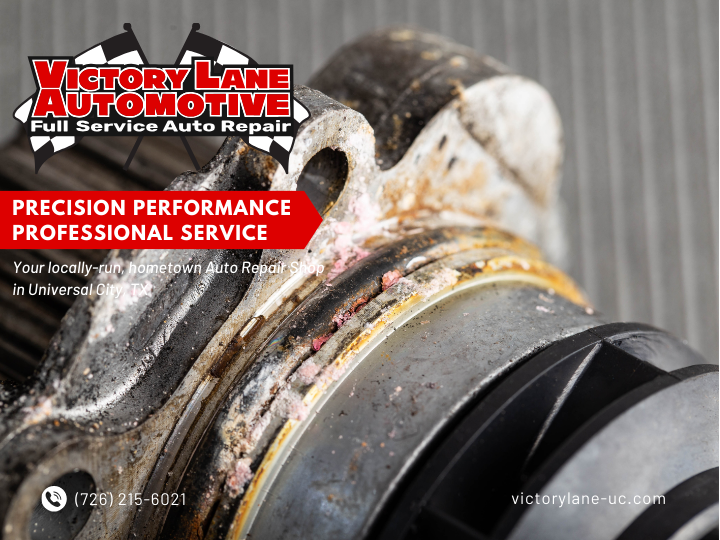
- White, green, or orange crust on radiator surfaces
- Overheating in traffic or while idling
Radiator leaks often become worse in hot regions where the system is exposed to repeated high-temperature cycles.
4. Water Pump Leaks
The water pump is responsible for circulating coolant throughout the engine and radiator. When its internal seal fails or bearing begins to wear out, coolant can leak from the pump housing.
Common signs:
- Coolant dripping near the front-center of the engine
- Grinding or whining noise
- Overheating at idle
- Steam or coolant smell after driving
A leaking water pump is never something to delay. Once the pump fails completely, the engine can overheat very quickly.
5. Cracked Coolant Reservoir
The coolant reservoir, also called the expansion tank, handles thermal expansion as the engine heats and cools. Over time, plastic tanks become brittle and crack.
Common signs:
- Visible cracking in the plastic
- Coolant around or below the tank
- Repeated coolant loss
In hot-weather areas, the constant expansion and contraction cycle can accelerate reservoir failure.
6. Heater Core Leak
The heater core is like a small radiator inside the dash. It uses engine coolant to provide cabin heat. If it leaks, coolant enters the interior environment instead of staying inside the system.
Common signs:
- Sweet smell inside the cabin
- Foggy windows
- Damp passenger-side carpet
- Weak heat output
This type of leak affects both comfort and safety, especially when windows fog up unexpectedly.
7. Thermostat Housing Leak
The thermostat helps regulate coolant flow based on engine temperature. The housing that holds it can crack, warp, or lose gasket sealing over time.
Common signs:
- Coolant around the thermostat area
- Temperature fluctuations
- Overheating after warm-up
These leaks are often mistaken for hose or radiator issues without proper inspection.
8. Intake Manifold Gasket Leak
On some engines, coolant passes through parts of the intake manifold. If the gasket fails, coolant may leak externally or internally.
Common signs:
- Coolant pooling on top of the engine
- Misfires or rough idle
- White smoke from the exhaust
- Gradual coolant loss
Internal intake leaks can quietly create severe engine problems.
9. Head Gasket Failure
A head gasket leak is one of the most serious cooling-system failures. It allows coolant to enter the combustion chamber or engine oil passages.
Common signs:
- Thick white exhaust smoke
- Milky residue in engine oil
- Bubbles in the coolant reservoir
- Constant overheating
- Coolant disappearing with no obvious external leak
This is not a condition to monitor casually. It requires immediate professional diagnosis.
10. Freeze Plug or Core Plug Leaks
Freeze plugs seal casting openings in the engine block. Over time, corrosion can cause them to rust through.
Common signs:
- Coolant dripping from the lower side or back of the engine
- Rust trails
- Unexplained coolant loss
Though not the most common leak source, freeze plug failures can release coolant rapidly.
Early Warning Signs You Should Never Ignore
Coolant leaks rarely appear without warning. The key is recognizing the symptoms early instead of waiting for a full overheating event.
1. A Sweet Smell
Coolant has a very distinct sweet odor. If you smell it around the vehicle or inside the cabin, pay attention.
2. Rising Temperature Gauge
Even slight temperature changes matter. If the engine runs hotter than usual, coolant level or flow may already be compromised.
3. Puddles Under the Vehicle
Coolant often appears green, yellow, orange, pink, or blue depending on the type. It feels slick and usually has a noticeable smell.
4. Weak Heater Performance
If the heater suddenly stops blowing as warm as it should, low coolant may be affecting circulation through the heater core.
5. Steam
Steam from under the hood is never a normal condition. It often means coolant is contacting hot engine components.
6. Coolant Warning Light
Modern vehicles are designed to alert the driver before the situation becomes catastrophic. That warning should never be ignored.
Why Coolant Leaks Are Especially Serious in Universal City and Northeast San Antonio
Cooling system problems are serious anywhere, but in South Texas they become even more urgent because environmental stress is so high.
1. Extreme Heat
High outside temperatures reduce the cooling system’s margin for error. When the air is already hot, the radiator has a harder time releasing heat.
2. Stop-and-Go Traffic
Drivers traveling through Universal City, Live Oak, Selma, Converse, Schertz, and Northeast San Antonio often spend time in traffic where airflow through the radiator is reduced.
3. Daily Commuting
Long drives around Loop 1604, I-35, FM 78, and the Randolph area create repeated heat cycles that wear down hoses, seals, and cooling system plastics.
4. Idling and Heat Soak
Vehicles that sit idling in traffic or parking lots experience severe under-hood heat buildup.
5. Older Vehicle Population
Many drivers keep vehicles longer, which means more cars on the road are reaching the age where coolant components start to fail.
In a hot region, a minor coolant leak can become a major overheating event faster than many people realize.
The Hidden Dangers of Ignoring a Coolant Leak
A lot of drivers think topping off coolant is enough. It is not. Adding coolant may temporarily restore the fluid level, but it does nothing to solve the actual failure.
Ignoring a coolant leak can lead to:
1. Engine Overheating
Once coolant level drops enough, the engine can overheat rapidly.
2. Blown Head Gasket
Excess heat can damage the head gasket, allowing coolant and combustion gases to cross-contaminate.
3. Warped Cylinder Head
Aluminum cylinder heads are especially vulnerable to heat damage.
4. Oil Contamination
If coolant enters the oil, lubrication breaks down and internal wear increases dramatically.
5. Heater Failure
Low coolant prevents proper heater operation.
6. Sudden Breakdown
Vehicles often fail at the worst times — in traffic, in high heat, or while traveling at speed.
7. Complete Engine Failure
Severe overheating can seize the engine or destroy major internal components.
A coolant leak is not just a fluid problem. It is a full-system risk.
Why Adding Coolant Does NOT Fix the Problem
A properly functioning cooling system is sealed. If coolant is going missing, there is a leak or an internal problem. Adding coolant only replaces what is being lost.
It does not fix:
- Cracked hoses
- Failing water pumps
- Leaking radiators
- Bad radiator caps
- Reservoir cracks
- Thermostat housing leaks
- Intake gasket issues
- Head gasket failures
At best, topping off coolant buys a little time. At worst, it gives the driver false confidence while damage continues.
How Professional Technicians Diagnose Coolant Leaks
A good shop does not guess at coolant leaks. It follows a process designed to identify the true source.
1. Cooling System Pressure Test
The system is pressurized to help reveal leaks that may not show up when the engine is cold.
2. UV Dye Testing
A dye may be added to the coolant so tiny leaks can be traced under ultraviolet light.
3. Block Test
This checks for combustion gases in the cooling system, which helps identify possible head gasket failure.
4. Visual Inspection
Technicians inspect hoses, clamps, the radiator, water pump, reservoir, thermostat housing, heater connections, and surrounding components.
5. Flow and Temperature Evaluation
A technician can assess whether coolant is circulating correctly and whether certain areas are running hotter than they should.
This matters because replacing the wrong part wastes money and leaves the real problem unresolved.
When You Should Stop Driving Immediately
There are times when continuing to drive is a serious mistake. Shut the engine off and stop driving if:
- Steam is coming from under the hood
- The temperature gauge spikes into the hot zone
- The coolant warning light appears with rising temperature
- The engine begins running rough while overheating
- A very strong coolant smell is present and temperature is climbing
Driving an overheating engine for even a short time can cause permanent damage.
Long-Term Cooling System Care
The best way to avoid coolant-related failures is not to wait until something breaks. Preventive care matters.
1. Replace Coolant at Proper Intervals
Old coolant loses its protective additives and becomes more corrosive.
2. Inspect Hoses and Components Regularly
Rubber and plastic parts do not last forever. Early inspection helps catch weak spots.
3. Address Small Leaks Early
A small seep is still a failure point. It almost always gets worse.
4. Use the Correct Coolant
Different systems require different formulations. The wrong coolant can create chemical and material compatibility problems.
5. Watch the Temperature Gauge
Many drivers never look at it until something is already wrong. Monitoring it helps catch issues early.
Cooling system maintenance is not just about avoiding inconvenience. It is about protecting the engine itself.
Local Driving Conditions That Stress Cooling Systems
Drivers in Universal City and the surrounding area place heavy demand on their cooling systems through:
- Hot summer temperatures
- Commutes on I-35 and Loop 1604
- Traffic around FM 78 and Kitty Hawk Road
- Frequent idling
- Long suburban driving patterns
- Air conditioning use during high heat
- Older vehicles exposed to repeated heat cycles
These conditions make the cooling system work hard nearly every day of the year.
When to Schedule a Cooling System Inspection
Schedule an inspection if you notice:
- A coolant puddle
- A sweet smell
- A low coolant warning
- A rising temperature gauge
- Weak heater performance
- Steam
- Repeated need to add coolant
Waiting usually makes the repair bigger, not smaller.
Professional Coolant Leak Repair in Universal City, TX
When you need expert cooling-system diagnosis and repair, Victory Lane Automotive provides the kind of clear, precise, customer-first service drivers need when engine protection is on the line.
Victory Lane Automotive
264 Kitty Hawk Rd
Universal City, TX 78148
Phone:
(726) 222-1264
Website:
https://www.victorylane-uc.com/
Proudly serving drivers in:
- Universal City
- Schertz
- Cibolo
- Live Oak
- Selma
- Converse
- Randolph area
- Northeast San Antonio
Protecting the cooling system means protecting the engine, the reliability of the vehicle, and the long-term cost of ownership. A coolant leak should never be ignored.
You can watch the video