Why Is My Steering Wheel Shaking at Highway Speeds
Why Is My Steering Wheel Shaking at Highway Speeds
Why Is My Steering Wheel Shaking at Highway Speeds?
You're driving along I-35 or Loop 1604, heading to work, running errands, or traveling across the San Antonio area. Everything seems normal until your vehicle reaches highway speed. Suddenly, you notice something unusual. Your steering wheel begins to shake.
At 40 mph, your vehicle feels smooth. Around 55 mph, you notice a slight vibration. By the time you reach 65 or 70 mph, the shaking becomes difficult to ignore.
You slow down, and the vibration seems to disappear.
Now you're wondering what's wrong. Do your tires need balancing? Is your vehicle out of alignment? Could something be wearing out in the steering or suspension system? More importantly, is your vehicle still safe to drive?
A shaking steering wheel at highway speeds is a common automotive concern, but it shouldn't be ignored. Sometimes the cause is relatively straightforward, such as an unbalanced tire. Other times, the vibration can indicate damaged wheels, uneven tire wear, worn suspension components, or other mechanical problems.
The challenge is that several different problems can create similar symptoms.
A shaking steering wheel is a symptom, not a diagnosis.
Understanding the possible causes, recognizing warning signs, and knowing when professional attention is needed can help you avoid unnecessary repairs while protecting your vehicle's safety, reliability, and long-term value.
Why Does My Steering Wheel Shake When I Drive Faster?
Your vehicle's tires, wheels, steering system, and suspension work together to provide a smooth, stable ride.
Your tires maintain contact with the road. Your wheels allow those tires to rotate. Your suspension controls movement over uneven pavement, while your steering system allows you to guide the vehicle.
When everything operates properly, your vehicle should feel stable during normal highway driving.
However, even a relatively small irregularity can create noticeable vibration.
As your vehicle accelerates, its wheels rotate faster. If a tire is unbalanced, a wheel is bent, or another component isn't operating smoothly, the resulting vibration may become more noticeable.
That's why your vehicle might feel perfectly normal while driving around Universal City or Live Oak but begin shaking when traveling along I-35, Loop 1604, or other highways throughout Northeast San Antonio.
The circumstances surrounding the vibration provide important clues.
For example, steering wheel shaking that occurs primarily between 55 and 70 mph often suggests a tire or wheel-related concern.
Vibration that occurs mainly when braking may involve the braking system.
Shaking that becomes worse during acceleration may indicate a drivetrain problem.
However, these symptoms can overlap.
The important thing is identifying the actual cause rather than assuming that a particular repair will solve the problem.
1. Unbalanced Tires: One of the Most Common Causes
One of the first things a technician may investigate when your steering wheel shakes at highway speeds is tire and wheel balance.
Every tire and wheel assembly has slight variations in weight distribution.
When tires are installed, technicians use balancing equipment to measure these differences and install small corrective weights.
These weights help the tire and wheel assembly rotate smoothly.
When an assembly becomes unbalanced, the uneven weight distribution creates forces as the wheel rotates.
At slower speeds, the vibration may be barely noticeable.
As speed increases, the vibration can become strong enough to travel through the steering and suspension system and into the steering wheel.
What Causes Tires to Become Unbalanced?
Several conditions can affect tire balance over time.
Normal tire wear can change weight distribution.
Balancing weights may become dislodged.
Pothole impacts can damage tires and wheels.
Improper balancing during installation can also cause vibration.
Sometimes a tire develops an irregularity that creates vibration even when the assembly is properly balanced.
This is why simply adding wheel weights isn't always the answer.
How Do You Know if Your Tires Are Out of Balance?
A common symptom is vibration that becomes noticeable within a particular speed range.
You might experience shaking around 55 mph that becomes stronger at 65 mph.
When you slow down, the vibration may decrease.
Front-wheel imbalance often creates vibration through the steering wheel, while rear-wheel imbalance may be more noticeable through the seat or floor.
However, these are clues rather than definitive answers.
Will Tire Balancing Fix the Shaking?
If imbalance is responsible, properly balancing the affected assembly may correct the problem.
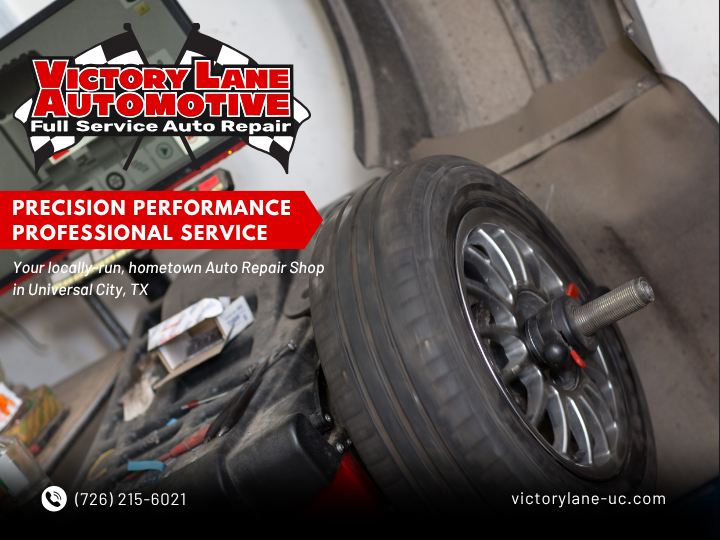
A technician uses specialized balancing equipment to identify uneven weight distribution and determine where corrective weights should be installed.
In some situations, road-force balancing can provide additional information by measuring how the tire behaves under a simulated load.
However, balancing won't necessarily correct a damaged tire, bent wheel, or worn steering component.
The correct approach is to inspect the entire assembly and confirm the cause.
2. Uneven Tire Wear Can Cause Steering Wheel Vibration
Your tires are the only components of your vehicle that maintain direct contact with the road.
Their condition influences steering, braking, handling, and ride comfort.
When tires wear unevenly, they may no longer roll smoothly.
This can create vibration, additional road noise, and changes in how your vehicle feels at highway speeds.
What Causes Uneven Tire Wear?
Improper tire inflation, incorrect wheel alignment, worn suspension components, and insufficient tire rotation can all contribute to unusual tread wear.
For example, incorrect tire pressure can change how the tread contacts the pavement.
Improper alignment may cause excessive wear along one side of a tire.
Worn suspension components can allow unwanted movement that affects tire contact with the road.
What Is Tire Cupping?
Tire cupping occurs when alternating high and low spots develop around the tread.
Rather than maintaining an even rolling surface, the tire develops an irregular pattern.
As the tire rotates, this can create vibration or a humming sound that becomes more noticeable at higher speeds.
Worn shocks or struts can contribute to cupping because they may no longer control suspension movement effectively.
However, other conditions may also be involved.
Replacing a cupped tire without determining why the wear developed may allow the same problem to return.
Should Unevenly Worn Tires Be Replaced?
That depends on the type and severity of the wear.
Some tires may remain safe to use, while others may develop conditions that compromise traction or structural integrity.
A professional inspection can help determine whether the tire needs replacement and whether an underlying mechanical problem needs correction.
The objective should be to preserve safe, usable tire life while addressing the actual cause.
3. Bent Wheels and Pothole Damage
Drivers throughout the San Antonio area encounter road construction, potholes, uneven pavement, and other road hazards.
A single impact can damage a tire, bend a wheel, or affect steering and suspension components.
Sometimes the damage is obvious.
Other times, a wheel may appear normal while still being bent enough to create vibration.
How Does a Bent Wheel Cause Shaking?
Your wheels are designed to rotate around a consistent centerline.
When a wheel becomes bent, part of it may move outside its intended path as it rotates.
That irregular movement can create vibration through the steering and suspension system.
At lower speeds, the vibration may be difficult to notice.
At highway speeds, it can become considerably stronger.
You may also notice that the shaking began immediately after hitting a pothole or curb.
Can a Bent Wheel Be Repaired?
Some minor wheel damage may be repairable by a qualified specialist.
However, cracked wheels, severe bends, or damage affecting structural integrity may require replacement.
The decision depends on the wheel's construction, the location of the damage, and whether a safe repair is possible.
A wheel that cannot safely support the tire or maintain a proper seal shouldn't remain in service.
A professional inspection helps determine the appropriate solution.
4. Does My Steering Wheel Shake Because I Need an Alignment?
Many drivers assume that steering wheel vibration automatically means their vehicle needs a wheel alignment.
However, wheel alignment and tire balancing address different problems.
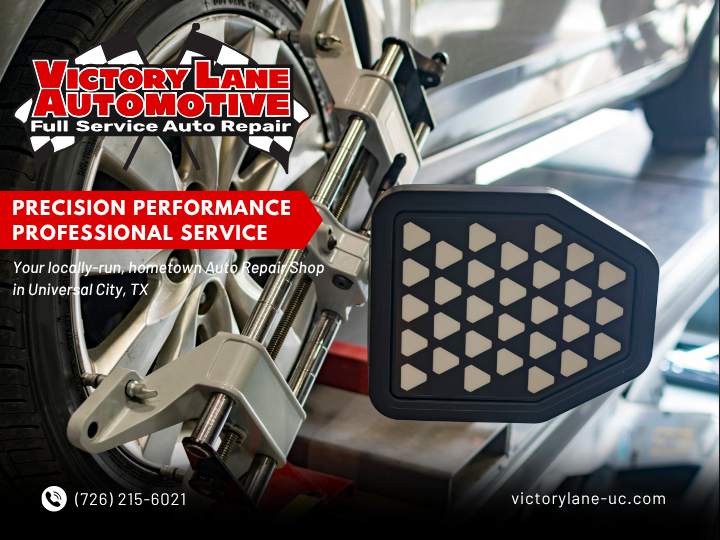
Tire balancing corrects uneven weight distribution in a rotating tire and wheel assembly. Wheel alignment corrects the angles at which the wheels are positioned.
When your wheels are properly aligned, they're positioned according to the manufacturer's specifications.
These angles help maintain predictable handling and promote even tire wear.
What Are the Signs of Poor Alignment?
Common symptoms include a vehicle pulling to one side, a steering wheel that sits off-center while driving straight, or abnormal tire wear.
Alignment problems can develop after hitting potholes, curbs, or other road hazards.
Worn steering and suspension components may also affect wheel positioning.
Will an Alignment Stop Steering Wheel Shaking?
Not necessarily.
Incorrect wheel alignment generally doesn't create vibration that occurs only at a specific highway speed.
However, alignment problems can contribute to uneven tire wear, and that irregular wear may eventually produce vibration.
For example, if your steering wheel shakes at 65 mph because a tire is unbalanced, performing an alignment may not correct the problem.
Similarly, balancing a tire won't correct improper wheel angles.
The correct service should be determined by identifying the actual cause.
5. Worn Steering and Suspension Components
Your vehicle's steering and suspension systems play an important role in maintaining control, stability, and predictable handling.
These systems include multiple components that allow the wheels to move appropriately while maintaining their intended position.
As parts wear, excessive movement can develop.
Depending on the condition, that movement may contribute to vibration, loose steering, unusual noises, or irregular tire wear.
Worn Tie Rods
Tie rods connect your steering system to the wheels.
When they become worn, excessive looseness may develop.
Symptoms can include wandering, loose steering response, clunking noises, and uneven tire wear.
A severely worn tie rod can become a serious safety concern because failure may result in loss of steering control.
Worn Ball Joints
Ball joints allow suspension components to move as your wheels turn and travel over bumps.
When these joints wear excessively, they may develop looseness.
This can affect handling and contribute to unusual tire wear or clunking sounds.
A severely worn ball joint can compromise vehicle safety.
Control Arm Bushings
Control arm bushings help absorb vibration while controlling suspension movement.
As these bushings deteriorate, unwanted movement may develop.
This can affect handling and contribute to vibration under certain driving conditions.
Worn Shocks and Struts
Shocks and struts help control suspension movement and maintain tire contact with the road.
When they wear out, your vehicle may bounce excessively, feel unstable over bumps, or develop irregular tire wear.
Worn shocks and struts don't always cause a direct highway-speed steering wheel vibration, but they can contribute to tire conditions that do.
A thorough inspection can determine whether these components are worn and whether they're contributing to the problem.
6. Why Does My Steering Wheel Shake When I Brake?
If your steering wheel shakes primarily when you apply the brakes, the cause may involve the braking system.
A common source of braking vibration is variation in brake rotor thickness or uneven friction-material deposits on the rotor surface.
As the rotor rotates, these irregularities can create changes in braking force.
Those fluctuations may be felt through the steering wheel or brake pedal.
Many drivers describe this condition as warped brake rotors, although the actual problem isn't always a physically warped rotor.
What Other Brake Problems Cause Vibration?
Sticking brake calipers, worn brake hardware, improperly installed components, and other mechanical conditions may also contribute.
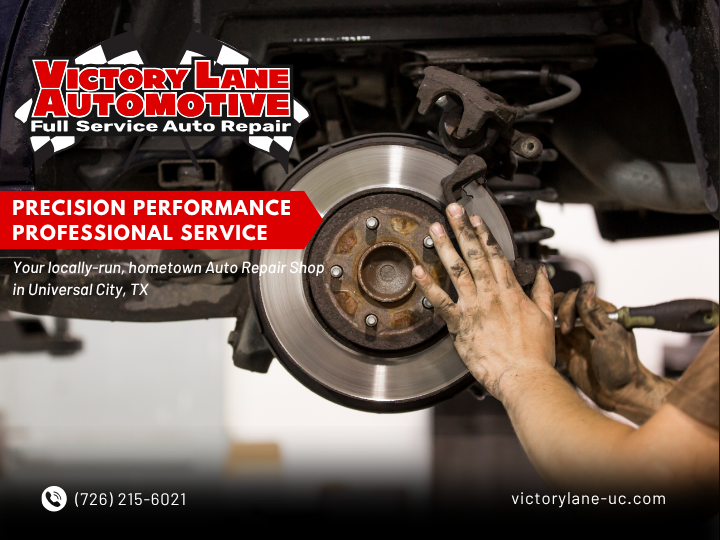
A proper brake inspection may include measuring rotor condition, checking brake pads, inspecting calipers, and evaluating related hardware.
Because your braking system is essential to stopping safely, unusual vibration during braking deserves prompt attention.
However, the repair should address the actual cause rather than automatically replacing components without confirmation.
7. Can Worn Wheel Bearings Cause Steering Wheel Vibration?
Wheel bearings allow your wheels to rotate smoothly while supporting the vehicle's weight.
When a bearing begins wearing out, it may produce humming, growling, or rumbling noises.
These sounds often become more noticeable as vehicle speed increases.
In some cases, worn wheel bearings may also create vibration.
How Can You Recognize a Wheel Bearing Problem?
A common symptom is humming or rumbling that changes with vehicle speed.
Sometimes the sound becomes louder or quieter during turns because the load on the bearing changes.
However, certain tire problems can produce similar noises.
A technician may need to inspect the bearing and related components to determine whether excessive wear or looseness is present.
Severely damaged wheel bearings can become a significant safety concern.
8. Could the Problem Be an Axle or Drivetrain Component?
Not every highway-speed vibration comes from the tires, wheels, or steering system.
Certain drivetrain problems can create shaking during acceleration or highway driving.
Your vehicle's axles and related components transfer power from the engine and transmission to the wheels.
When a component becomes worn or damaged, vibration may develop under certain operating conditions.
For example, some worn inner constant-velocity joints can produce vibration during acceleration.
Other drivetrain components may also create speed-related shaking.
What Symptoms Suggest a Drivetrain Problem?
Pay attention to when the vibration occurs.
Does it become stronger when accelerating?
Does it decrease when you release the accelerator?
Does the vehicle shake while maintaining a steady speed?
These details can help a technician determine which systems deserve attention.
However, several mechanical problems can produce similar symptoms, so accurate diagnosis remains important.
Why Does My Steering Wheel Shake at 60 MPH but Stop at 70 MPH?
One of the most confusing aspects of steering wheel vibration is that it may occur only within a particular speed range.
You might notice shaking at 55 mph, experience stronger vibration at 60 or 65 mph, and then feel less vibration at 70 mph.
It can seem as though the problem has disappeared.
However, the underlying condition may still exist.
Rotating components create vibrations at different frequencies depending on speed.
At certain speeds, those vibrations may interact with the steering or suspension system in a way that makes them more noticeable.
At other speeds, the vibration may become less pronounced.
This can explain why tire imbalance and certain other mechanical concerns produce shaking within a relatively narrow speed range.
The fact that your vehicle feels smoother at another speed doesn't mean the problem has corrected itself.
Is It Safe to Drive With a Shaking Steering Wheel?
The seriousness of the problem depends on the underlying cause.
A minor tire imbalance may initially be more of a comfort concern.
However, damaged tires, cracked wheels, severely worn steering components, and other mechanical conditions can create safety risks.
Unfortunately, the amount of shaking doesn't always reveal how serious the underlying problem is.
When Should You Stop Driving?
Find a safe location to pull over if you experience sudden severe vibration, difficulty controlling the vehicle, loud mechanical noises, unusual wheel movement, or visible tire damage.
A tire with a bulge or evidence of structural failure shouldn't be driven on.
If the vehicle feels unstable or unsafe, arrange for towing instead of continuing your trip.
For less severe vibrations that develop gradually, schedule an inspection before another extended highway drive.
The safest approach is to identify the problem rather than assume it's harmless.
Can Texas Heat Affect My Tires and Cause Steering Wheel Vibration?
Texas drivers know how demanding summer temperatures can be on a vehicle.
During the warmer months, pavement temperatures can rise considerably, especially during extended highway driving.
Heat itself doesn't normally cause a properly maintained steering wheel to shake. However, high temperatures can place additional stress on tires that are improperly inflated, overloaded, damaged, or already deteriorating.
Why Tire Pressure Matters During Hot Weather
Tire pressure changes as temperatures change.
When tires heat up during driving, their internal pressure naturally increases. This is expected and is one reason tire pressure should be checked when the tires are cold.
The correct cold inflation pressure is generally listed on the manufacturer's tire information placard inside the driver's door opening.
Driving on underinflated tires can increase heat buildup and place additional stress on tire components.
Over time, excessive heat and stress may contribute to tire deterioration and failure.
Can Heat Damage Cause Highway-Speed Shaking?
A tire that develops internal damage or an irregular shape may create vibration as it rotates.
In some cases, the vibration may be noticeable before obvious external damage appears.
However, shaking shouldn't automatically be blamed on the Texas heat.
A proper inspection should evaluate tire pressure, tread condition, structural integrity, wheel balance, and related components.
This is especially important for drivers regularly traveling along I-35, Loop 1604, and other busy highways around Universal City and San Antonio.
A tire problem discovered during an inspection may be considerably easier to address than an unexpected tire failure during highway driving.
Can I Diagnose a Shaking Steering Wheel Myself?
There are several simple observations you can make before scheduling an appointment.
Start by checking your tire pressures when the tires are cold.
Use the manufacturer's recommended pressures listed on the tire information placard, usually located inside the driver's door opening.
Inspect the tires for visible damage, unusual tread wear, or sidewall bulges.
Think about when the vibration first appeared.
Did it begin after hitting a pothole?
Was it noticeable after installing new tires?
Does the shaking happen only when braking?
Does the vibration become worse when accelerating?
These observations can help a technician narrow down the possible causes.
However, some problems can't be identified through a basic visual inspection.
Internal tire damage, subtle wheel deformation, worn suspension components, and certain drivetrain concerns may require professional testing.
DIY Repair Versus Professional Diagnosis
It can be tempting to begin replacing the parts most commonly associated with vibration.
However, that approach can become expensive.
Replacing tires won't correct a worn steering component.
Performing an alignment won't necessarily correct an unbalanced wheel.
Replacing brake rotors won't solve a vibration caused by a bent wheel.
Professional diagnosis helps distinguish between the symptom and its cause.
It can also reduce the likelihood of paying for repairs that don't solve the problem.
There is another important consideration: safety.
Working beneath a vehicle, removing wheels, or evaluating suspension components requires appropriate equipment and procedures.
Improperly supporting a vehicle can cause serious injury.
The objective isn't simply to perform a repair.
It's to identify the actual problem and perform the correct repair.
What Happens During a Professional Steering Wheel Vibration Inspection?
A proper inspection begins with understanding the symptoms.
A technician or service advisor may ask when the vibration occurs, how long you've noticed it, and whether your vehicle recently experienced a road impact.
If the vehicle is safe to operate, a road test may help reproduce the concern.
The technician may then inspect tire condition, evaluate wheel balance, examine tread wear patterns, and check for wheel damage.
Depending on the findings, additional testing may involve steering components, suspension parts, wheel bearings, brakes, or drivetrain components.
The objective is to identify the source of the vibration rather than replace parts based on assumptions.
Why Digital Vehicle Inspections Are Valuable
Digital vehicle inspections can help customers understand their vehicles through photographs, videos, and documented findings.
For example, images of uneven tire wear can help explain why additional testing is recommended.
Photographs of damaged steering or suspension components can also provide useful information.
However, photographs alone don't always establish the cause of vibration.
Mechanical measurements, physical testing, and road testing may also be necessary.
A valuable inspection combines accurate diagnosis with clear communication.
Customers deserve to understand what requires immediate attention, what can be addressed through preventive maintenance, and what can be monitored.
That information helps them make informed decisions about their vehicles.
How Much Does It Cost to Fix a Shaking Steering Wheel?
There isn't one standard repair cost because there isn't one standard cause.
The solution may involve tire balancing, replacing a damaged tire, correcting wheel damage, or repairing worn steering and suspension components.
Vehicle design, parts availability, labor requirements, and the severity of the problem all influence the repair.
However, the most important consideration isn't simply finding the lowest initial price.
It's making sure the recommended service addresses the actual cause.
Why Accurate Diagnosis Can Save Money
Imagine your steering wheel begins shaking during your daily commute.
You assume the vehicle needs an alignment and pay to have one performed.
Unfortunately, the vibration continues because the actual cause is an unbalanced tire.
You've now paid for a service that didn't correct the concern.
Another driver might purchase new tires when the real problem is a bent wheel.
These situations demonstrate why accurate diagnosis matters.
A low-cost repair that doesn't solve the issue isn't necessarily a good value.
Likewise, an expensive repair shouldn't be recommended without evidence that it's necessary.
The best value comes from understanding the condition and selecting the appropriate repair.
Can Regular Maintenance Help Prevent Steering Wheel Vibration?
Not every vibration can be prevented.
Pothole impacts, unexpected tire damage, and mechanical failures can happen even when a vehicle is properly maintained.
However, regular maintenance can help identify developing concerns.
Tire maintenance is particularly important.
Proper inflation supports consistent tire contact with the pavement.
Regular tire rotation can promote more even tread wear.
Steering and suspension inspections can identify components that are beginning to wear.
A useful approach is to evaluate tire condition and rotation needs during regular 5,000-mile maintenance visits, while following applicable manufacturer recommendations.
Wheel balancing should be performed when needed, including when tires are installed or vibration develops.
Wheel alignment should be evaluated when symptoms, abnormal tire wear, or road impacts suggest a problem.
Why Preventive Maintenance Protects Your Vehicle's Long-Term Value
Vehicle maintenance should accomplish more than simply preventing breakdowns.
Your vehicle represents a significant investment.
Maintaining tires, steering components, suspension systems, and related parts supports safe, dependable transportation.
Identifying uneven tire wear early provides an opportunity to investigate the cause before additional damage develops.
Finding worn steering or suspension components before they become severe can also reduce the risk of unexpected repair needs.
The objective isn't to replace parts simply because they've reached a certain age.
It's to understand their condition and make decisions that support long-term vehicle ownership.
Why Ignoring a Shaking Steering Wheel Can Become Expensive
It's easy to become accustomed to small changes in how your vehicle drives.
A slight vibration may initially seem insignificant.
You may even adjust your driving speed to avoid the range where the shaking occurs.
However, avoiding the symptom doesn't correct the underlying problem.
Uneven tire wear may continue.
A damaged wheel may create additional problems.
Certain worn steering and suspension components may deteriorate further.
Not every vibration will develop into a major mechanical failure, but allowing an unidentified condition to continue creates unnecessary uncertainty.
The better approach is to investigate the concern when you first notice it.
An inspection may reveal something straightforward.
If the condition is more significant, identifying it early allows you to make an informed decision before it becomes more disruptive.
Steering Wheel Shaking in Universal City, TX? Victory Lane Automotive Can Help
Drivers throughout Universal City and Northeast San Antonio depend on their vehicles for commuting, work, family responsibilities, school activities, and everyday transportation.
Whether you're traveling along I-35, Loop 1604, Pat Booker Road, or local roads through Schertz, Live Oak, Selma, Converse, Cibolo, and surrounding communities, your vehicle should provide smooth and predictable handling.
For military families and civilian employees traveling to and from Joint Base San Antonio-Randolph, dependable transportation is particularly important.
Road construction, potholes, high temperatures, and everyday driving can all contribute to tire, wheel, steering, and suspension concerns.
When your steering wheel begins shaking at highway speeds, identifying the actual cause is the first step toward correcting the problem.
At Victory Lane Automotive, located at 264 Kitty Hawk Road in Universal City, the focus is on helping customers maintain safe and dependable vehicles through professional automotive maintenance and repair.
Established in June 2000, Victory Lane Automotive is a family-owned automotive repair business offering services for domestic, Asian, and European vehicles.
The shop's ASE-certified technicians provide automotive diagnostics, brake repairs, wheel alignments, steering and suspension repairs, and routine maintenance. Victory Lane Automotive also services cars, trucks, SUVs, and light-duty diesel vehicles.
The business emphasizes clear communication, accurate diagnosis, and helping customers understand their vehicle's needs.
Those principles are particularly important when investigating steering wheel vibration because several different problems can produce similar symptoms.
If a tire and wheel assembly is unbalanced, balancing may correct the problem.
If a wheel has been damaged, the appropriate solution may be different.
If a steering or suspension component has developed excessive wear, customers deserve to understand which component is affected, why the condition matters, and which repairs are necessary.
Victory Lane Automotive also offers a 3-year/36,000-mile warranty on qualifying parts and labor, along with customer conveniences that include shuttle service and available transportation options.
However, the most important part of an automotive repair experience should always be identifying what the vehicle actually needs.
A customer shouldn't be told to purchase new tires simply because the steering wheel shakes.
An alignment shouldn't be recommended without evidence that the wheel angles need correction.
Suspension components shouldn't be replaced unless their condition and the reason for repair have been established.
The purpose of a thorough inspection is to distinguish between immediate safety concerns, necessary repairs, preventive maintenance, and conditions that can be monitored.
This helps customers make informed decisions and plan for the continued safety and reliability of their vehicles.
When a shop genuinely has its customers' best interests at heart, its responsibility is to explain the condition, recommend the appropriate solution, and help the customer get the greatest possible value from the vehicle they already own.
Schedule a Steering Wheel Vibration Inspection in Universal City, TX
Your steering wheel shouldn't shake simply because you're traveling at highway speeds.
Whether the vibration begins at 55 mph, becomes stronger at 65 mph, or occurs mainly when braking, there's a reason for the change in how your vehicle drives.
The correct solution begins with identifying that reason.
If you live or work in Universal City, Schertz, Live Oak, Selma, Converse, Cibolo, Garden Ridge, or the surrounding Northeast San Antonio communities, Victory Lane Automotive can help evaluate the concern.
Victory Lane Automotive
264 Kitty Hawk Rd Universal City, TX 78148
Phone: (726) 222-1264
Website: https://www.victorylane-uc.com/
Contact Victory Lane Automotive to schedule an inspection and find out what's causing your steering wheel to shake.
Because the goal of automotive repair should never be to replace parts until a problem disappears.
It should be to identify the cause, explain the findings, and recommend repairs that are genuinely in the customer's best interest.
You can watch the video