Catalytic Converter Replacement Cost Near Me
Catalytic Converter Replacement Cost Near Me
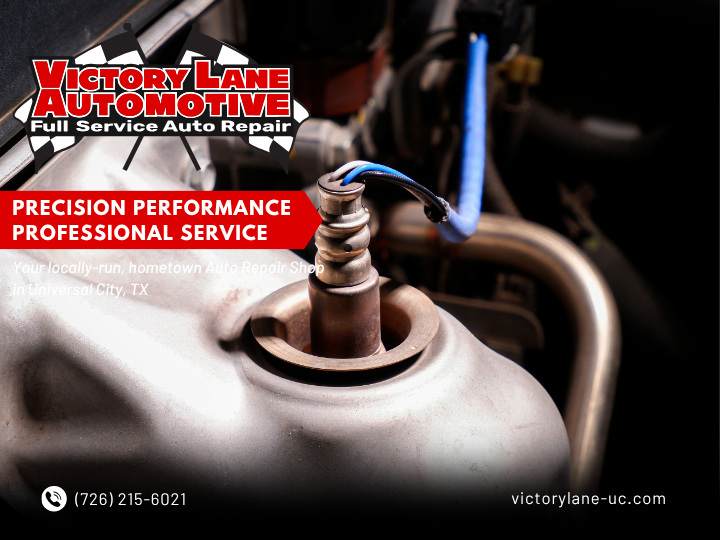
Catalytic Converter Replacement Cost Near Universal City, TX: Why Doing the Repair Right the First Time Can Cost Less
When drivers search for catalytic converter replacement cost near Universal City, TX, they are usually trying to answer an immediate question: What will it take to repair the vehicle and get it back on the road?
The answer depends on much more than the price of the catalytic converter.
Before replacing this important emissions component, a technician should determine whether the converter has actually failed, what caused the failure, whether another engine or exhaust-system problem must be corrected first, and which replacement converter is right for the specific vehicle.
Skipping those steps may make the first estimate appear lower, but it can make the complete repair much more expensive.
A replacement converter can be damaged because an engine misfire was never corrected. A check engine light can return because the original problem was an oxygen sensor, exhaust leak, fuel-control concern, or damaged wiring. A converter that physically fits the exhaust system may still be wrong for the vehicle’s engine or onboard emissions-monitoring system.
The customer may then face:
- Another diagnostic appointment
- Additional replacement parts
- A second catalytic converter
- A returning check engine light
- Exhaust leaks
- Reduced engine performance
- Emissions-testing problems
- Additional time without the vehicle
- Warranty complications
- A repair that must be performed again
That is why the most important question is not simply:
“How much does catalytic converter replacement cost?”
The better question is:
“What will it take to identify the real problem, correct the cause, install the proper converter, and protect the customer from paying for the same repair again?”
A professional auto repair shop that truly has the customer’s best interest at heart focuses on solving the complete problem correctly the first time.
What Does a Catalytic Converter Do?
The catalytic converter is part of the vehicle’s exhaust and emissions-control system. It reduces harmful compounds in the exhaust before those gases leave the tailpipe. The Environmental Protection Agency identifies catalytic converters as major emissions-control components used on most passenger vehicles and light-duty trucks produced since the 1970s.
Inside the converter is a honeycomb-like structure coated with materials that support chemical reactions. As hot exhaust gases pass through the converter, harmful compounds are changed into less harmful emissions.
For the converter to operate correctly, several other vehicle systems must also work properly:
- The ignition system
- The fuel-delivery system
- The air-intake system
- The oxygen sensors
- The cooling system
- The exhaust system
- The engine computer
- Internal engine components
The converter depends on the engine burning fuel correctly.
When excessive unburned fuel enters the exhaust, the converter can overheat. When engine oil or coolant enters the combustion chamber, the converter can become contaminated. When an exhaust leak affects oxygen-sensor readings, the engine computer may set a converter-related fault code even when the converter was not the original cause.
This is why catalytic converter replacement should not be treated as an isolated exhaust repair.
The converter may be damaged, but another condition may have caused that damage.
Why Catalytic Converter Replacement Cost Varies
There is no single catalytic converter replacement cost that applies to every vehicle in Universal City.
Some vehicles have one converter. Others have two, three, or more. A converter may be installed underneath the vehicle as part of an exhaust pipe, positioned close to the engine, or incorporated into the exhaust manifold.
The scope of the repair may depend on:
- Vehicle year, make, and model
- Engine size and configuration
- Number of catalytic converters
- Location of the failed converter
- Original-equipment or aftermarket availability
- Vehicle emissions specifications
- Condition of the exhaust pipes
- Corroded or damaged mounting hardware
- Oxygen-sensor condition
- Damaged sensor wiring
- Exhaust leaks
- Previous exhaust repairs
- Engine-performance problems
- Catalytic converter theft
- Quality of the replacement component
Two estimates that appear to describe the same catalytic converter replacement may represent very different repairs.
One estimate may include only the converter and basic installation. Another may include:
- Professional diagnosis
- Root-cause testing
- The correct replacement converter
- New gaskets and mounting hardware
- Oxygen-sensor service
- Exhaust-pipe repair
- Exhaust-system alignment
- Leak testing
- Computer-system evaluation
- Road testing
- Post-repair verification
The lower initial estimate is not necessarily the better value. It may simply exclude steps that will still be required later.
Quick Tip: Ask for a written explanation of what the estimate includes. Find out whether diagnosis, oxygen sensors, gaskets, mounting hardware, pipe repairs, leak testing, and post-repair verification are included.
A Catalytic Converter Code Is Not a Complete Diagnosis
Many catalytic converter concerns begin when the check engine light turns on.
A technician connects a scan tool and retrieves a code indicating that catalytic efficiency is below the level expected by the vehicle’s computer.
That code matters, but it does not automatically prove that the converter must be replaced.
A diagnostic trouble code reports what the computer has detected. It gives the technician a direction for testing, but it does not always identify the failed part.
The engine computer commonly evaluates converter operation by comparing information from oxygen sensors positioned before and after the converter.
When those sensor patterns do not follow what the computer expects, it may set a converter-efficiency code.
However, the readings can also be affected by:
- A weak oxygen sensor
- A contaminated oxygen sensor
- Damaged sensor wiring
- A small exhaust leak
- An intermittent engine misfire
- An incorrect fuel mixture
- A leaking fuel injector
- Improper fuel pressure
- A vacuum leak
- An air-intake problem
- Oil entering the combustion chamber
- Coolant entering the engine
- Incorrect engine operating temperature
- Internal engine wear
- An incorrect previous replacement converter
Replacing the converter solely because a fault code includes the word “catalyst” is part replacement, not complete diagnosis.
The converter may genuinely be failing, but professional testing should confirm the failure and identify anything that could damage the replacement.
Why Catalytic Converters Fail
Catalytic converters are designed to operate at high temperatures. Excessive heat, however, can melt or destroy the internal structure.
One of the most common causes of converter damage is an engine misfire.
A misfire occurs when fuel does not burn correctly inside one or more engine cylinders. Unburned fuel can travel into the exhaust and ignite inside the catalytic converter.
That secondary burning can create temperatures far beyond normal operating conditions. EPA technical guidance explains that an overly rich fuel mixture, including a condition caused by an ignition misfire, can rapidly raise converter temperature and damage its internal core.
Over time, the converter’s internal structure may:
- Melt
- Crack
- Collapse
- Break apart
- Become restricted
- Stop processing exhaust effectively
Misfires may result from:
- Worn spark plugs
- Weak ignition coils
- Damaged ignition wiring
- Fuel-injector problems
- Vacuum leaks
- Compression loss
- Engine-timing concerns
- Internal engine damage
An overly rich fuel mixture can create similar damage. When the engine receives more fuel than it can burn, the converter may be forced to process the excess.
Other possible causes of catalytic converter failure include:
- Excessive oil consumption
- Coolant entering the engine
- Leaking fuel injectors
- Faulty oxygen sensors
- Airflow-sensor problems
- Exhaust leaks
- Road impact
- Broken exhaust mounts
- Internal converter deterioration
- Incorrect installation
- An improper replacement component
- Catalytic converter theft
Finding the cause matters because a new converter installed behind an unhealthy engine may quickly suffer the same damage as the original.
Quick Tip: A flashing check engine light often indicates an active misfire. Continuing to drive can send unburned fuel into the converter and cause severe overheating.
The Converter May Be the Result, Not the Cause
This is one of the most important principles for vehicle owners to understand.
The catalytic converter may be the component that eventually causes the warning light to appear, but another problem may have started the failure months earlier.
Consider an ignition coil that creates an occasional misfire.
The vehicle may appear to run normally most of the time. The driver may notice only a slight hesitation, or perhaps no obvious symptom at all.
Each misfire can send a small amount of unburned fuel into the exhaust. The converter repeatedly becomes hotter than normal.
Eventually, it loses its ability to process exhaust gases effectively, and the engine computer sets a catalytic-efficiency code.
Replacing only the converter addresses the final result.
Replacing the converter and correcting the ignition problem addresses both the cause and the result.
The same pattern can occur with:
- Leaking fuel injectors
- Worn spark plugs
- Incorrect fuel pressure
- Air-intake leaks
- Airflow-sensor failures
- Oxygen-sensor problems
- Oil consumption
- Coolant consumption
- Exhaust leaks
- Engine-temperature problems
- Internal engine wear
A customer-first repair process does not stop after finding a damaged converter. It looks for the reason the converter became damaged.
How Replacing the Wrong Part Can Cost More
The most expensive catalytic converter repair is often the one that must be performed twice.
Imagine that a vehicle has a catalytic-efficiency code. The converter is replaced without checking:
- Misfire history
- Fuel-trim readings
- Oxygen-sensor activity
- Exhaust leaks
- Oil consumption
- Coolant loss
- Engine operating temperature
- Fuel-injector performance
The check engine light returns shortly afterward.
The customer has already paid for the converter replacement, but the original condition remains. The vehicle must return for more testing and additional repairs.
If the unresolved problem has already damaged the new converter, another replacement may also be required.
The complete repair may now involve:
- The original incomplete repair
- Additional diagnostic testing
- Repairing the actual cause
- Another catalytic converter
- Oxygen-sensor replacement
- Exhaust-system corrections
- Towing or alternate transportation
- Additional vehicle downtime
- Emissions retesting
- Warranty complications
This is how a repair that appears less expensive at the beginning can cost considerably more than having a professional shop diagnose and repair the vehicle correctly the first time.
Professional diagnosis is not an unnecessary addition. It is the process that helps prevent unnecessary parts from being installed.
Quick Tip: Ask what evidence confirms that the converter has failed. A clear explanation should involve more than reading a fault code from a scan tool.
Why the Least Expensive Converter May Cost More
Catalytic converters are not universal.
A replacement must match the vehicle’s:
- Year
- Make
- Model
- Engine
- Exhaust configuration
- Emissions certification
- Converter location
- Onboard monitoring system
A converter may physically fit into the exhaust system and still be incorrect for the vehicle.
Some inexpensive converters may not contain enough of the active materials required to process the vehicle’s exhaust effectively. Others may not have the correct capacity for that engine or application.
An incorrect or inadequate converter may cause:
- A returning check engine light
- Poor catalyst efficiency
- Incomplete emissions monitors
- Emissions-testing problems
- Restricted exhaust flow
- Reduced engine performance
- Improper fitment
- Exhaust leaks
- Unusual exhaust noise
- Premature failure
- Broken welds or flanges
- Warranty difficulties
- Another replacement
The converter must do more than fit between two sections of exhaust pipe. It must perform efficiently enough for the engine computer to confirm that the emissions system is operating properly.
EPA guidance requires installers to establish a legitimate need for converter replacement and use a component intended for the correct vehicle application and location.
Selecting the right component at the beginning is one of the most important ways to control the total cost of the repair.
Why Do-It-Yourself Replacement Can Become More Expensive
Online videos can make catalytic converter replacement appear straightforward.
The old converter is unbolted or cut out, the replacement is installed, and the vehicle is ready to drive.
Real exhaust systems are rarely that cooperative.
Catalytic converters, exhaust pipes, sensors, and mounting hardware are repeatedly exposed to:
- Extreme heat
- Water and moisture
- Road debris
- Dirt
- Vibration
- Corrosion
- Repeated heating and cooling
Bolts may be seized. Exhaust studs may break during removal. Flanges can crack. Oxygen sensors may be difficult to remove without damage. Exhaust pipes may be weakened or too thin to support a replacement.
A do-it-yourself catalytic converter repair may require:
- Safe vehicle-lifting equipment
- Properly rated jack stands
- Exhaust-cutting tools
- Welding equipment
- Oxygen-sensor sockets
- Rust-removal tools
- Drilling and extraction equipment
- A capable scan tool
- Electrical testing equipment
- Exhaust leak-testing tools
- Knowledge of emissions requirements
- Experience aligning exhaust systems
The project can become much larger once the exhaust system is disassembled.
A broken exhaust stud, damaged oxygen sensor, incorrect converter, or pipe cut in the wrong location can turn one repair into several.
Working underneath a vehicle also creates serious safety risks. Exhaust components can remain extremely hot, and cutting or welding underneath a vehicle introduces additional hazards.
Quick Tip: Never work underneath a vehicle supported only by a jack. A properly positioned lift or correctly rated jack stands are essential for any under-vehicle repair.
Poor Installation Can Damage the Replacement
Purchasing the correct converter is only part of the repair. Installation quality also matters.
The exhaust system must be aligned properly. Pipes should not be forced into position or placed under unnecessary tension.
The technician must also pay attention to:
- Gaskets
- Flanges
- Oxygen sensors
- Sensor wiring
- Heat shields
- Exhaust hangers
- Pipe clearance
- Mounting hardware
- Weld quality
Poor installation can cause:
- Exhaust leaks
- Cracked welds
- Broken flanges
- Loose heat shields
- Rattling noises
- Damaged sensor wiring
- Stress on the exhaust manifold
- Failed flex pipes
- Exhaust contact with the vehicle body
- Incorrect oxygen-sensor readings
- Premature converter failure
Even a small exhaust leak can affect the repair.
A leak near an oxygen sensor may allow outside air into the exhaust stream. The sensor may then provide information that causes the computer to adjust the fuel mixture incorrectly or set another fault code.
A professional installation should include proper exhaust alignment, sealed connections, secure wiring, adequate clearance, and leak testing.
What Professional Catalytic Converter Diagnosis Should Include
A professional diagnosis begins with a conversation about what the driver has experienced.
The technician or service advisor should ask:
- When did the check engine light appear?
- Is the light steady or flashing?
- Has the vehicle lost power?
- Is the engine running roughly?
- Are there unusual noises or odors?
- Is the vehicle using oil or coolant?
- Was the converter stolen?
- Were any recent engine or exhaust repairs performed?
The diagnostic process may then include several steps.
Confirming the Concern
The technician verifies the warning light, power loss, rough running, exhaust noise, unusual odor, rattling, or visible damage.
Scanning the Vehicle
A scan tool is used to retrieve stored, pending, and historical fault codes.
Freeze-frame information may show the operating conditions present when the fault occurred, including engine temperature, speed, load, and fuel-system status.
Reviewing Live Engine Data
The technician may evaluate:
- Fuel-trim readings
- Oxygen-sensor activity
- Misfire counters
- Airflow information
- Engine temperature
- Fuel-system status
- Converter-monitor data
This information may reveal a problem that is damaging the converter or creating misleading sensor readings.
Inspecting the Exhaust System
The complete exhaust system should be examined for:
- Leaks
- Corrosion
- Impact damage
- Broken hangers
- Failed flex pipes
- Loose heat shields
- Damaged flanges
- Poor previous repairs
- Incorrect components
- Theft-related cuts
- Oxygen-sensor damage
Testing Converter Operation
Depending on the vehicle and symptoms, testing may involve:
- Temperature measurements
- Exhaust backpressure testing
- Oxygen-sensor waveform analysis
- Road-test information
- Manufacturer-specific procedures
Identifying the Root Cause
Before installing a replacement, the technician should identify any condition that could damage it, including misfires, improper fuel control, oil consumption, coolant leaks, sensor failures, or internal engine concerns.
Verifying the Repair
After installation, the vehicle should be checked for leaks, abnormal noises, correct sensor operation, proper fuel control, and normal performance.
Not every vehicle requires every test. The process should be based on the vehicle’s symptoms, design, fault codes, and repair history.
The evidence should lead to the recommendation—not the other way around.
Truly Having the Customer’s Best Interest at Heart
An auto repair shop that truly has the customer’s best interest at heart does not automatically recommend the largest repair.
It first determines what the vehicle actually needs.
The shop should ask:
- Has the converter definitely failed?
- What testing confirms the failure?
- What caused the damage?
- Could a sensor or exhaust leak be responsible?
- Is the engine healthy enough to protect the replacement?
- Which converter is correct for the vehicle?
- Is additional exhaust work necessary?
- What must be repaired now?
- What can be monitored or planned for later?
The customer should receive a clear explanation of:
- What was tested
- What was found
- Why the converter failed
- What repair is recommended
- What parts are included
- Whether another problem must be corrected first
- What warranty applies
- How the repair will be verified
The objective should not be to simply sell a catalytic converter.
The objective should be to restore the vehicle’s performance, reliability, exhaust-system operation, and emissions controls while reducing the risk of repeat repairs.
Catalytic Converter Replacement Near Universal City, TX
Victory Lane Automotive provides automotive diagnostics, exhaust-system repair, maintenance, and full-service vehicle repair from its location at 264 Kitty Hawk Road in Universal City, Texas. The shop’s diagnostic services include evaluating exhaust systems for leaks, restrictions, and emissions-related concerns.
The location is convenient for drivers throughout Universal City and nearby northeast San Antonio communities, including:
- Schertz
- Selma
- Converse
- Cibolo
- Live Oak
- Windcrest
- Garden Ridge
- Kirby
- Northeast San Antonio
- Randolph Air Force Base
- Saint Hedwig
- Marion
Victory Lane Automotive specifically identifies Universal City, Schertz, Selma, Converse, Cibolo, Live Oak, San Antonio, and surrounding areas among the communities it serves. Its technicians are described as ASE-certified and supported by ongoing training and modern diagnostic equipment.
The correct starting point for a catalytic converter concern is a complete evaluation.
That evaluation may include examining:
- The engine computer
- Oxygen sensors
- Fuel-control system
- Ignition operation
- Engine temperature
- Misfire history
- Exhaust condition
- Converter performance
The purpose is to determine whether the converter actually requires replacement and identify anything that could damage the new component.
Bexar County Emissions Testing Makes Correct Diagnosis More Important
Beginning November 1, 2026, qualifying gasoline-powered vehicles registered in Bexar County will be required to receive emissions testing before annual registration renewal. Texas DPS states that gasoline vehicles from two through 24 model years old will generally receive an onboard diagnostic emissions test.
This matters because the onboard diagnostic system monitors emissions-related components, including catalytic-converter performance.
A vehicle may have difficulty passing when:
- The check engine light is illuminated
- Emissions-related fault codes are stored
- The catalytic converter is missing
- The converter is not operating efficiently
- The vehicle’s readiness monitors are incomplete
- Communication with the vehicle’s computer cannot be established
Drivers should also remember that emissions requirements are based on the county where the vehicle is registered. Because Victory Lane Automotive serves communities across the northeast San Antonio region, the requirements may vary depending on the customer’s registration address.
Clearing a check engine light immediately before testing does not repair the vehicle. It can reset the onboard readiness monitors, meaning the vehicle may need additional driving before the computer can evaluate the emissions systems again.
A professional repair process should:
- Determine why the check engine light appeared
- Correct the actual failure
- Verify that no exhaust leaks remain
- Confirm proper oxygen-sensor operation
- Allow the readiness monitors to complete
- Explain what driving may be required before testing
The Bexar County emissions requirement is scheduled to begin on November 1, 2026, so drivers should use that exact date when planning registration renewals and emissions-related repairs.
Quick Tip: Do not clear the check engine light immediately before an emissions test. The warning light may disappear temporarily, but the vehicle’s readiness monitors can reset and remain incomplete.
Catalytic Converter Theft Requires a Complete Inspection
Catalytic converter theft creates a different type of repair.
Converters are often removed by cutting through the exhaust pipes. During the theft, additional components may also be damaged.
These can include:
- Oxygen sensors
- Sensor wiring
- Exhaust pipes
- Heat shields
- Exhaust hangers
- Mounting points
- Nearby electrical components
- Other under-vehicle systems
A proper theft repair requires more than installing another converter.
The technician should inspect the location and condition of the cuts, determine whether the remaining exhaust pipe can support a reliable repair, and check for damaged wiring or surrounding components.
Additional sections of pipe or other exhaust components may be required.
A rushed repair may attach the replacement converter to weakened or damaged pipe. The result can be exhaust leaks, rattling, poor alignment, or another repair shortly afterward.
The replacement must also be correct for the vehicle and installed in the proper original location. EPA requirements prohibit removing a required catalytic converter without installing an appropriate replacement.
The goal should be to restore the complete exhaust system—not simply fill the space where the converter used to be.
Quick Tip: If your vehicle suddenly becomes extremely loud after being parked, turn it off and inspect from a safe distance. A stolen converter or cut exhaust pipe may be responsible.
Why Exhaust Leaks Matter
An exhaust leak may seem minor compared with a failed catalytic converter, but it can create several problems.
Leaks commonly develop around:
- Exhaust manifolds
- Converter flanges
- Pipe connections
- Welded joints
- Flex pipes
- Oxygen-sensor openings
- Damaged gaskets
- Broken studs
- Previous repair areas
An exhaust leak can create noise and allow gases to escape underneath the vehicle.
Depending on its location, it may also alter oxygen-sensor readings. This can contribute to incorrect fuel adjustments, catalytic-efficiency codes, or a returning check engine light.
The exhaust system should be properly aligned and supported after the converter is installed. Pipes should not be under unnecessary tension, and the hangers should prevent the system from contacting the vehicle.
A complete converter replacement includes checking for leaks and verifying that the entire system is secure.
Questions to Ask Before Approving Replacement
Before approving catalytic converter replacement, ask the shop several direct questions.
What Testing Confirmed the Converter Failure?
A trouble code alone should not be the complete explanation. Ask what additional testing supports the recommendation.
What Caused the Converter to Fail?
The shop should consider misfires, fuel-control problems, oxygen sensors, oil consumption, coolant loss, and exhaust leaks.
Is the Replacement Correct for My Vehicle?
The converter should match the vehicle’s engine, emissions configuration, exhaust design, and computer-monitoring system.
Are the Oxygen Sensors Included?
Some sensors can be reused. Others may be damaged, contaminated, or seized in the old converter.
Is Additional Exhaust Work Required?
Damaged pipes, broken studs, failed flanges, or theft-related cuts may require additional work.
What Warranty Applies?
Ask what is covered and whether correcting underlying engine concerns is required to maintain the warranty.
How Will the Repair Be Verified?
The vehicle should be checked for leaks, warning lights, sensor operation, engine performance, and proper monitor operation after installation.
Clear answers indicate that the recommendation is based on testing rather than assumptions.
Can You Continue Driving With a Bad Catalytic Converter?
The answer depends on the type and severity of the failure.
A converter that has lost some efficiency may not immediately prevent the vehicle from being driven. However, the check engine light may remain on, and the underlying cause may continue damaging the converter.
A clogged or internally collapsed converter is more serious.
Symptoms may include:
- Severe loss of power
- Poor acceleration
- Hard starting
- Engine stalling
- Excessive heat underneath the vehicle
- Reduced fuel economy
- Rattling from the exhaust
- A sulfur-like odor
- Difficulty maintaining highway speed
A restricted converter prevents exhaust gases from leaving the engine efficiently. This increases backpressure, reduces performance, and creates additional heat.
A vehicle with a flashing check engine light, severe power loss, overheating exhaust components, or exhaust entering the passenger compartment should not be driven unnecessarily.
Continuing to drive may turn an emissions concern into a much larger engine or exhaust-system repair.
How to Protect a Replacement Catalytic Converter
The best way to protect a replacement converter is to keep the engine operating correctly.
Drivers should respond promptly to:
- Check engine lights
- Rough running
- Engine misfires
- Excessive oil use
- Coolant loss
- Hard starting
- Poor fuel economy
- Strong exhaust odors
- Unusual exhaust noises
- Loss of power
- Recurring fault codes
Routine vehicle inspections can identify ignition, fuel, cooling-system, and exhaust concerns before they damage more expensive components.
Regular oil service is also important. Neglected oil changes can contribute to engine wear and oil consumption, which may eventually contaminate the converter.
Spark plugs, air filters, ignition components, fuel-system components, and cooling-system parts should be maintained as part of a complete vehicle-care plan.
A catalytic converter does not simply expire at a predictable mileage. Its lifespan is affected by engine condition, operating temperature, driving habits, maintenance history, component quality, and installation quality.
Quick Tip: Do not repeatedly clear a check engine light without correcting its cause. Clearing the code removes useful diagnostic information but does not repair the vehicle.
The Difference Between a Low Estimate and a Complete Repair
A low initial estimate may include only the converter and basic installation.
A complete repair may include:
- Professional diagnosis
- Root-cause testing
- The correct catalytic converter
- New gaskets and hardware
- Oxygen-sensor service
- Pipe or flange repair
- Exhaust-system alignment
- Leak testing
- Computer-system evaluation
- Road testing
- Post-repair verification
These are not the same repair.
A complete professional repair is designed to reduce the risk of:
- Replacing the wrong part
- A returning check engine light
- Another converter failure
- Exhaust leaks
- Damaged oxygen sensors
- Broken mounting points
- Poor engine performance
- Emissions-testing problems
- Repeated diagnostic appointments
- Additional vehicle downtime
- Warranty complications
The goal is not to choose the highest estimate.
The goal is to choose the repair process that provides the clearest diagnosis and the best opportunity to solve the problem correctly the first time.
Schedule Catalytic Converter Service Near Universal City, TX
When you need catalytic converter replacement near Universal City, begin with a professional diagnosis.
Victory Lane Automotive can inspect the vehicle’s engine-management system, exhaust components, oxygen sensors, fault codes, and catalytic-converter operation to determine what the vehicle actually needs. Its service listings include both exhaust-system repair and vehicle diagnostics.
The findings should provide clear answers about:
- Whether the converter has failed
- What caused the failure
- Whether another repair is needed first
- Which replacement is correct
- What the installation requires
- How the completed repair will be verified
For catalytic-converter concerns, exhaust-system diagnosis, and professional auto repair near Universal City, contact:
Victory Lane Automotive
264 Kitty Hawk Road
Universal City, TX 78148
Phone: (726) 222-1264
Website: Victory Lane Automotive online.
Victory Lane Automotive serves drivers throughout Universal City and nearby communities, including Schertz, Selma, Converse, Cibolo, Live Oak, Windcrest, Garden Ridge, Kirby, northeast San Antonio, Randolph Air Force Base, Saint Hedwig, Marion, and surrounding areas.
The best catalytic converter repair is not always the repair with the lowest initial estimate.
It is the repair that identifies the correct problem, corrects the cause of the failure, uses the proper replacement converter, restores the complete exhaust system, and protects the customer from paying to solve the same concern again.
That is what doing the job correctly the first time means.
More importantly, that is what truly having the customer’s best interest at heart should look like.
You can watch the video