Why Is My Truck Leaking Brake Fluid
Why Is My Truck Leaking Brake Fluid
Why Is My Truck Leaking Brake Fluid?
A Complete Safety Guide for Truck Owners in Universal City, Schertz, Live Oak, and Northeast San Antonio
If your truck is leaking brake fluid, you are dealing with one of the most serious safety failures a vehicle can experience. Brake fluid is not a maintenance fluid or a wear item—it is the hydraulic force that allows your truck to stop. When that fluid escapes the system, braking performance becomes unpredictable, stopping distances increase, and total brake failure becomes a real possibility.
Drivers throughout Universal City, Schertz, Live Oak, Selma, Converse, Cibolo, and Northeast San Antonio rely heavily on their trucks for commuting, work, towing, and daily travel along high-traffic corridors near Randolph AFB, I-35, Loop 1604, and FM roads that demand consistent, reliable braking. In these conditions, even a small brake fluid leak is not something that can be ignored or “watched.”
This guide explains—clearly and thoroughly—why trucks leak brake fluid, how to identify the warning signs, what causes the leaks, how professionals diagnose the issue, and what steps are required to restore safety. This is not surface-level information; it’s designed so truck owners understand exactly what’s at stake.
Brake fluid leaks never stabilize.
They never improve on their own.
They always get worse.
Section 1: Why Brake Fluid Is the Foundation of Your Truck’s Braking System
Your truck’s braking system operates entirely on hydraulics. When you press the brake pedal, the master cylinder pushes brake fluid through sealed lines and hoses under extremely high pressure. That pressure activates brake calipers or wheel cylinders, which apply pads or shoes to slow the truck.
If brake fluid leaks anywhere in that system, pressure drops.
If pressure drops, braking power drops.
If braking power drops far enough, the truck may not stop when you need it to.
Brake fluid differs from other automotive fluids in one critical way:
it should
never decrease.
Brake fluid does not evaporate.
It does not burn off.
It does not get consumed.
If the fluid level drops, there is a leak—no exceptions.
In high-temperature Texas conditions where brakes already operate under greater heat stress, even minor hydraulic loss becomes dangerous very quickly.
Section 2: How to Tell If the Leak Is Brake Fluid
Trucks can leak several fluids, but brake fluid has clear characteristics that set it apart.
Brake fluid identification:
Color
• New fluid: clear to pale yellow
• Aged fluid: amber to dark brown
Texture
• Thin
• Slick
• Less greasy than engine oil
• Not sticky like coolant
Smell
Brake fluid has a sharp, chemical odor.
Common leak locations
Brake fluid usually appears:
• Near or behind a wheel
• Under the master cylinder area
• Along brake lines under the frame
• Around the ABS hydraulic unit
• Inside rear brake drums (if equipped)
Fluid found at any of these points should be treated as a brake system failure until proven otherwise.
Section 3: The Most Common Reasons Trucks Leak Brake Fluid
Brake fluid leaks always originate from specific components. Below are the most common causes—many of which are accelerated by heat, traffic, and truck use common in South Texas.
1. Cracked or Deteriorated Brake Hoses
Brake hoses connect solid brake lines to moving suspension and steering components. They flex thousands of times over their lifespan.
Over time, hoses fail due to:
• Heat exposure
• Age and dry rot
• Internal breakdown
• Road debris
• Repeated flexing
Symptoms:
• Fluid near wheels
• Wet hoses
• Soft or inconsistent brake pedal
Texas heat accelerates rubber deterioration, making hose failure common in trucks.
2. Rusted or Corroded Brake Lines
While Texas doesn’t use road salt heavily, brake lines still corrode due to:
• Moisture
• Road grime
• Dirt roads
• Age
• Poor drainage on undercarriages
Corrosion can cause:
• Pitting
• Pinholes
• Line rupture
Warning signs:
• Fluid dripping along the frame
• Pedal slowly sinking
• Sudden brake pressure loss
Brake line failure is one of the most dangerous causes of brake fluid leaks.
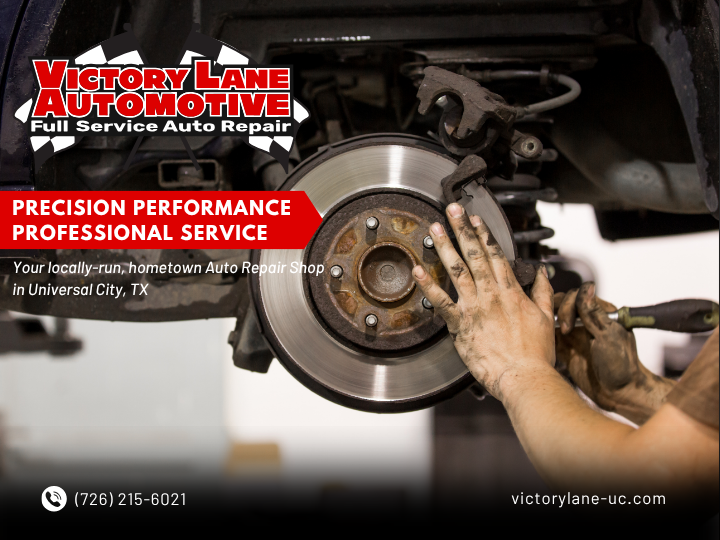
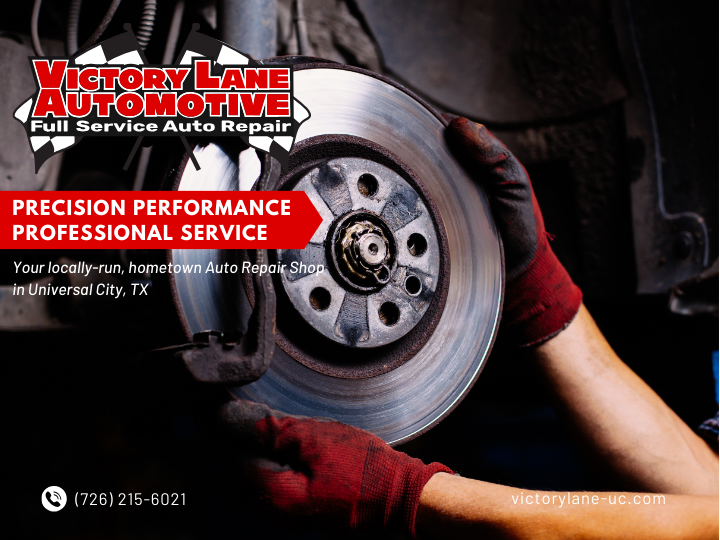
3. Leaking Brake Caliper Seals
Brake calipers contain pistons sealed by high-pressure rubber components. When seals fail:
• Fluid leaks
• Pressure drops
• Braking becomes uneven
Signs:
• Wet caliper
• Fluid inside the wheel
• Truck pulling during braking
Heat from stop-and-go traffic near city corridors and highway exits accelerates caliper seal breakdown.
4. Rear Wheel Cylinder Leaks (Drum Brakes)
Many trucks still use rear drum brakes. Inside each drum is a wheel cylinder that can leak when seals wear out.
Symptoms:
• Fluid inside the drum
• Wet backing plate
• Reduced rear braking
• Increased pedal travel
Because drum components are enclosed, these leaks often progress unnoticed until braking performance drops significantly.
5. Master Cylinder Failure
The master cylinder is the hydraulic heart of the braking system.
It can fail in two ways:
External leaks:
• Fluid around the cylinder
• Drips onto the brake booster
• Low fluid level
Internal leaks:
• Pedal sinks while holding pressure
• Weak braking
• No visible leak
Internal failure is especially dangerous because there is often no puddle to warn the driver.
6. Loose or Damaged Brake Line Fittings
Brake systems use multiple fittings:
• Banjo bolts
• Copper washers
• Line junctions
• Bleeder screws
Vibration, age, or improper service can cause leaks.
Symptoms:
• Wetness at fittings
• Slow pressure loss
• Inconsistent pedal feel
Even small fitting leaks worsen rapidly under high pressure.
7. ABS Hydraulic Module Leaks
The ABS hydraulic unit contains valves and seals operating at extremely high pressure.
When seals fail:
• Brake fluid leaks externally
• Brake or ABS warning lights turn on
• Pedal feel becomes inconsistent
ABS leaks require professional diagnostics.
8. Brake Booster Contamination
If the rear seal of the master cylinder fails, brake fluid can leak into the brake booster.
Signs:
• Fluid between master cylinder and booster
• Hissing noise
• Weak braking assist
This often requires replacement of both components.
9. Heat-Related Seal and Fluid Breakdown
Truck brakes generate significant heat, especially:
• In stop-and-go traffic
• While towing
• During highway driving
• In high ambient temperatures
Heat accelerates:
• Seal failure
• Hose breakdown
• Fluid degradation
Symptoms:
• Burning smell
• Brake fade
• Fluid seeping when hot
Once heat damage begins, leaks worsen quickly.
Section 4: Warning Signs Your Truck Is Leaking Brake Fluid
Brake fluid leaks create unmistakable symptoms.
Key warning signs:
• Soft, spongy, or sinking pedal
• Brake or ABS warning light
• Fluid on the ground
• Decreasing brake fluid level
• Longer stopping distance
• Pulling left or right
• Chemical or burning odor
• Inconsistent pedal feel
If any of these appear, the brake system is already compromised.
Section 5: Why Brake Fluid Leaks Are Especially Dangerous for Trucks
Brake fluid leaks affect all vehicles, but trucks face amplified risk due to:
• Higher weight
• Towing and hauling
• Larger brake systems
• Higher heat generation
• More vibration and suspension travel
A leak that might feel minor in a car can become catastrophic in a truck.
Section 6: Can You Drive With a Brake Fluid Leak?
No.
Driving with a brake fluid leak risks:
• Sudden total brake failure
• Inability to stop at intersections
• Rear-end collisions
• Runaway braking situations
• Loss of control while towing
• Serious accidents at highway speeds
Even if brakes seem to work temporarily, failure can occur without warning.
Section 7: How Brake Fluid Leaks Are Properly Diagnosed
Professional diagnostics include:
• Fluid condition inspection
• Master cylinder inspection
• Full brake line inspection
• Hose inspection
• Caliper and wheel cylinder inspection
• ABS module testing
• Brake booster inspection
• Pressure testing
• Wear pattern analysis
This ensures the entire system is safe—not just patched.
Section 8: Preventing Brake Fluid Leaks
Prevention includes:
• Regular fluid checks
• Brake fluid service
• Annual line inspections
• Hose inspections
• Proper towing habits
• Avoiding brake overheating
• Immediate attention to warning signs
Brake maintenance is safety maintenance.
Section 9: Texas Driving Conditions That Increase Brake Wear
Local factors that accelerate brake wear include:
• High temperatures
• Heavy traffic congestion
• Highway driving
• Towing and hauling
• Dust and debris
These conditions demand proactive brake inspections.
Section 10: When to Seek Immediate Brake Service
Bring your truck in immediately if you experience:
• Soft or sinking pedal
• Brake fluid leaks
• Warning lights
• Burning smells
• Pulling while braking
• Low fluid levels
• Unpredictable braking
Brake fluid leaks are emergencies—not maintenance items.
Victory Lane Automotive
Complete Brake Fluid Leak Diagnosis & Truck Brake Repair
264 Kitty Hawk Rd, Universal City, TX 78148
Phone: (726) 222-1264
https://www.victorylane-uc.com/
Victory Lane Automotive proudly serves Universal City, Schertz, Live Oak, Selma, Converse, Cibolo, and Northeast San Antonio with comprehensive brake system diagnostics, brake line repair, hydraulic service, ABS diagnostics, and full brake system restoration for trucks of all makes and models.
A brake fluid leak is not something to delay. Victory Lane Automotive restores your truck’s braking system to full safety, reliability, and confidence.
You can watch the video