Brakes Grinding in Universal City, TX | Victory Lane
Brakes Grinding in Universal City, TX | Victory Lane
Brakes Grinding in Universal City? What Heat, Heavy Trucks, and Flash Floods Do to Your Brakes
Your truck has been making a grinding noise when you stop at the lights on Pat Booker Road. Maybe it started after you drove through a flooded low spot during one of those sudden storms. Maybe it’s been building since the summer, when the trailer was hitched up most weekends. Whatever started it, you want to know whether it’s serious and what it’s going to take to fix.
When your brakes are grinding in Universal City, the cause is often tied to how we live and drive in South Texas. Long, hot summers keep brakes running hotter. Trucks, SUVs, and diesels carry heavy loads and tow trailers. And when a strong storm floods the roads, water, mud, and grit can get into the brakes and cause grinding that wasn’t there before. Some of these noises clear on their own. Others mean worn pads and damaged rotors that need attention right away.
At Victory Lane Automotive, we work on everything from family cars to light-duty diesels, heavier-duty vehicles, and fleets across northeast San Antonio. This guide explains what grinding means, how heat, weight, and water affect your brakes, and how to keep your vehicle stopping safely.
How Your Brakes Work
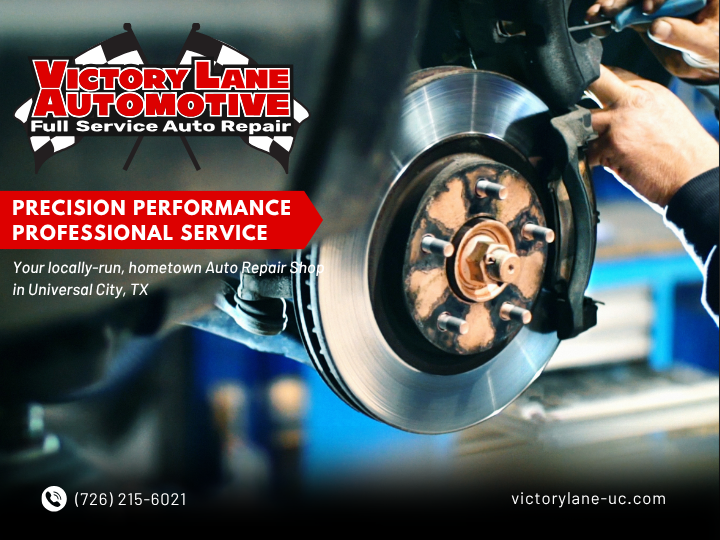
When you press the pedal, the calipers squeeze brake pads against the rotors, the metal discs that spin with the wheels. That friction turns the vehicle’s motion into heat and slows it down. Some trucks and older vehicles use drum brakes on the rear, where shoes press against the inside of a drum.
Brake pads have friction material bonded to a steel backing plate. Every stop wears a little of it away. Many pads have a small wear indicator that squeals when they get thin. When the friction material is gone, the steel backing plate grinds against the rotor, and that’s the grinding that means the brakes need attention now.
What Different Grinding Sounds Usually Mean
A steady grind on every stop that’s gotten louder over time usually means the pads are worn through. A grind or scrape that started right after driving through water or mud often means grit or debris is caught in the brakes. Grinding from one wheel with a pull to one side or a hot smell can mean a caliper is sticking. A growl that changes with speed or when turning may be a wheel bearing, especially after the vehicle has been through deep water. And a short scrape on the first few stops after rain or a humid night is usually surface rust that clears quickly.
Texas Heat and Your Brakes
Brakes already get hot from friction, and South Texas summers add to that load. On a summer afternoon in stop-and-go traffic on Loop 1604 or I-35, brakes start every stop hotter than they would on a mild day. That leaves less room before they overheat during a hard stop or a series of stops.
Repeated overheating can glaze pads, which makes them harder and less grippy, and it can cause uneven deposits and wear on the rotors that lead to vibration and noise. Heat also affects brake fluid over time. Most brake fluid absorbs moisture, which lowers its boiling point, and fluid that’s old and full of moisture is more likely to boil when the brakes get very hot. That can make the pedal feel soft. Checking fluid condition is part of a complete brake inspection for that reason.
Heavy Trucks, Diesels, and Towing
Weight Means More Work
The heavier a vehicle is, the more energy the brakes have to absorb every time it stops. Three-quarter-ton and one-ton trucks, diesels, and loaded work vehicles carry a lot of weight before they ever hook up a trailer. Their brakes are built for it, but they still work hard and wear accordingly.
Towing Adds Even More
Towing a boat, camper, livestock trailer, or equipment trailer multiplies the load. A trailer with its own working brakes and a properly adjusted brake controller takes on a share of the stopping. If the trailer brakes are weak or not working, the truck’s brakes do much more of the work, which leads to overheating, fade, and faster wear.
Exhaust Brakes and Engine Braking
Many newer diesel pickups offer an exhaust brake, which uses the engine to help slow the truck. Using it when towing or carrying heavy loads can take a lot of strain off the service brakes and help them last longer. On gas trucks, using a lower gear or tow-haul mode, where your vehicle has it, does a similar job. Check your owner’s manual for how your truck’s system works.
Inspect Before You Tow
Before a trip with a trailer, have the truck’s brakes and fluid inspected and make sure the trailer’s brakes, wiring, and controller are working properly. It’s one of the most important safety checks a towing owner can make. You can learn more on our [link to Victory Lane diesel and truck service page].
Flash Flooding and Your Brakes
Northeast San Antonio sees strong thunderstorms that can flood low-water crossings and roads quickly. The first and most important advice is the National Weather Service’s: turn around, don’t drown. Never drive into water when you can’t see the road beneath it, because even shallow moving water can sweep a vehicle away.
When you do drive through standing water, it can affect your brakes in a few ways.
Wet Brakes Stop Less Well
Water on the pads and rotors reduces friction, so the brakes may feel weak right after you leave the water. Once you’re safely through, check your mirrors and gently press the brakes a few times at low speed. The heat from light braking helps dry them. Don’t assume they’re working normally until they feel normal again.
Mud and Grit Cause Grinding
Floodwater often carries mud, sand, and small debris. That grit can get trapped between the pads and rotors or inside drum brakes, causing grinding or scraping that wasn’t there before. Sometimes it clears after a few stops. If it doesn’t, the debris can score the rotors, so the brakes should be inspected and cleaned.
Water Can Get Where It Shouldn’t
Deep water can get into wheel bearings, brake components, and other parts that are supposed to stay dry. Contaminated wheel bearings may start growling later. Water can also contribute to corrosion of brake hardware, which can lead to sticking calipers. If your vehicle has been through deep water, a brake and wheel bearing inspection is a smart precaution.
Driving Around Universal City
Commuters heading toward Live Oak and Selma on I-35, or along Loop 1604, deal with heavy traffic and sudden slowdowns that call for hard stops. Drivers in Schertz and Cibolo heading along FM 78, and those taking routes toward Converse, mix highway miles with busy local roads and frequent signals. Households in Garden Ridge often have trucks that tow on weekends. Military commuters heading to JBSA-Randolph and work vehicles making stops all day add their own wear.
Each of these patterns affects how fast brakes wear. That’s why brake inspections should be based on how you drive and what you haul, not just on mileage.
Fleet Vehicles
For businesses, worn brakes on a work truck or van mean downtime, rescheduled jobs, and safety risks for drivers. Fleet vehicles carry tools and materials, make frequent stops, and often tow. Including brake inspections in regular fleet maintenance, using pads suited to heavy use, and addressing wear before grinding starts keeps vehicles on the road and drivers safe.
What Happens If You Keep Driving on Grinding Brakes
Grinding brakes take longer to stop the vehicle, and in a heavy truck or with a trailer behind you, that extra distance adds up fast. Every stop on worn pads scores the rotors further, and the caliper piston can extend too far and stick or leak. Overheated brakes can fade when you need them most.
Debris-related grinding left alone can damage rotors that were otherwise fine. Catching any grinding early keeps the repair smaller and keeps you, your family, and other drivers safer.
What a Thorough Brake Inspection Includes
A proper inspection starts with the wheels off. The technician measures the inner and outer pads, checks the rotors against their minimum thickness, and looks for scoring, heat damage, and trapped debris. Calipers and slides are checked for free movement, and drums are removed on vehicles that have them. Brake hoses and lines are inspected, and the fluid is checked for level and condition.
For trucks that tow, the inspection considers the extra load, and the trailer brakes and controller deserve a look too. After flood exposure, wheel bearings are checked as well. At the end, you’ll know what’s worn, what’s fine, and what needs to be done.
What Drives the Cost of Fixing Grinding Brakes
The cost depends on the cause and the vehicle. Cleaning debris out of the brakes after flood exposure can be a small job. Pads replaced before they wear through, with the hardware cleaned and lubricated, are one of the most cost-effective repairs any vehicle needs. Once grinding has damaged the rotors, they usually need replacing too, and sticking calipers or worn fluid add to the job.
Heavy trucks and diesels have larger brake components, which affects the cost. Quality pads designed for heat and heavy use usually last longer on trucks that tow, lowering your cost per mile over time. Above all, acting early costs less than waiting. If your vehicle is still under warranty, keep records of brake service so your coverage stays protected.
How Victory Lane Automotive Handles Grinding Brakes
At Victory Lane Automotive, we’re proud to be a hometown shop serving Universal City, the communities around JBSA-Randolph, and northeast San Antonio. When your brakes are grinding, we find out exactly why and explain it clearly. If it’s grit from a flooded road, we’ll tell you. If the pads and rotors need work, we’ll show you what we found.
We service cars, SUVs, trucks, light-duty diesels, heavier-duty vehicles, and fleets, including domestic, Asian, and European models. If you need to keep moving while your vehicle is with us, ask about our shuttle service and loaner or rental vehicles, and if it isn’t safe to drive, ask about towing. Learn more on our [link to Victory Lane brake repair page].
Frequently Asked Questions
My brakes started grinding after I drove through high water. What happened?
Mud, sand, or debris from the water may be caught in the brakes. Sometimes it clears after a few stops, but if it doesn’t, the debris can score the rotors. Have the brakes and wheel bearings checked, especially if the water was deep.
Are my brakes safe right after driving through water?
They may be less effective until they dry. Once you’re safely through, gently apply the brakes a few times at low speed to help dry them. And whenever you can, follow the National Weather Service’s advice and avoid driving into flooded roads at all.
Why do my truck’s brakes wear out so fast?
Heavier vehicles need more braking force, and towing and heavy loads add even more. Texas heat also keeps brakes running hotter. Pads suited to heavy use, working trailer brakes, and using an exhaust brake or lower gear when towing can help them last longer.
Do I need to check my brakes before towing?
Yes. Towing adds a lot of load to your truck’s brakes. Have the brakes and fluid inspected, and make sure the trailer’s brakes, wiring, and brake controller are working so they handle their share.
How much does it cost to fix grinding brakes?
It depends on the cause and the vehicle. Cleaning out debris may be a small job, and pads replaced early are one of the more affordable repairs. Damaged rotors, calipers, or larger truck brakes add to the cost, so catching it early keeps it down.
I commute on I-35 every day. How often should I have my brakes checked?
Heavy traffic and sudden stops wear brakes steadily, especially in summer heat. Having them inspected at regular service visits, and right away if you hear grinding, is the best guide.
Stop Safely in Every Texas Season
If your brakes are grinding in Universal City, a thorough inspection will tell you whether it’s debris, heat damage, or worn parts, and what it takes to fix it right. Whether you’re towing on weekends, commuting to JBSA-Randolph, or running a fleet, we’re here to help. Serving Schertz, Cibolo, Converse, Live Oak, and all of northeast San Antonio.
Call us, schedule a visit at [link to Victory Lane schedule appointment page], or stop by the shop on Kitty Hawk Road.
Victory Lane Automotive
264 Kitty Hawk Rd, Universal City, TX 78148
(726) 222-1264
https://www.victorylane-uc.com/
You can watch the video