Car Leaking Fluid in Universal City, TX | Victory Lane
Car Leaking Fluid Near Me
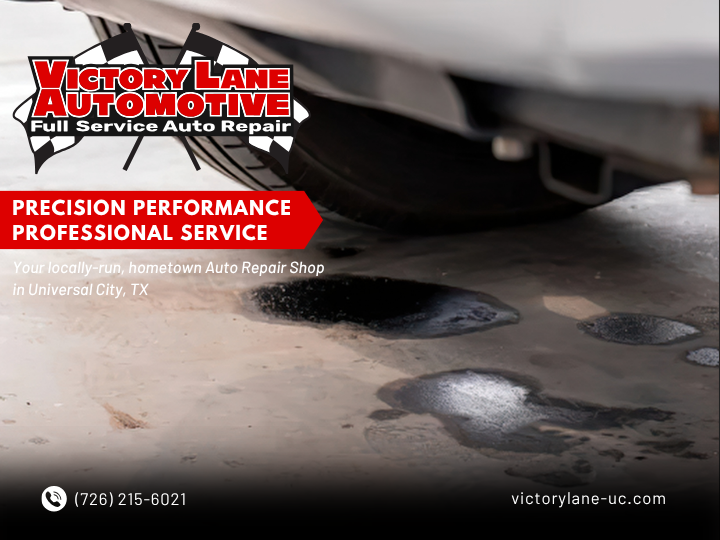
Car or Truck Leaking Fluid in Universal City? What Texas Heat, Heavy Loads, and High Water Do to Your Vehicle
In Universal City, vehicles work hard. Pickups tow and haul. Diesels rack up miles on I-35. Daily drivers sit in summer traffic on Pat Booker Road with the A/C running full blast in 100-degree heat. So when a spot shows up under your car or truck, it’s natural to wonder whether the heat finally got to something, and whether it’s safe to keep driving.
Here’s the quick answer. Some leaks mean park it and call for help: brake fluid, fuel, or anything that comes with an overheating engine or an oil pressure light. Many leaks, such as a slow oil drip or a seeping differential, can make a careful trip to the shop and should be checked soon. And some things that look like leaks, like clear water under the front of the car on a hot day, are completely normal.
At Victory Lane Automotive, we work on cars, SUVs, trucks, light-duty diesels, and fleet vehicles, so we see leaks of every kind. This guide explains how to identify a car or truck leaking fluid in Universal City, how Texas heat and flash floods affect your vehicle, what diesel owners should watch for, and how to decide what to do next.
Is It Safe to Drive?
Before anything else, check for the warning signs that mean the vehicle should stay put.
Don’t drive if you suspect a brake fluid leak, which is clear to yellowish, slippery, and usually near a wheel, or if your brake pedal feels soft or sinks. Don’t drive if you smell gasoline or diesel fuel near the engine, since fuel near hot components is a fire risk. Pull over and shut off the engine if your temperature gauge is climbing, you see steam, or an oil pressure light comes on. Driving even a few more miles in those conditions can cause serious damage. If your vehicle shouldn’t be driven, call us. Towing is available, and we’ll help you get it here. [link to towing page]
For most other leaks, you can usually drive carefully for a short distance. That includes a small oil drip, a slow coolant seep with a normal temperature gauge, or gear oil on a differential with no change in how the truck drives. Watch your gauges, check your fluid levels, and schedule an inspection soon.
And if you see clear, odorless water dripping from under the front passenger side on a hot day, relax. That’s condensation from your A/C, and in a South Texas summer, there’s a lot of it.
What’s Leaking? A Guide for Cars, Trucks, and Diesels
Colors darken with age and vary by manufacturer, so use location and smell along with color.
Engine oil: amber when fresh, dark brown or black when used. It’s slick and usually under the engine.
Coolant: bright green, orange, pink, yellow, or blue, with a sweet smell. It’s usually near the front of the vehicle. It’s toxic, and its sweet taste attracts pets.
Transmission fluid: usually red or pink, darker with age, though some newer fluids differ. It’s typically under the middle of the vehicle.
Power steering fluid: red, amber, or clear, near the front. Many newer vehicles use electric power steering and have no fluid.
Brake fluid: clear to yellowish and slippery, near a wheel or behind the engine on the driver’s side. Always urgent.
Gear oil: thick, dark, and strong-smelling, usually on or under a differential or transfer case. Very common on trucks.
Gasoline: thin, evaporates quickly, strong smell.
Diesel fuel: oily, slower to evaporate than gasoline, with a distinct diesel smell. It can leave a slick film that lingers.
Diesel exhaust fluid (DEF): clear and watery, often with a faint ammonia smell. When it dries, it leaves a white, crusty, crystal-like residue around the DEF tank, lines, or fill area. It’s found on most newer diesel pickups.
Water: clear and odorless under the front passenger side. Normal A/C condensation.
Why Texas Heat Speeds Up Leaks
Rubber seals, gaskets, and hoses all wear out eventually. Long, intense South Texas summers make it happen sooner.
Heat breaks down rubber and plastic over time, hardening hoses and gaskets until they crack or lose their seal. A vehicle that sits in an open parking lot in the sun all day, then crawls home in stop-and-go traffic on Loop 1604 or FM 78, goes through about the hardest daily heat cycle there is. Under the hood, temperatures climb, the cooling system works at its limit, and the A/C adds even more heat load in front of the radiator.
Fluids get thinner when they’re hot, and pressure in some systems rises as they heat up. A seal that barely seeps on a mild morning can drip noticeably after a long drive on I-35 on an August afternoon. That’s one reason leaks often seem to appear or get worse during summer.
Then there’s the occasional winter freeze. When temperatures drop suddenly after a long hot season, aging rubber that has been baked all summer can stiffen and seep. It doesn’t happen often here, but a hard freeze can reveal leaks that were already on their way.
High-Mileage Trucks and Light-Duty Diesels
Trucks are a big part of life around Universal City, and high-mileage trucks and diesels have leak patterns worth knowing.
Differentials and transfer cases
Rear differentials, and front differentials and transfer cases on four-wheel-drive trucks, are filled with gear oil and sealed with gaskets and seals. Towing, hauling, and heat all wear those seals faster. A seeping differential cover gasket or pinion seal leaves dark, smelly gear oil on the axle housing. An axle seal leak can let gear oil reach the brakes, which reduces braking performance. On a truck that tows, that’s a safety problem.
Towing and heat
Towing a trailer, camper, or boat in Texas heat pushes the engine, transmission, and cooling system hard. Transmission fluid that runs hot for long periods breaks down faster and stresses seals and cooler lines. If you tow regularly, keeping an eye on leaks, especially around the transmission and cooling system, is one of the best ways to protect your truck.
Diesel-specific leaks
Light-duty diesels add a few leak points of their own. Many diesel engines are turbocharged, and the oil lines that feed the turbocharger can seep at their fittings. Diesel fuel leaks can come from fuel lines, filters, or connections. Because diesel doesn’t evaporate as quickly as gasoline, a leak may leave a lingering oily film. On newer diesels, DEF lines, the DEF tank, and DEF injectors can leak, leaving that telltale white crust. A DEF leak isn’t usually a safety emergency, but a low DEF level can eventually limit engine power on many trucks, so it shouldn’t be ignored.
After a Flash Flood or High-Water Crossing
Strong thunderstorms and localized flash flooding are part of life in South Texas. The safest choice is always to avoid driving through flooded roads. Water can be deeper and faster than it looks. But if you’ve driven through standing water, it’s worth knowing what can happen afterward.
Differentials, transmissions, and some transfer cases have vent tubes that allow them to breathe as they heat up and cool down. When a hot axle is suddenly submerged in cool water, it can draw water in through those vents. Water mixed with gear oil turns it milky or foamy and reduces its ability to protect the gears and bearings. You won’t necessarily see a leak, but the fluid may need to be checked and changed.
Driving through water can also damage underbody components and seals, and debris carried by floodwater can strike pans and lines. If your vehicle went through high water, especially a truck with a hot differential, let us check the fluids and the underside before small problems become big ones.
Getting Ready for a PCS Move or Long Road Trip
Many families around Joint Base San Antonio–Randolph eventually face a permanent change of station, and a PCS move often means a long drive across several states with a loaded vehicle, sometimes towing a trailer. Summer road trips from Universal City bring similar demands.
Long trips with heavy loads in hot weather are exactly the conditions that turn a small leak into a breakdown. Before a big drive, check under the vehicle for fresh spots and check your oil, coolant, brake fluid, and, if your vehicle has a dipstick, transmission fluid levels with the engine cool. If you’ve been topping off any fluid regularly, have it inspected before you go. A leak that’s a minor nuisance around town can leave you stranded hundreds of miles from home, in unfamiliar territory, with your family and your belongings in tow. A pre-trip inspection is one of the best investments you can make before a move. [link to trip inspection page]
Fleet Vehicles: Small Leaks, Big Downtime
For businesses that depend on vehicles, a leak isn’t just a repair. It’s downtime. A work truck sidelined by an overheated engine or a failed seal means missed jobs and frustrated customers.
The most cost-effective approach for a fleet is catching leaks early during routine service. When vehicles come in for oil changes or brake work, a careful look underneath can spot a seeping seal or a damp hose long before it causes a breakdown. Victory Lane Automotive provides fleet service and works on cars, trucks, light-duty diesels, and heavier-duty vehicles, so we can help keep your fleet on the road. [link to fleet service page]
What Waiting Costs
Leaks almost never fix themselves. Seals keep wearing, fluid keeps escaping, and the damage spreads.
An oil leak lowers the oil level, and running low increases engine wear and can cause permanent damage. Oil dripping on a hot exhaust can smoke and create a fire risk. A coolant leak can lead to overheating, and in Texas heat, that can happen fast. Severe overheating can damage the head gasket or cylinder head. A transmission leak can lead to slipping and overheating. A differential running low on gear oil can wear out bearings and gears. A brake fluid leak or gear oil on the brakes reduces your ability to stop.
On a truck or a family vehicle that’s about to make a long trip, the stakes are even higher. A breakdown on the highway in the heat is uncomfortable at best and dangerous at worst.
How Victory Lane Diagnoses a Leak
We start by listening. We’ll ask what you’ve noticed, where you saw the fluid, whether you tow or haul, whether the vehicle has been through high water, and whether anything else has changed. Then we put the vehicle on a lift and inspect it carefully. We check fluid levels and condition, trace wet areas back to their source, and look at the gaskets, seals, hoses, and lines in that area.
Fluid often runs along the engine or gets blown backward by airflow before it drips, so the spot on the ground isn’t always where the leak starts. On trucks and diesels, we pay close attention to differentials, axle seals, fuel connections, turbo oil lines, and DEF components. When a source is hard to pin down, we can clean the area and recheck it to see exactly where fresh fluid appears.
Then we explain what we found in plain language, how urgent it is, and what your options are. Some leaks need immediate attention, some can be scheduled, and some small seeps can simply be watched. We’ll tell you which is which.
We also know your time matters. Shuttle service and loaner or rental vehicles help keep your day moving while we take care of your vehicle.
What Does It Cost to Fix a Leak?
The cost of leak repair depends on several factors.
Labor is usually the biggest. A leaking hose or drain plug that’s easy to reach is a quick job. A seal buried deep in the drivetrain or behind other components takes much longer, even if the part itself is inexpensive. Vehicle type matters too. Trucks, diesels, and heavier-duty vehicles often have larger, heavier components, which can affect labor time.
Parts quality matters as well. Quality seals, gaskets, and hoses installed correctly hold up to Texas heat. Cheap parts may fail sooner, and you end up paying for the labor twice. Sometimes it makes sense to replace a related part at the same time when the labor overlaps, and we’ll explain those choices clearly.
What doesn’t change is that catching a leak early is almost always far less expensive than waiting. An axle seal is a fraction of the cost of a damaged differential. Fixing a small leak is far less expensive than repairing an engine or transmission damaged by low fluid. When you think in terms of cost per mile, keeping up with leaks is one of the most cost-effective ways to keep a high-mileage truck or a family vehicle running for years in South Texas conditions.
If your vehicle is still under a manufacturer’s warranty, keep your service records and receipts. Some leaks may be covered, and complete records protect you.
Why Universal City Drivers Choose Victory Lane Automotive
Victory Lane Automotive is a hometown shop serving working families, commuters, truck owners, and military-connected households across northeast San Antonio. We know the roads here, from Kitty Hawk Road and Pat Booker Road to I-35 and Loop 1604, and we know what Texas heat and heavy use do to a vehicle.
We work on domestic, Asian, and European cars, SUVs, trucks, light-duty diesels, heavier-duty vehicles, and fleets. Our services include brake repair and replacement, oil changes, steering and suspension, alignments, general maintenance, and repairs, with shuttle service, loaner or rental vehicles, and towing available. That range lets us follow a leak wherever it leads and help you get back on the road.
Whether you’re commuting to Randolph on Pat Booker Road, driving in from Schertz or Cibolo on FM 78, coming from Live Oak or Selma along I-35, or heading in from Converse or Garden Ridge, we’re here to help with honest answers and quality work. [link to scheduling page]
Frequently Asked Questions About Leaks in Universal City
Is clear water under my car normal in the summer?
Yes. Clear, odorless water dripping under the front passenger side is condensation from the A/C, and in South Texas heat, your A/C produces a lot of it. If the liquid is colored, slippery, or has a smell, have it checked.
There’s white crusty residue near my diesel truck’s DEF tank. What is it?
That’s likely dried diesel exhaust fluid, which leaves a white, crystal-like residue when it evaporates. It usually points to a seeping DEF line, fitting, or component. It’s not typically a safety emergency, but a DEF problem can eventually affect engine performance, so have it inspected.
I drove through high water on a flooded road. Should I get my truck checked?
Yes, especially if the differentials were submerged while hot. Water can be drawn in through vent tubes and contaminate the gear oil, turning it milky. We can check the fluids and the underside and recommend any service needed.
We have a PCS move coming up. What should we check before the drive?
Look for fresh leaks, and check your oil, coolant, brake fluid, and transmission fluid levels. If you’ve been adding fluid regularly or towing a trailer, have the vehicle inspected before you leave. A pre-trip check can prevent a breakdown far from home.
How much does it cost to fix a leak?
It depends on what’s leaking, how much labor it takes to reach the part, and the type of vehicle. Some repairs are quick, and others are larger jobs, especially on trucks and diesels. Fixing a leak early almost always costs far less than repairing the damage it causes later, and we’ll explain everything before any work begins.
My truck has gear oil on the rear axle. Is it safe to tow?
It’s best to have it inspected first. A leaking differential or axle seal lowers the gear oil level, and if oil reaches the brakes, braking performance drops. Towing adds heat and load, so it’s worth fixing before your next trip.
Can I get a ride while my vehicle is in the shop?
Yes. We offer shuttle service and loaner or rental vehicles to help keep your day on track. If your vehicle isn’t safe to drive, towing is available too.
Keep Your Vehicle Ready for Texas Roads
Heat, heavy loads, and sudden storms ask a lot of your vehicle. A leak is an early warning, and answering it now keeps your car or truck dependable, your costs lower, and your plans on track.
If you’ve noticed a car or truck leaking fluid in Universal City, or you’re preparing for a long trip or a PCS move, give us a call or stop by. We’ll find the source, explain what we found, and help you make the right decision for your vehicle and your budget.
Victory Lane Automotive
264 Kitty Hawk Rd, Universal City, TX 78148
(726) 222-1264
https://www.victorylane-uc.com/
You can watch the video