Burning Smell From Car or Truck in Universal City, TX
Burning Smell From Car or Truck in Universal City, TX

Burning Smell From Your Car or Truck in Universal City, TX: What Is Normal and What Is Not
You pull into the driveway after work and shut the truck off. The cooling fan keeps roaring for a minute, the exhaust ticks as it cools, and there is a hot, sharp smell hanging around the bed. Yesterday there was nothing. Is the truck doing something it is supposed to do, or is something cooking that should not be?
A burning smell from your car or truck has more possible explanations here than in most places. Northeast San Antonio has long stretches of serious heat, a lot of trucks and diesels, a lot of towing, and plenty of vehicles that either work all day or sit for months while their owners are away. Some burning smells are completely normal, including one that modern diesel trucks make on purpose. Others point to a leak, a slipping belt, a dragging brake, or wiring that is overheating.
At Victory Lane Automotive, we would rather you know the difference than guess. This guide explains what is normal, what is not, when to stop driving, and how we find the cause.
When a Burning Smell Means Stop Now
Get this part settled first. Pull over somewhere safe, shut the engine off, and get everyone out if you notice any of the following:
- Smoke from under the hood, from a wheel, or inside the cab
- A melting plastic or hot wiring smell that is getting stronger
- A temperature gauge heading for hot, or a red warning light
- The smell of raw fuel
- A brake pedal that feels soft, or brakes that are not slowing the vehicle the way they should
If there is smoke or flame, move well away and call 911. Do not open the hood, because that gives a fire more air. And do not pull off onto dry grass. In a dry spell, a hot exhaust can set grass on fire in moments. Pick pavement, gravel, or bare dirt.
If the smell is faint, the gauges are normal, and the vehicle drives and stops the way it should, it can generally make a short trip to the shop. If you are not sure, call us. We can help arrange a tow when one is the safer choice.
Diesel Trucks: The Burning Smell That Is Supposed to Happen
If you drive a diesel pickup built since the late 2000s, your truck has a part that produces a hot, burning smell as part of its normal operation. Knowing about it will save you a lot of worry.
What regeneration is
Modern diesels have a filter in the exhaust that traps soot so it does not come out the tailpipe. The filter fills up over time. To clean itself, the truck periodically raises the exhaust temperature very high and burns the soot away. This is called regeneration.
What it looks, sounds, and smells like
While it is happening, you may notice:
- A hot, sharp, slightly acrid smell around the truck, especially when you stop
- The engine idling a little faster than usual
- The cooling fan running hard, sometimes after you shut the engine off
- Noticeable heat coming from under the truck
- A message or indicator on the dash, on some models
- A temporary dip in fuel economy
All of that is normal. It usually completes during a single drive of reasonable length.
Why short trips cause trouble
Regeneration needs time and steady driving to finish. If your truck mostly makes short hops, say from Universal City to Schertz and back, or a few miles down Pat Booker Road, the process keeps getting interrupted. The filter loads up faster than it can be cleaned, the truck tries to regenerate more and more often, and eventually a warning light comes on and power may be reduced.
The remedy is simple. Give the truck a steady highway run on a regular basis. A stretch on Loop 1604 or I-35 at a constant speed lets the cycle finish.
When it is not normal
Have the truck checked if regenerations seem to be happening constantly, if you see heavy white or blue smoke, if you smell raw diesel fuel, if the engine oil level seems to be rising instead of falling, or if a warning light stays on. Those point to a problem with the system, not routine operation.
A safety point
The exhaust is extremely hot during and right after regeneration. Do not park over dry grass, leaves, or anything that can burn.
A few other diesel-specific notes: a sharp ammonia smell is diesel exhaust fluid, not something burning. Burning oil with blue smoke can come from oil reaching the hot side of the turbocharger. And on some diesel engines, a sweet smell with white exhaust can mean coolant is getting into the exhaust stream, which needs prompt attention. [link to diesel service page]
What Texas Heat Does Under the Hood
Heat is the common thread in most of what we repair, and the hot season here is long.
Belts and the air conditioning compressor
Your air conditioning compressor is driven by a rubber belt, and for much of the year it runs nearly every minute the engine does. If the belt is worn or glazed, or the compressor is starting to bind, the belt slips and gives off a burning rubber smell, usually with a squeal. Because that same belt typically drives the alternator and other accessories, a belt that fails takes more than the air conditioning with it.
Hoses, gaskets, and plastic
Rubber and plastic age faster in heat. Hoses soften or crack. Gaskets harden and begin to seep. A seep of oil that lands on the exhaust produces a bitter, sharp smell, most noticeable when you stop after a drive.
Coolant
The cooling system has no margin to spare in a Texas summer. Coolant that escapes onto a hot engine smells sweet, like syrup. If you notice that smell, look at the temperature gauge immediately. If it is climbing, shut the engine off. An overheated engine is one of the most expensive failures there is.
Heat soak in slow traffic
Idling in a long line with the air conditioning on, whether at a base gate, a drive-through, or a backup on FM 78, lets heat build under the hood with almost no airflow to carry it off. Fumes from a small leak rise and get pulled into the cab through the fresh-air intake. That is why a smell often shows up while you are sitting still and fades once you are moving.
Batteries
Heat is hard on batteries. A sulfur or rotten-egg smell near the battery can mean it is being overcharged and venting gas. Keep your face away from it and have the charging system tested.
Working Trucks: Loads, Brakes, and Transmissions
A truck that tows or hauls makes more heat everywhere.
Brakes. A heavy truck in stop-and-go traffic on Pat Booker Road, or exiting I-35 with a loaded trailer, asks a lot of its brakes. An acrid smell at the wheels after hard use is brake heat. If you smell it after ordinary driving, or at only one wheel, a brake is likely sticking. That wheel will be far hotter than the others. Do not touch it.
Transmission. Pulling a load in high heat pushes transmission fluid to its limits. Overheated fluid has a harsh burnt odor that is different from engine oil. Use the tow or haul mode when you are loaded, and have the fluid inspected if you ever notice that smell. Burnt fluid stops protecting the transmission.
Tires. An underinflated tire on a loaded truck flexes and runs hot. Check pressures before you tow, and set them for the load you are carrying.
A Vehicle That Has Been Sitting
With so many military families around Joint Base San Antonio-Randolph, we regularly see vehicles that sat for months during a deployment or an extended assignment. The first drive afterward is a common time to notice a burning smell.
Dust. A layer of dust on the exhaust and engine burns off in the first few miles. It smells dry and dusty and stops quickly.
Rodents. A parked vehicle is shelter. Nests built on top of the engine heat up and smell when it runs, and chewed wiring can short out or overheat. Look under the hood for shredded material and droppings before you start a vehicle that has been stored.
Brakes. Rotors rust while a vehicle sits, and brake parts can seize in place. A brake that is stuck will drag, overheat, and smell within a few miles.
Belts and hoses. Rubber that has sat through a hot season without moving can crack or take a set.
If a vehicle has been parked for a long stretch, a quick inspection before it goes back into daily service is time well spent.
For Fleet Managers: A Smell Is a Report, Not a Complaint
For a business, a burning smell that goes unreported is how a small repair becomes a truck on the shoulder and a missed job. A few simple practices prevent that.
- Make it easy to report. Drivers should know that mentioning a smell is expected, not an inconvenience.
- Ask three questions. What did it smell like? When did it happen? Where on the vehicle?
- Set a clear rule for pulling a unit. Smoke, a warning light, a high temperature reading, or an electrical smell means the vehicle stops until it is checked.
- Build in a walk-around. A lap around the truck at the end of a shift catches a hot wheel or a fresh drip.
Downtime is the real cost for a fleet. Catching problems at the smell stage keeps trucks earning. [link to fleet service page]
After High Water
Storms here can put water across a road in minutes. The first rule is not to drive into it. If you have come through heavy rain or shallow standing water, some white vapor from under the vehicle is just water on a hot exhaust, and it disappears almost instantly.
A lasting smell afterward is different. Floodwater carries debris, and plastic or brush can wrap around the exhaust or the driveshaft. Brakes that have been soaked may also behave differently for a few stops. If a burning smell continues after a storm, have the underside inspected.
Other Common Causes of a Burning Smell From Your Car or Truck
Something melted on the exhaust. A plastic bag or road debris produces a strong burning plastic smell from underneath. It usually burns off within a few drives.
Electrical heat. Hot plastic from the vents or dash, a blower fan that works only on some speeds, or a fuse that keeps blowing means wiring or a connector is overheating. Add-on equipment such as light bars, trailer brake controllers, and stereo amplifiers is a frequent source when it is not wired with the right fuse and wire size. Never replace a blown fuse with a larger one.
A slipping clutch. On a manual transmission, a worn clutch gives off a smell like scorched paper, especially under load.
Recent service. A little oil spilled during an oil change, or the coatings on new brake pads, can smell briefly and then stop. If it lasts more than a few days, have it rechecked.
The first use of the heater. When a cold front finally arrives and the heat comes on for the first time in months, dust burns off inside the dash for a few minutes. That is normal.
What Happens If You Keep Driving
A normal smell, such as diesel regeneration or heater dust, takes care of itself. A real problem does not.
A leaking gasket lowers the oil level and ruins the belts and hoses the oil lands on. A slipping belt eventually breaks and can leave you with no charging and, on many engines, no cooling. A coolant leak leads to overheating. A dragging brake destroys its pads and rotor and reduces stopping power. Burnt transmission fluid shortens the life of the transmission. Overheated wiring can start a fire.
In every case, the repair is smallest at the moment the smell first appears.
Quick Checks You Can Do in the Driveway
A few minutes of looking will tell you a lot, and it gives the technician a head start. Do these with the engine off and everything cooled down unless noted.
Walk a lap right after a drive. Before you go inside, walk around the vehicle. Is the smell stronger at the front, underneath, or at one wheel? Is one wheel throwing off far more heat than the others? Hold your hand near it, never on it.
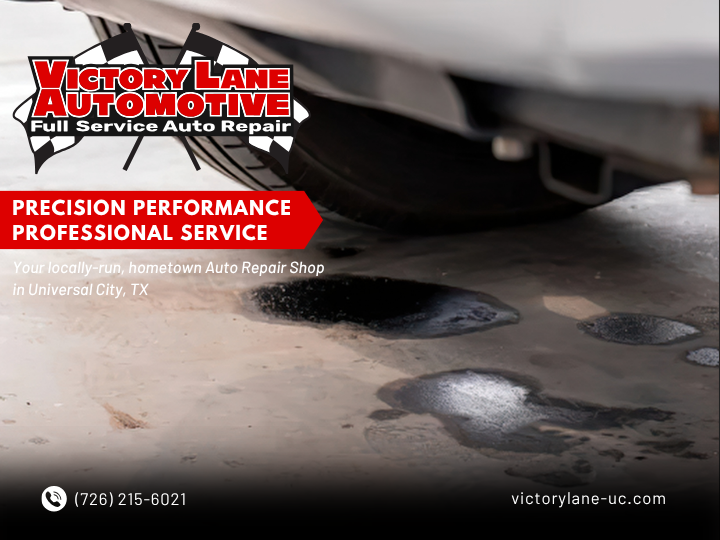
Look at the ground. Check where you park for fresh spots, and note the color. Dark brown or black is usually engine oil. Red or pink is often transmission fluid or coolant. Green or orange is typically coolant.
Check the gauges on your next drive. Note where the temperature gauge normally sits so you will recognize it if it moves.
Look at the belt. With the engine off, look at the drive belt for cracks, fraying, or a shiny glazed surface.
Check the oil level. A level that keeps dropping between changes means oil is going somewhere.
Think about what changed. A new accessory, recent service, a heavy tow, a storm, or a long time parked are all useful details.
Write down what you find and bring it with you. A good description from the driver often saves more diagnostic time than any tool.
How We Find the Cause
We start with questions. Gas or diesel? Loaded or empty? Was it moving or sitting still? Where did the smell seem to come from? Has the vehicle been parked for a while, or had recent work?
Then we inspect. Fluids are checked for level and condition. The vehicle goes on a lift so the engine, transmission, exhaust, and brakes can be examined from below for leaks, residue on hot parts, debris, and signs of overheating. Belts, pulleys, and hoses are checked closely. Each brake is checked for free movement. A scan of the vehicle's computer shows stored fault codes, and on a diesel it can show how the exhaust filter system has been behaving.
You get a clear explanation in plain terms, and you decide what happens next. [link to brake repair page]
Cost, Downtime, and Long-Term Value
The cost of fixing a burning smell depends on the cause, so finding the cause comes first. These are the main factors.
How early it is caught. A belt replaced when it first slips is a small job. A belt that breaks on the highway can mean a tow and possible overheating damage. A brake caught when it first sticks may need only service and hardware. Later, it needs pads, a rotor, and perhaps a caliper.
The vehicle. Diesels and heavier trucks use larger, more specialized parts, and some repairs take more labor.
Parts quality. In this heat, quality belts, hoses, gaskets, and brake parts last noticeably longer, which lowers the cost per mile.
Downtime. For a work truck or a one-vehicle household, time without the vehicle has its own cost. A planned repair is always easier than an emergency one.
How often belts, hoses, and fluids need attention depends on the heat they see, the loads you carry, and what an inspection shows. A truck that tows through a Texas summer needs a closer eye than a commuter car.
A truck or car that is paid for and kept in good shape is nearly always far less expensive to keep than to replace. If your vehicle is under warranty, keep your service records so its maintenance history is documented.
How Victory Lane Automotive Handles It
We are a hometown shop, and many of our customers are working families, commuters, truck owners, and military households who cannot afford to be without a vehicle or to be surprised by a repair.
So we keep it simple. We find the real cause, show you what we found, and tell you plainly what needs attention now and what can wait. If the answer is that your diesel is doing exactly what it should, we will tell you that. We service cars, SUVs, trucks, light-duty diesels, and fleets, and our shuttle service and loaner or rental vehicles help keep your day moving while we work.
Frequently Asked Questions
Why does my diesel truck smell like it is burning after I park? Most likely it was cleaning its exhaust filter, a normal process called regeneration. You may also notice a faster idle, the fan running, and heat from under the truck. If it happens constantly, or comes with heavy smoke, a fuel smell, or a warning light, have it checked.
Is a burning rubber smell with the air conditioning on serious? It usually means the drive belt is slipping, either because the belt is worn or the compressor is starting to bind. Since that belt runs other accessories too, have it inspected soon. A broken belt can leave you stranded.
How much does it cost to fix a burning smell? It depends on the cause. Normal diesel regeneration and debris on the exhaust cost nothing. A belt, gasket, or brake caught early is a modest repair. Problems that are left to damage other parts cost considerably more, so we diagnose first.
Can I pull over on the grass if I smell something burning? Avoid it. A hot exhaust, especially on a diesel, can ignite dry grass. Stop on pavement, gravel, or bare ground.
My car sat while I was deployed and now smells hot. Is that normal? A dusty smell for the first few miles is common. Check under the hood for nests before starting it. If the smell continues, comes from one wheel, or smells like plastic or wiring, have it inspected before regular use.
Is it safe to drive on Loop 1604 or I-35 with a burning smell? Not if there is smoke, a warning light, a high temperature reading, or an electrical smell. Highway speed and traffic make a breakdown more dangerous. A faint smell with normal gauges can usually handle a short drive on local streets to the shop.
Why do I smell it only while waiting in line? At idle there is no airflow moving heat and fumes away from the engine, so they rise and get drawn into the cab. It often points to a small fluid leak reaching a hot part, and it is worth having checked.
Get a Straight Answer
A burning smell from your car or truck is a question worth answering before the next long haul. Drivers come to us from Live Oak near Loop 1604, from Converse and Cibolo along FM 78, from Selma up I-35, and from Garden Ridge, and what they all want is the same thing: to know what it is and what to do about it.
Call Victory Lane Automotive or stop by, and we will take a look. [link to appointment scheduling page]
Victory Lane Automotive
264 Kitty Hawk Rd, Universal City, TX 78148
(726) 222-1264
https://www.victorylane-uc.com/
You can watch the video