Car Cranks But Won't Start Universal City | Victory Lane
Car Cranks But Won't Start Universal City | Victory Lane
Truck or Car Cranks But Won't Start in Universal City? Start Here
Your truck has never let you down. Then one morning it cranks and cranks and won't fire. Maybe it is a diesel on one of those rare cold South Texas mornings. Maybe it is a gas truck that sat for weeks while you were away. Maybe it is a fleet vehicle that has to be on the road by eight. If your truck or car cranks but won't start in Universal City, the cause depends a lot on what you drive and how it has been used.
Here is the starting point. When an engine turns over normally but doesn't run, the starter and battery are usually doing their jobs, and the engine is missing something it needs. A gasoline engine needs fuel, spark, air, and compression. A diesel needs fuel, air, compression, and enough heat to ignite the fuel without a spark. On modern vehicles of either kind, the engine computer and security system also have to give the go-ahead.
At Victory Lane Automotive, we work on cars, SUVs, trucks, light-duty diesels, heavier-duty vehicles, and fleets for working families, commuters, and military-connected households. This guide covers what causes a crank-no-start in gas and diesel vehicles, what happens to a vehicle that sits during a deployment or move, what you can check, and how we find the real cause.
Cranking Is Not Starting
The starter motor spins the engine when you turn the key or press the button. That is cranking. When the engine catches and runs by itself, that is starting. A normal crank with no start tells you the starting circuit works and points the search toward fuel, ignition, sensors, or security.
A vehicle that clicks or does nothing usually has a battery, cable, or starter problem. A slow, labored crank often points to a weak battery or poor connection. And an unusually fast, smooth crank can mean a loss of compression, sometimes from a timing problem. If you hear that, stop cranking. On many engines, continued cranking can cause internal damage.
Why Diesels Behave Differently
A diesel engine has no spark plugs. It squeezes air so tightly that the air gets hot enough to ignite fuel the moment it is injected. That design is tough and efficient, but it means a diesel's starting problems look a little different from a gas engine's.
Glow plugs and intake heaters
On a cold engine, the compressed air may not get hot enough on its own to ignite the fuel reliably. Many diesels use glow plugs, small heaters in each cylinder, or an intake air heater to help. Most of the year in South Texas, that barely matters. But on the occasional winter freeze, a diesel with failing glow plugs or a faulty heater circuit may crank and struggle to start. Wait for the glow plug or wait-to-start light to go out before cranking, and if the truck still won't fire on a cold morning, the heating system is one of the first things to check.
Fuel filters and water separators
Diesel fuel systems are sensitive to contamination. Fuel filters trap debris, and many diesels use a water separator to collect water before it can reach the injection system. A clogged fuel filter is one of the most common causes of a diesel no-start or stall. Water in the fuel is another, and many trucks have a warning light that comes on when the separator needs draining.
Fuel gelling in a hard freeze
Diesel fuel contains wax that can thicken and clog the fuel filter in very cold temperatures. That is rare around San Antonio, but hard freezes do happen here from time to time, and a diesel left outside during one can have trouble. Winter-blend fuel and a properly maintained fuel system help.
Air in the fuel system
If a diesel runs out of fuel, or if air gets into the system during a filter change or because of a leak, it may crank without starting until the air is purged. Many modern diesels have a procedure for priming the system. If you are not sure how yours works, let a technician handle it.
Emissions system warnings
Many modern diesels use diesel exhaust fluid as part of their emissions system. If the fluid runs out or the system develops a fault, many trucks give warnings first, then reduce power or limit restarting. Pay attention to those dashboard messages, because they are designed to give you time to act before the truck becomes harder to use.
When a Gas Car Cranks But Won't Start
Gasoline vehicles have their own list of usual suspects.
Fuel pump or its power supply
An electric fuel pump in the tank pushes fuel to the engine. When it wears out, or when the fuse or relay that powers it fails, the engine gets no fuel. A pump that is weakening often causes longer cranks before it stops working completely. Texas heat can be hard on fuel pumps, especially when the tank is often run low.
Crankshaft position sensor
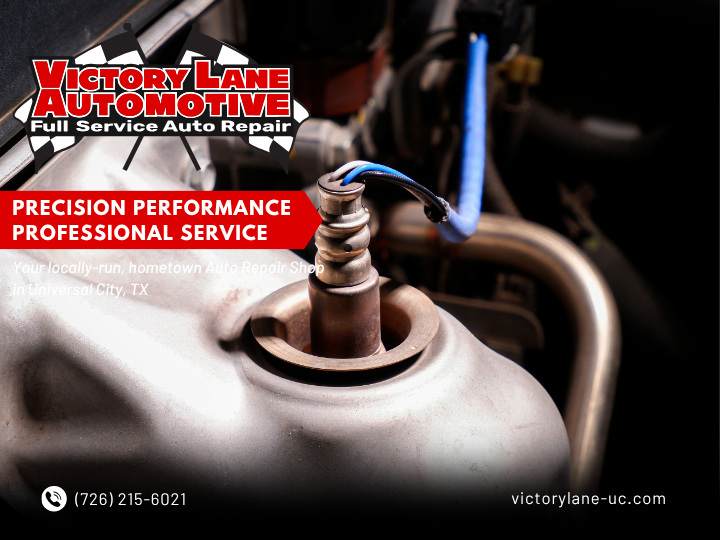
This sensor tells the computer that the engine is turning and where each piston is. Without its signal, the computer won't fire fuel or spark. Some sensors fail only when they are hot, which can leave you with a vehicle that won't restart after a hot afternoon drive and starts fine after it cools.
Security system
If the immobilizer doesn't recognize your key, many vehicles crank but won't start. A flashing security light on the dash is the clue. Try your spare key.
Battery weakened by heat
Long, very hot summers are hard on batteries. A battery weakened by heat can still crank the engine but drop too much voltage for the fuel and ignition systems during the start. That is why a load test belongs in every no-start diagnosis.
When a Vehicle Sits During a Deployment or Move
Many families around JBSA-Randolph know the routine: a vehicle sits for weeks or months during a deployment, training, or a PCS move. When it is time to drive again, it cranks but won't start.
A few things happen to a vehicle that sits that long. The battery slowly drains from the small power draws that keep the computers and alarm alive. Fuel ages and loses some of its ability to ignite easily, especially in a nearly empty tank. Fuel pressure bleeds off, and a weak pump may struggle to rebuild it. Rubber and seals can dry out. In some cases, small animals take shelter under the hood and chew wiring.
If you know a vehicle will sit, a few steps help: fill the tank, add a fuel stabilizer, keep the battery on a maintainer or disconnect it, and have someone start and drive the vehicle periodically if possible. When you return, check the battery first and look under the hood before cranking over and over.
How Local Driving Plays a Role
The way people drive around Universal City affects which problems show up. Stop-and-go traffic on Pat Booker Road and Kitty Hawk Road in summer heat builds up temperature under the hood, which is hard on heat-sensitive sensors and batteries. Commuters on I-35 toward Selma and Schertz, or on Loop 1604, put on highway miles that bring fuel pump and timing belt wear into play sooner. Drivers heading out FM 78 toward Converse and Cibolo, or up toward Garden Ridge, mix highway stretches with growing suburban traffic.
Weather adds its own pressure. Strong thunderstorms and localized flash flooding can push water into places it doesn't belong. If your vehicle quit after driving through floodwater, don't try to start it. Water drawn into an engine can cause severe damage, and cranking can make it worse. Have it towed and inspected.
What You Can Check Before You Call
- Listen to the crank and note whether it is normal, slow, or unusually fast.
- Watch the dashboard for a flashing security light, a wait-to-start light on a diesel, a water-in-fuel light, or emissions warnings.
- Try your spare key if the security light is flashing.
- Check the fuel level, and remember that a diesel that ran dry may need priming.
- Crank in short bursts with rest in between, and stop after a few attempts.
Avoid starting fluid. On diesels with glow plugs or intake heaters especially, it can cause serious engine damage, and on any engine it can hide the real cause. If a few careful attempts don't work, have the vehicle towed. Victory Lane offers towing availability, so call us first.
How We Diagnose a Crank-No-Start
We follow a logical sequence so we find the actual cause. We test the battery under load and scan the computer for trouble codes and live data, including whether it sees engine speed during cranking. On a gas vehicle, we measure fuel pressure and test for spark. On a diesel, we check fuel supply and filter condition, the water separator, the glow plug or intake heater system, and fuel pressure readings from the computer. If the security system is involved, we check the keys and immobilizer. If fuel delivery and ignition check out, we look at compression and timing.
For fleet vehicles, we understand that downtime costs money. A clear, accurate diagnosis gets the vehicle back in service with one repair instead of several.
Keeping a Work Truck or Fleet Starting Every Morning
For a contractor, a delivery business, or anyone who depends on a truck for income, a no-start isn't just an inconvenience. It is lost work. The good news is that many of the most common causes can be caught before they leave a truck sitting in the yard.
Base fuel filter service on how the truck is used
Fuel filters protect expensive injection parts, and a clogged filter is one of the most common reasons a diesel won't start or stalls. How quickly a filter loads up depends on fuel quality, how much the truck runs, and the conditions it works in. A truck that idles on job sites, works in dust, or fills up at many different stations may need attention sooner than one that runs clean highway miles. We base our recommendations on how your truck is actually used and what we see during inspection.
Drain the water separator
If your diesel has a water separator, make draining it part of your routine, and never ignore a water-in-fuel warning light. Water that gets past the separator can damage injection system parts, and that repair is far more expensive than the habit that prevents it.
Test the batteries, plural
Many diesel pickups use two batteries working together to supply the power a diesel needs to crank. If one battery weakens, the other has to carry more of the load, and both can wear out faster. When the batteries are tested, both should be checked, and they are often best replaced as a pair.
Check the cold-start system before winter
South Texas freezes don't come often, but when they do, glow plugs and intake heaters are suddenly very important. Having the cold-start system checked in the fall means your truck is ready for the rare cold morning instead of discovering a problem when it matters.
Teach drivers to report long cranks
In a fleet, the people who notice problems first are the drivers. A truck that takes a little longer to start, a wait-to-start light that stays on longer than usual, or a new warning message are all early signs worth reporting. Making it easy for drivers to speak up helps you schedule repairs on your timeline instead of losing a truck for a day.
Keep fuel quality in mind
Filling up at busy, high-volume stations helps ensure you are getting fresh fuel. For trucks that sit for long periods, such as seasonal equipment or vehicles parked during a deployment, a fuel stabilizer appropriate for the fuel type helps keep the fuel in good condition.
Keep records for every vehicle
Service records help you spot patterns, such as a truck that goes through batteries quickly or a fuel filter that clogs more often than expected. Those patterns can point to an underlying issue worth fixing. They also protect you if a covered part fails under warranty.
Victory Lane Automotive works with fleets and understands that downtime costs money. We will help you build a maintenance approach that fits how your vehicles actually work.
What Affects the Cost of a No-Start Repair?
The cost depends on what failed and the vehicle involved. A fuse, relay, key issue, or drained water separator is a fraction of the cost of a major part. A fuel filter replacement is one of the more affordable diesel repairs and also one of the most cost-effective pieces of preventive maintenance. Glow plugs vary with the engine design. A fuel pump costs more, particularly on trucks where the tank or bed must come off for access. Diesel injection system repairs and timing failures sit at the high end.
The make and model, whether the vehicle is gas or diesel, labor time, part quality, and related parts worth replacing at the same time all shape the final number. Heavier-duty vehicles often take more labor simply because of their size.
The smartest first step is always a diagnosis. Replacing parts until a truck starts is expensive, and on a diesel the wrong guess can be especially costly. One correct repair lowers the total cost, reduces downtime, and lowers your cost per mile over the long working life of a truck.
If your vehicle is still under warranty, keep records of every service and repair. They protect you if a covered part fails.
How Victory Lane Automotive Helps
Victory Lane Automotive is a hometown shop serving working families, commuters, truck owners, fleets, and military-connected households. We handle general maintenance and repairs for domestic, Asian, and European vehicles, including cars, SUVs, trucks, light-duty diesels, and heavier-duty vehicles. We offer shuttle service, loaner and rental vehicles, and towing availability, so a no-start doesn't have to stop your day.
When your vehicle won't start, we listen to what happened, test methodically, and explain what we found. We will tell you what needs attention now and what can wait.
You can learn more about our [link to diesel service page] or read our guide to [link to battery blog].
Frequently Asked Questions
Why does my diesel truck crank but not start on cold mornings in Universal City?
Failing glow plugs or a faulty intake heater circuit are common causes, because a cold diesel needs that extra heat to ignite the fuel. A clogged fuel filter or water in the fuel can also cause it. Wait for the wait-to-start light to go out before cranking, and have the heating system tested if the problem continues.
My car sat during a deployment and now it cranks but won't start. What should I check?
Start with the battery, which likely drained while the car sat. Look under the hood for signs of animals or chewed wiring. Old fuel and a weak fuel pump are other common causes after a long sit, and a diagnosis will find which one applies.
Can a clogged fuel filter stop a diesel from starting?
Yes. A clogged fuel filter is one of the most common causes of diesel no-starts and stalls. Replacing it on schedule and draining the water separator are some of the most cost-effective maintenance you can do.
Should I use starting fluid on my diesel?
No. On diesels with glow plugs or intake heaters, starting fluid can cause serious engine damage. It can also hide the real problem on any engine.
How much does it cost to fix a truck that cranks but won't start?
It depends on the cause and whether the truck is gas or diesel. A fuse, relay, or fuel filter is far less expensive than a fuel pump, injection system repair, or timing repair. A diagnosis first keeps you from paying for parts you don't need.
My car won't start after driving through high water on a flooded road. What should I do?
Don't try to start it. Water drawn into the engine can cause severe damage, and cranking can make it worse. Have the vehicle towed and inspected before attempting to start it.
Get Back on the Road
If your truck or car cranks but won't start in Universal City, call Victory Lane Automotive. Whether you are in Live Oak, Schertz, Converse, or near JBSA-Randolph, we will find the cause and get you moving again.
Victory Lane Automotive
264 Kitty Hawk Rd, Universal City, TX 78148
(726) 222-1264
https://www.victorylane-uc.com/
You can watch the video