Honest Check Engine Light Diagnosis Near Me
Honest Check Engine Light Diagnosis Near Me

Honest Check Engine Light Diagnosis in Universal City, TX: Clear Answers Before Repairs Are Recommended
When the check engine light comes on, most drivers feel the same uncertainty right away. The vehicle may still seem to drive normally, but the warning light is there. Or the vehicle may be running rough, shaking, hesitating, stalling, losing power, or acting differently than it did before.
Either way, the questions start quickly.
Is it safe to keep driving?
Is this serious?
Is it something simple?
Could this turn into a bigger problem?
Can I trust what I am going to be told?
That is why honest check engine light diagnosis matters.
A check engine light should never be treated like a guessing game. It should not be handled by simply plugging in a scanner, reading a trouble code, naming a part, and hoping that part fixes the problem. That is not real diagnosis. That is guessing with equipment.
Drivers in Universal City, Live Oak, Selma, Schertz, Converse, Cibolo, Garden Ridge, Randolph Air Force Base, Kirby, Windcrest, New Braunfels, and the surrounding Northeast San Antonio area deserve better than that. They deserve clear communication, proper testing, and repair recommendations based on facts.
The customer’s best interest should come first.
That means finding the real cause, explaining it in plain language, and helping the customer make the right decision for the vehicle without pressure, confusion, or fear.
A Check Engine Light Code Is Only a Clue
One of the biggest misunderstandings about check engine lights is believing the code tells you exactly what part needs to be replaced.
It does not.
A diagnostic trouble code tells the technician what system, circuit, or condition the vehicle’s computer detected. It may point toward a sensor, emissions system, fuel control issue, ignition problem, airflow concern, misfire, or other engine performance issue. But the code does not always explain why the problem happened.
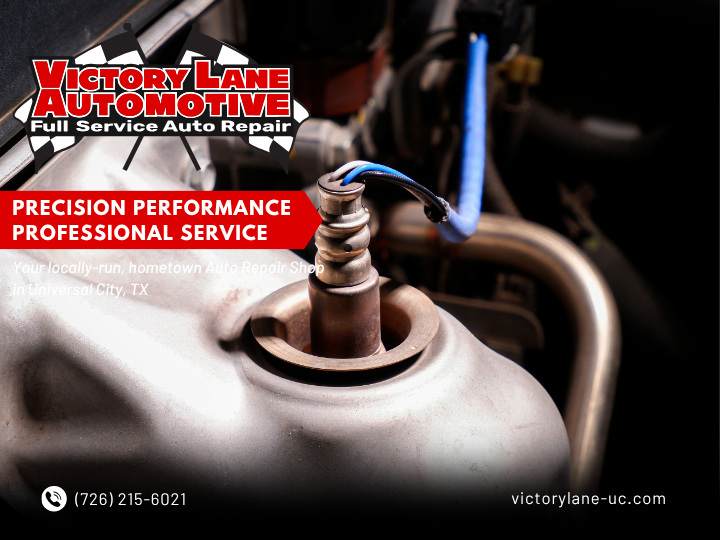
For example, a code may mention an oxygen sensor. That does not automatically mean the oxygen sensor is bad. The oxygen sensor may simply be reporting a condition caused by a vacuum leak, exhaust leak, fuel delivery issue, air intake problem, misfire, or wiring concern.
A catalytic converter efficiency code does not automatically mean the catalytic converter should be the first thing replaced. A converter can be affected by misfires, fuel control problems, oil consumption, overheating, exhaust leaks, or unresolved engine performance problems.
A misfire code does not automatically mean spark plugs are the only issue. Misfires can be caused by worn spark plugs, weak ignition coils, fuel injectors, compression concerns, vacuum leaks, wiring problems, or computer control issues.
That is why an honest diagnosis does not stop at the code.
The code points the technician in a direction. Testing confirms the truth.
Pulling a Code Is Not the Same as Diagnosis
Many drivers have had a check engine light scanned at a parts store or with a basic code reader. There is nothing wrong with gathering information. Knowing the code can be helpful. But pulling a code is not the same as professional diagnosis.
A code reader may tell you what fault was stored. It may give a short description. It may even list common possible causes. But it does not test the vehicle.
It does not confirm the failed part.
It does not inspect wiring.
It does not verify voltage or ground.
It does not check fuel pressure.
It does not find vacuum leaks.
It does not test ignition performance.
It does not prove whether a sensor has failed or whether the sensor is simply reporting a problem caused by something else.
That is where many customers get frustrated.
They are told, “It says oxygen sensor.” They replace the oxygen sensor. Then the light comes back on. Now they have spent time, effort, and trust, but the real issue was never found.
That is not fair to the customer.
A real diagnostic process protects the customer from guessing. It uses the code as a starting point, then tests the system to confirm what is actually wrong.
The goal should not be to sell a part. The goal should be to solve the problem.
Steady Check Engine Light vs. Flashing Check Engine Light
Not every check engine light carries the same level of urgency.
A steady check engine light usually means the vehicle has detected a fault that should be inspected. The vehicle may still feel normal, but that does not mean the issue should be ignored. A steady light can still affect fuel economy, emissions, drivability, reliability, and long-term vehicle health.
A flashing check engine light is more serious. It often means there is an active misfire that may damage the catalytic converter or create a drivability concern. If the light is flashing, the safest choice is to stop driving as soon as it is safe and have the vehicle inspected promptly.
This is not about creating fear. It is about protecting the vehicle.
A steady light says, “Something needs attention.”
A flashing light says, “Something may be causing damage right now.”
For drivers traveling through Universal City, Live Oak, Selma, Schertz, Converse, Cibolo, Randolph Air Force Base, or along routes like Kitty Hawk Road, Pat Booker Road, Loop 1604, I-35, FM 78, and Judson Road, vehicle reliability matters. A vehicle that misfires, stalls, hesitates, or loses power can quickly become a safety concern.
An honest shop will help the customer understand the urgency without exaggerating the problem.
The Right Diagnosis Starts With Listening
A proper check engine light diagnosis begins with the customer.
The driver may not know the technical cause, but they often know the pattern. That pattern can be extremely valuable.
When did the light come on?
Was it steady or flashing?
Did the vehicle start running differently?
Does it idle rough?
Does it hesitate under acceleration?
Did it happen after fueling?
Does the light come and go?
Does it happen more when the engine is cold?
Does it happen during hot weather?
Does it happen on the highway or around town?
Has fuel economy changed?
Were any repairs recently performed?
Has this issue happened before?
Those questions matter because they help guide the diagnostic path.
Then the vehicle should be scanned properly. The codes should be recorded. Freeze-frame data should be reviewed when useful. Live data may need to be monitored. Depending on the concern, the technician may need to perform visual inspections, electrical testing, smoke testing, fuel pressure testing, road testing, or component testing.
That is how a shop moves from guessing to knowing.
Honest Communication Is Part of the Repair
Technical skill matters. So does communication.
A customer should not leave a diagnostic visit more confused than when they arrived. They should understand what code was found, what that code means, what testing was performed, what was confirmed, and what is being recommended.
They should also understand whether the repair is urgent, whether the vehicle is safe to drive, and what may happen if the issue is delayed.
Honest communication sounds like this:
“This code points us toward this system.”
“We tested this component and confirmed it is failing.”
“This sensor is reporting a problem, but it is not the root cause.”
“This issue could damage other parts if ignored.”
“This item is maintenance-related and can be planned separately.”
“We need more testing before making a repair recommendation responsibly.”
That kind of explanation builds trust.
Customers should not be pressured into repairs they do not understand. They should be educated enough to make a confident decision.
Common Causes of a Check Engine Light
There are many reasons a check engine light can come on. Some are simple. Others require deeper testing.
Common causes include:
Loose or leaking fuel cap
EVAP system leak
Ignition coil failure
Worn spark plugs
Engine misfire
Oxygen sensor concern
Catalytic converter efficiency issue
Mass airflow sensor problem
Vacuum leak
Air intake leak
Fuel delivery problem
Fuel injector concern
Thermostat or coolant temperature issue
Exhaust leak
Battery voltage issue
Damaged wiring or connectors
Computer communication concern
The important thing to remember is that many problems can create similar symptoms or similar codes.
A lean fuel code may be caused by a vacuum leak, low fuel pressure, a dirty mass airflow sensor, an exhaust leak, or a sensor circuit issue.
An EVAP code may be caused by a fuel cap, purge valve, vent valve, charcoal canister, cracked hose, wiring issue, or small system leak.
A misfire may be caused by spark plugs, ignition coils, injectors, compression loss, air leaks, or electrical problems.
That is why testing matters.
Replacing parts based only on the code can lead to repeat problems, wasted effort, and unnecessary frustration.
Why Guessing Hurts the Customer
Guessing at check engine light repairs creates a bad experience.
The customer approves a repair. A part is replaced. The light goes off temporarily. Then it comes back. Now the customer is frustrated because the real issue was never found.
That damages trust.
The customer does not want someone to “try something.” They want the vehicle diagnosed correctly.
Honest diagnosis requires discipline. It means slowing down. It means testing before recommending. It means not pretending the code tells the whole story. It means being willing to say, “We need to verify this before we can responsibly recommend the repair.”
That is what separates a true diagnostic process from parts replacement.
A customer should not have to pay for assumptions. They deserve answers.
Why Universal City Driving Conditions Matter
Local driving conditions can affect vehicle performance and check engine light concerns.
Drivers in Universal City and the surrounding Northeast San Antonio area deal with hot weather, highway commuting, stop-and-go traffic, short trips, long idle times, dust, construction zones, and frequent driving between Bexar, Comal, and Guadalupe County communities. Those conditions can be hard on batteries, cooling systems, ignition components, sensors, wiring, air intake systems, fuel systems, exhaust components, and emissions systems.
Texas heat can expose weak batteries, cooling system problems, and electrical concerns. Stop-and-go traffic can increase heat and stress on engine systems. Dust and dry conditions can affect filters, airflow readings, and sensor performance. Short trips may prevent the engine from fully warming up, which can affect fuel control and emissions systems over time.
A vehicle driven mostly around Universal City, Live Oak, Selma, Schertz, or Converse may develop different patterns than one commuting regularly on I-35, Loop 1604, FM 78, or routes into San Antonio and New Braunfels.
That is why the diagnostic conversation should include how the vehicle is actually used.
The vehicle is not being diagnosed in theory. It is being diagnosed based on real-world conditions.
Check Engine Light and Emissions Systems
Many check engine light problems are connected to emissions-related systems. That does not mean they are minor.
Emissions systems are tied directly to how well the engine runs. Oxygen sensors, catalytic converters, fuel control, ignition performance, airflow measurement, EVAP systems, and exhaust efficiency all affect vehicle performance.
A vehicle with an active check engine light may have reduced fuel economy, poor drivability, higher emissions, or possible long-term damage if the issue is ignored.
Even if the vehicle feels normal, the computer may still be detecting a fault that needs attention.
A proper diagnosis helps determine whether the issue is emissions-related, drivability-related, safety-related, reliability-related, or maintenance-related.
That distinction matters because customers need priorities, not pressure.
Why “Just Clear the Code” Is Not a Repair
It may be tempting to clear the code and see if the light comes back. In some situations, clearing codes is part of the diagnostic or repair verification process. But clearing a code without understanding why it appeared is not a repair.
The light may stay off for a short time. It may return after a few miles. It may come back after the vehicle completes its self-tests. If the underlying issue is still present, the vehicle will likely detect it again.
Clearing codes too early can also erase useful diagnostic information.
Freeze-frame data can show what was happening when the code set. It may include engine temperature, vehicle speed, RPM, load, fuel trim, and other data that helps the technician understand the problem.
That information should not be erased casually.
A customer-first shop will explain why simply turning off the warning light does not solve the concern.
Intermittent Check Engine Light Problems
Sometimes the check engine light comes on and then turns off by itself. That can make the problem even more confusing.
A light that turns off does not always mean the problem is gone. It may mean the computer has not seen the fault again recently. The code may still be stored in history. The condition may be intermittent.
Intermittent problems can be challenging because the vehicle may not act up while it is at the shop.
The issue may happen only:
When the engine is cold
After the engine is fully warmed up
After fueling
During hot weather
During highway driving
At idle
Under acceleration
After sitting overnight
During short trips
In stop-and-go traffic
After extended idling
Those details matter.
The more clearly the customer can describe the pattern, the better the technician can narrow the cause.
Honesty means explaining when a problem is intermittent and what testing may be needed to confirm it.
Electrical Testing Is Often Necessary
Modern vehicles rely heavily on electronics. Sensors, modules, wiring, connectors, grounds, relays, and communication networks all work together to control engine operation.
That means check engine light diagnosis often requires electrical testing.
A sensor code does not automatically mean the sensor is bad. The sensor may not be receiving proper voltage. The ground may be weak. The connector may be loose. A wire may be damaged. Another condition may be causing the sensor to report abnormal data.
A proper diagnosis may include checking voltage, resistance, signal patterns, ground integrity, circuit continuity, connector condition, and live data.
This is why professional diagnosis requires more than a basic scanner.
The scan tool gives information. Testing proves the cause.
Maintenance Can Help Prevent Check Engine Light Problems
Not every check engine light is caused by missed maintenance. Parts fail. Sensors age. Electrical issues happen. Vehicles are complex.
But consistent maintenance can prevent many engine performance problems.
Spark plugs wear. Ignition coils get stressed. Air filters become dirty. Fuel systems collect deposits. Batteries weaken. Belts and hoses age. Fluids break down. Leaks develop. Sensors can be affected by contamination, airflow issues, fuel problems, or poor engine operation.
When a vehicle is maintained well, it is often more reliable and easier to diagnose when something does go wrong.
A check engine light can also be an opportunity to look at the bigger picture.
Is the vehicle caught up on maintenance?
Are there issues that could affect reliability?
Are there small problems that should be planned before they become larger problems?
Is the customer trying to keep the vehicle for several more years?
Does the vehicle need a practical plan?
A customer-first shop does not just turn off the light. It helps the driver understand how to keep the vehicle safe, reliable, and dependable.
Digital Vehicle Inspections Help Customers See What Is Happening
A digital vehicle inspection can help customers understand the condition of their vehicle.
Photos, notes, and clear explanations make the repair process more transparent. For a check engine light diagnosis, a digital inspection may show visible concerns such as damaged wiring, cracked hoses, leaking fluids, worn ignition components, poor connections, or other related issues.
But the inspection should educate, not overwhelm.
Customers should understand the difference between:
What caused the check engine light
What affects safety
What affects reliability
What is recommended maintenance
What can be planned later
That separation matters.
When everything is presented as urgent, customers lose trust. When priorities are explained clearly, customers can make good decisions.
What an Honest Diagnostic Visit Should Feel Like
A good check engine light visit should feel organized, respectful, and clear.
The customer should be listened to.
The codes should be documented.
The data should be reviewed.
The vehicle should be inspected.
The right tests should be performed.
The findings should be explained clearly.
The urgency should be discussed honestly.
The customer should know what is recommended and why.
The customer should leave with a plan.
That is what trust looks like in auto repair.
Trust is not built by saying, “Trust us.” Trust is built by showing the customer the process, explaining the findings, and recommending what is best for the vehicle.
A customer should never feel embarrassed for asking questions. It is their vehicle, their safety, and their decision.
When a Check Engine Light Should Be Addressed Quickly
Some check engine light concerns can be scheduled soon. Others need prompt attention.
Be cautious if:
The check engine light is flashing
The vehicle is shaking or misfiring
The engine is overheating
The vehicle is stalling
The vehicle has reduced power
The vehicle smells like fuel
The vehicle is hard to start
The light appears with other warning lights
The vehicle is making unusual noises
Fuel economy suddenly drops
In those situations, continuing to drive may create more risk or damage.
If the check engine light is steady and the vehicle feels normal, it should still be diagnosed. Waiting too long may allow a small problem to become a larger one.
Honest advice helps customers understand the difference between urgent, important, and plan-ahead repairs.
Honest Check Engine Light Diagnosis in Universal City, TX
For drivers looking for honest check engine light diagnosis in Universal City, TX, the goal should be simple: proper testing, clear communication, and recommendations based on what the vehicle actually needs.
Victory Lane Automotive serves drivers from Universal City, Live Oak, Selma, Schertz, Converse, Cibolo, Garden Ridge, Randolph Air Force Base, Kirby, Windcrest, New Braunfels, and nearby Northeast San Antonio communities.
Located at 264 Kitty Hawk Rd, Universal City, TX 78148, Victory Lane Automotive helps drivers get real answers when their check engine light comes on.
When the light appears, the best response is not fear. It is diagnosis. It is communication. It is a clear plan from people who care about the customer’s best interest.
Drivers can call Victory Lane Automotive at (726) 222-1264 or visit https://www.victorylane-uc.com/ to learn more.
Questions Customers Should Ask
A trustworthy shop should welcome questions.
When your check engine light is on, it is fair to ask:
What codes were stored?
What do those codes mean?
What testing was performed?
Was the failed part confirmed?
Is the vehicle safe to drive?
Is this urgent or can it be planned?
Could this issue damage other components?
Is this related to maintenance?
What happens if I wait?
What should be done first?
A good shop should answer those questions clearly and respectfully.
The customer should never feel difficult for wanting to understand the repair. Understanding is part of trust.
Why the Customer’s Best Interest Must Come First
The automotive repair relationship is built on trust. Most customers cannot personally verify every test, every reading, or every technical explanation. That makes honesty essential.
Putting the customer’s best interest first means being transparent.
It means not guessing.
It means not overselling.
It means not ignoring serious concerns.
It means not replacing parts without proof.
It means explaining priorities.
It means helping customers keep their vehicles safe, reliable, and worth owning.
Sometimes the honest answer is, “This needs attention now.”
Sometimes it is, “This can be planned.”
Sometimes it is, “We need more testing before making a recommendation.”
All of those answers are acceptable when they are based on facts.
The Bottom Line
A check engine light should not create panic. It should create action.
The right action is not guessing. The right action is not clearing the code and hoping it stays off. The right action is honest diagnosis from people who care about finding the truth.
Drivers in Universal City and surrounding Northeast San Antonio communities deserve clear answers. They deserve proper testing. They deserve repair recommendations that make sense. They deserve a shop that puts the customer’s best interest first.
When the check engine light comes on, do not settle for a guess. Get answers. Get a real diagnosis. Get a clear plan for keeping your vehicle safe, reliable, and ready for the road ahead.
You can watch the video