Humming Noise While Driving Universal City | Victory Lane
Humming Noise While Driving Universal City | Victory Lane
Humming Noise While Driving in Universal City? What Truck Owners, Fleets, and Military Families Should Know
You're pulling a trailer north on I-35, the truck is loaded, and the afternoon heat is shimmering off the pavement. Somewhere past Loop 1604, you notice a low hum that rises with your speed. Unloaded on Pat Booker Road the next morning, it's quieter, but it's still there. Trucks make noise, sure. This one is new.
A humming noise while driving in Universal City usually comes from a worn wheel bearing or from tires that are wearing unevenly. Both produce a sound that grows with road speed. Tire noise usually signals uneven wear from alignment or suspension problems. Bearing noise is a mechanical problem that worsens with time, and the conditions we drive in here, with heat, heavy loads, long interstate miles, and the occasional flash flood, tend to speed it up.
At Victory Lane Automotive, we work on cars, SUVs, trucks, light-duty diesels, and fleet vehicles every day. This guide explains what's causing the hum, how heat, towing, and flood water affect wheel bearings, what fleet managers and military families heading out on a move should watch for, and how to make a smart repair decision.
What Causes a Humming Noise While Driving?
Wheel bearings
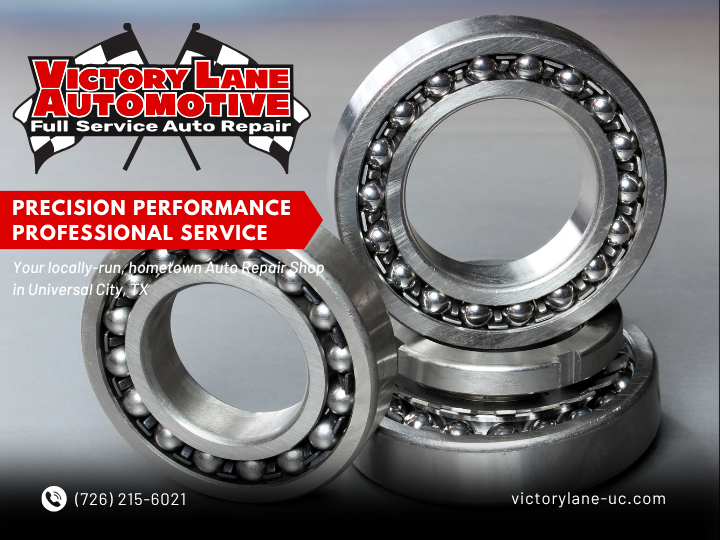
Every wheel spins on a bearing, a set of hardened steel balls or rollers in grease between smooth steel rings. On most cars and many trucks, the bearing is part of a sealed hub assembly. Some heavier-duty trucks use different designs, including bearings that can be serviced. Whatever the design, when grease breaks down or contaminants get inside, the steel surfaces pit and roughen. That creates a hum that grows into a growl, then a grind.
Tires
Uneven tire wear creates high and low spots in the tread that slap the road and produce a rhythmic hum. Truck tires with aggressive all-terrain tread also hum more than highway tires even when they're healthy, so a new noise matters more than the noise level alone.
Drivetrain components
On trucks and rear-wheel-drive or four-wheel-drive vehicles, a worn differential or transfer case can make a whine that's easy to confuse with bearing noise. The giveaway is that gear noise usually changes when you accelerate or let off the gas, while bearing noise follows road speed.
How Texas Driving Wears on Wheel Bearings
Long, hot summers
Grease does more than reduce friction. It carries heat away and protects steel from corrosion. Our long, very hot summers push heat into everything under a vehicle, from the pavement to the brakes to the hubs. Year after year, that heat ages grease and seals, and a bearing with a tired seal is more vulnerable to everything else on this list.
Heavy loads and towing
Bearings carry the weight of the vehicle, everything in it, and the tongue weight of anything it tows. A pickup hauling a boat, a camper, or a trailer full of equipment puts more load on every bearing, especially on curves and in highway crosswinds. Load by itself isn't damaging when it's within the vehicle's ratings, but more weight combined with Texas heat leaves less margin for a bearing that has already started to wear.
Flash flooding
Our strong thunderstorms can flood low-water crossings and underpasses with little warning. The most important advice first: never drive into a flooded roadway. The depth and current are hard to judge, and it only takes a small amount of moving water to sweep a vehicle away.
If you did end up driving through water, though, it's worth knowing what it can do. When a hot bearing is suddenly submerged, it can draw water past its seals as it cools. Water breaks down grease and starts the corrosion that leads to noise. Differentials and transfer cases can also take on water through their vents. If your vehicle has been through deep water, having the bearings and gear oil checked is smart, even if nothing sounds wrong yet.
Hail, storms, and debris
Storm debris and potholes after heavy rain on roads like FM 78 and O'Connor Road can deliver hard impacts. A big hit can dent a bearing's internal surfaces, and the hum from that damage often shows up weeks later.
Wheel Bearing or Tires? The Clues
Pointing toward a bearing:
- The noise grows with speed and sounds about the same on every road surface.
- It changes in curves. Curving left loads the right-side wheels, and curving right loads the left side. A worn bearing usually gets louder when loaded.
- It gets louder when the truck is loaded or towing.
- You feel a faint vibration in the steering wheel or floor.
- The ABS or traction control light comes on, since many hubs carry the wheel speed sensor or its tone ring.
Pointing toward tires:
- A rhythmic "wom-wom" or thumping sound.
- The noise changes when the pavement changes on Loop 1604 or I-35.
- The tread feels cupped or feathered when you run your hand around it.
- The noise moves to a new corner after a tire rotation.
The curve test is a clue rather than proof. Sound travels through a truck frame in surprising ways, which is why a hands-on inspection confirms it.
For Fleet Managers: Catching Bearings Before They Cause Downtime
For a business, a failed wheel bearing isn't just a repair. It's a vehicle off the road, a missed job, and possibly a tow. Bearings rarely fail without warning, so a few habits go a long way:
- Ask drivers to report new noises. Drivers hear a hum long before it becomes a breakdown. Make it easy for them to say something.
- Check bearings during routine service. A quick check for wheel play and roughness during regular maintenance catches wear early.
- Watch tire wear patterns. Uneven wear across a fleet can reveal alignment or suspension issues before they wear out tires and stress bearings.
- Pay attention after heavy-use periods. Busy seasons with heavy loads and long hours are when bearings take the most punishment.
For Military Families: Before a PCS Move or a Long Road Trip
Many of our neighbors near Joint Base San Antonio–Randolph make long drives for a PCS move, often with a loaded vehicle or a trailer. Those trips combine everything that's hard on bearings: heavy loads, sustained highway speed, and long stretches of heat. If you've noticed any hum, have it checked before you go. A bearing problem caught in Universal City is far easier to handle than one that grinds to a stop in the middle of a long interstate drive.
What Happens If You Keep Driving?
If the tires are the cause, uneven wear keeps getting worse, the noise grows, and grip suffers on wet roads during our storms.
If a bearing is the cause, the damage spreads. The bearing loosens, steering can wander, brake pads can wear unevenly, and the sensor signal your anti-lock brakes and stability control depend on can become unreliable, which is especially important when you're towing. Late in the failure, a bearing can grind, overheat, and let the wheel wobble. In rare, severe cases, it can seize or allow the hub to separate. Those outcomes usually follow a long warning period.
When to stop and call
If the hum turns into grinding, the steering shakes or wanders, a wheel feels hot after a drive, or the ABS light comes on with the noise, limit driving, unhitch any trailer, and call. Towing is available if you'd rather not drive it in.
What a Proper Diagnosis Includes
- A conversation about the noise, the speeds, whether it changes when loaded, and anything that happened before it started
- A road test, including curves and, when helpful, a coast-down to separate gear noise from bearing noise
- A tire inspection for wear patterns, pressure, and tread depth
- A lift inspection checking each wheel for play and roughness
- An inspection of brakes, suspension, steering, and alignment
- A scan for ABS and traction control codes, with sensor testing when a code is stored
If a bearing is confirmed, it's replaced with a quality part and installed with the correct torque on every fastener. Improper installation is one of the leading causes of early bearing failure.
What Affects the Cost?
Cost depends on the true cause, which is why we diagnose first.
If the tires are the source, a rotation, balance, and alignment correction are among the most cost-effective services you can do. If they're badly worn, replacement may be needed, and the cause of the wear should be fixed at the same time.
If a bearing is the source, cost depends on:
- Whether the vehicle uses a bolt-on hub, a press-in bearing, or a serviceable truck bearing
- Whether the hub has an integrated wheel speed sensor
- Whether the vehicle is a car, SUV, light-duty diesel, or heavier truck
- Whether flood water also contaminated gear oil or brake components
- The quality of the replacement part
For a work truck or fleet vehicle, the true cost of a bearing includes downtime. Replacing a bearing during the hum stage is a fraction of the cost of a roadside failure, a tow, and a damaged hub, sensor, and brakes. For a family vehicle, early attention protects your safety and your cost per mile.
If your vehicle is under warranty, keep your service records. You can also check your vehicle identification number for open recalls on NHTSA's recall lookup at nhtsa.gov/recalls.
A Pre-Tow Checklist for Truck Owners
Before you hook up a boat, a camper, or an equipment trailer, a few minutes of checking can save you from a breakdown on a hot interstate shoulder.
- Listen before you load. Drive the truck empty at highway speed with the radio off. A hum that's already there unloaded will only get louder with weight behind you.
- Check tire pressure for the load. Many trucks list a different recommended pressure for heavy loads. Check the label on the driver's door jamb or the owner's manual, and check pressure when the tires are cold.
- Look at the tread. Uneven wear on a truck's tires reduces stability when towing and adds noise.
- Don't forget the trailer. Trailer wheel bearings need attention too, and they're easy to overlook. A hot trailer hub after a stop is a warning sign.
- Feel for heat at stops. On a long trip, carefully check whether one wheel area is much hotter than the others at a rest stop. A noticeably hot hub can point to a bearing or a dragging brake.
- Know your ratings. Stay within your truck's towing and payload limits. Passengers, tools, and cargo in the bed count too.
After the Repair: What to Expect
Once a worn bearing is replaced, the hum from that corner should be gone, including when the truck is loaded. If an ABS or traction control light was on because of the bearing, it should clear once the system sees a clean wheel speed signal, which we confirm on a road test.
If flood water was part of the story, we'll also tell you what we found in the gear oil and brakes, and whether anything else needs attention. For fleet vehicles, we'll note the work clearly so your records stay complete, and we'll flag any early wear we spotted on other wheels so you can schedule it around your busy season instead of reacting to a breakdown.
How Victory Lane Automotive Helps
Victory Lane Automotive is proud to be Universal City's hometown shop. We serve working families, commuters, truck owners, fleets, and military-connected households with professional work and straight answers.
Our team handles brakes, steering and suspension, alignments, general maintenance, and domestic, Asian, and European repairs on cars, SUVs, trucks, light-duty diesels, and heavier-duty vehicles. We offer shuttle service, loaner and rental vehicles, and towing availability, so a humming noise doesn't have to bring your week to a halt.
Learn more about our [link to steering and suspension page], our [link to fleet service page], or [link to scheduling page].
Frequently Asked Questions
Why does my truck hum louder when I'm towing?
Towing adds weight to the bearings, and a worn bearing usually gets louder under more load. Heavier loads can also make tire wear noise more noticeable. If the hum is new or growing, have it checked before your next towing trip.
I drove through high water after a storm. Should I worry about my wheel bearings?
It's worth having them checked. A hot bearing that's submerged can draw water past its seals as it cools, and differentials can take on water through their vents. Catching contamination early can prevent noise and damage later. And whenever possible, turn around rather than drive into flooded roads.
Does Texas heat really affect wheel bearings?
Yes. Long, hot summers age grease and seals over time. Heat rarely ruins a healthy bearing by itself, but combined with heavy loads, age, or water contamination, it speeds up wear.
We have a PCS move coming up. Should we have the bearings checked?
If you've heard any humming, absolutely. A long, loaded interstate drive in the heat is hard on bearings. An inspection before you leave Universal City is much easier than a breakdown far from home.
How much does it cost to fix a humming noise?
It depends on whether the cause is tires, a bearing, or a drivetrain part, and on the type of vehicle. A rotation and alignment is one of the more affordable outcomes, while a hub assembly on a heavier truck involves more parts and labor. Diagnosing first keeps you from paying for the wrong repair.
Can you help keep our company trucks on the road?
Yes. We work with fleets of cars, SUVs, and trucks, and we can check bearings, tires, and suspension during routine service to catch problems before they cause downtime.
Do light-duty diesel trucks have different wheel bearings?
The bearing design depends on the truck's axle and weight rating more than its fuel type. Heavier trucks often carry heavier front ends and loads, which puts more demand on bearings. We'll identify your truck's specific design during the inspection.
Will a tire rotation tell you if the noise is a bearing?
It can help. If the noise moves to a different corner after the tires are rotated, the tires are the cause. If it stays in the same place, the bearing or suspension at that corner becomes the main suspect.
Don't Let a Hum Turn Into a Breakdown
A humming noise while driving in Universal City is an early warning worth listening to, especially when heat, heavy loads, and long miles are part of your routine. Whether you're coming from Live Oak, Schertz, Cibolo, Converse, Selma, or Garden Ridge, we'll find the cause and help you get back on the road with confidence.
Call Victory Lane Automotive at (726) 222-1264, visit us at 264 Kitty Hawk Rd, Universal City, TX 78148, or go to https://www.victorylane-uc.com/ to schedule.
You can watch the video