Oil Change in Universal City, TX
Oil Change in Universal City, TX
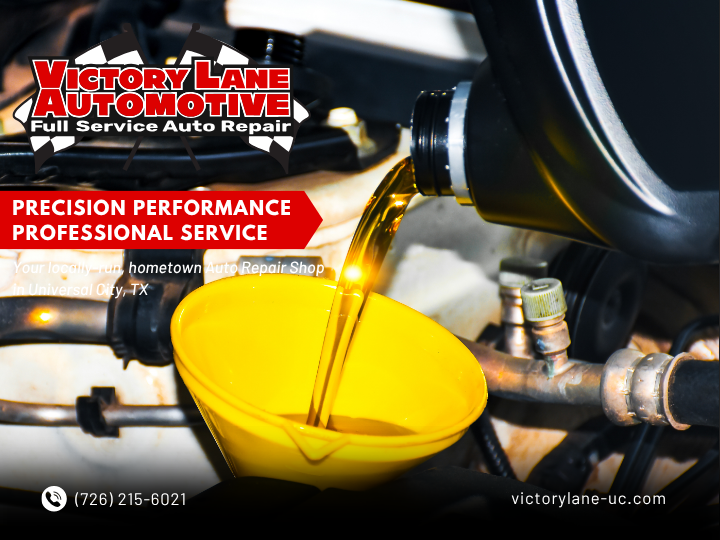
Oil Change in Universal City, TX: Protecting Your Engine With Customer-First Vehicle Care
An oil change is one of the most familiar services in vehicle ownership, but it should never be treated like a small thing. Routine does not mean unimportant. Common does not mean careless. Simple does not mean optional.
A proper oil change is one of the most important ways to protect your engine, reduce wear, support reliability, and help your vehicle stay ready for the roads you drive every day.
That matters for drivers in Universal City, TX.
Vehicles in this part of the San Antonio area deal with heat, traffic, short trips, highway driving, military commuting, school traffic, errands, construction zones, dry weather, sudden storms, and daily travel through Universal City, Live Oak, Schertz, Selma, Converse, Cibolo, Randolph AFB, Garden Ridge, Windcrest, Kirby, Northeast San Antonio, New Braunfels, and surrounding communities.
A vehicle in Universal City may spend one day commuting along Pat Booker Road, another day sitting in traffic near Loop 1604, another day traveling on I-35, and another day running short errands around Kitty Hawk Road, Universal City Boulevard, Schertz Parkway, or FM 78. Those driving patterns affect engine oil, tires, filters, fluids, belts, hoses, batteries, brakes, steering, suspension, and overall vehicle reliability.
That is why oil service should not be treated as a quick transaction.
It should be treated as a protection point.
A customer-first oil change is not about pressure. It is not about fear. It is not about selling something the customer does not need. It is about paying attention, telling the truth, identifying concerns early, and helping the customer understand what the vehicle needs to remain safe, dependable, and useful.
That is what truly having the customer’s best interest at heart looks like.
Why Oil Changes Matter So Much
Your engine works under constant stress. Every time the vehicle starts, internal engine components begin moving under heat, friction, pressure, and load. Pistons, bearings, camshafts, crankshafts, valves, timing components, and other internal parts all depend on proper lubrication.
Engine oil creates a protective barrier between moving parts. It helps reduce friction. It helps carry heat away from critical components. It helps suspend contaminants. It helps protect internal surfaces. It supports smoother operation and helps reduce unnecessary engine wear.
When oil is clean, full, and in good condition, it can do its job.
When oil becomes dirty, low, contaminated, or broken down, it cannot protect the engine as effectively. That can contribute to increased wear, sludge buildup, oil flow problems, reduced performance, oil pressure concerns, overheating concerns, and potential engine damage.
That is why regular oil service is one of the most important habits in responsible vehicle ownership.
An engine is not something you want to think about only after something goes wrong. Once internal engine damage begins, the problem may not be simple to reverse. The smarter approach is to protect the engine before preventable damage has a chance to develop.
Oil Service Is Preventive Protection
There is a major difference between reacting to a vehicle problem and preventing one.
Reactive maintenance waits until the oil light comes on, the engine makes noise, the vehicle overheats, the car will not start, or something fails. Preventive maintenance pays attention before the vehicle is forced into a breakdown situation.
Oil changes are one of the best examples of preventive maintenance because they happen regularly and create a natural checkpoint for the whole vehicle.
During a proper oil service, the vehicle should receive fresh oil and a new oil filter, but the service should not stop there. A trained professional should also look for visible concerns such as leaks, low fluids, tire wear, belt and hose issues, battery corrosion, brake concerns, steering and suspension wear, dirty filters, and other developing problems.
The value is not just the oil.
The value is the attention.
Many vehicle problems begin quietly. A small leak may not leave a puddle right away. A weak battery may still start the vehicle until the day it does not. A tire may wear unevenly before the driver feels vibration. A belt may crack before it fails. A hose may weaken before it bursts. A fluid may become contaminated before a warning light appears.
Regular oil service gives the customer a chance to understand what is happening before a small concern becomes a major inconvenience.
Universal City Driving Conditions Can Be Hard on Vehicles
Driving in and around Universal City creates real stress for a vehicle. Local drivers often experience a mix of city driving, highway commuting, military base traffic, school traffic, neighborhood errands, hot weather, and sudden changes in driving conditions.
Roads like Kitty Hawk Road, Pat Booker Road, Universal City Boulevard, FM 78, Loop 1604, I-35, Schertz Parkway, Toepperwein Road, Judson Road, O’Connor Road, Nacogdoches Road, and nearby routes toward Live Oak, Schertz, Selma, Converse, Cibolo, Windcrest, and Northeast San Antonio all expose vehicles to different demands.
Stop-and-go traffic can keep the engine running while the vehicle is barely moving. Short trips may not allow the engine to stay fully warmed up for long periods of time. Highway driving can create heat and sustained engine load. Texas summer temperatures can place extra stress on oil, coolant, batteries, belts, hoses, tires, and air conditioning systems.
For many drivers in the area, the vehicle may also be tied to work, military schedules, family responsibilities, school drop-offs, long commutes, or daily travel across the San Antonio metro area. That kind of use requires a maintenance mindset that is practical, consistent, and intentional.
This is why maintenance should be based on how the vehicle is actually used.
A vehicle that mostly drives short local trips around Universal City may experience different stress than a vehicle that commutes daily toward downtown San Antonio, New Braunfels, Seguin, or other surrounding areas. A truck, SUV, van, or work vehicle may have different needs than a lightly driven commuter car. A family vehicle that carries children, groceries, equipment, sports gear, and daily responsibilities needs attention before reliability becomes uncertain.
A customer-first maintenance plan does not assume every vehicle is used the same way.
It pays attention to the reality of the customer’s driving.
Mileage Matters, But It Is Not the Whole Story
Many drivers ask, “How many miles can I go between oil changes?”
That is a fair question, but it is not the complete question.
The better question is, “What does my vehicle need based on how I actually use it?”
Mileage matters. Time matters too. So does heat, traffic, idling, short trips, vehicle age, engine design, maintenance history, and local road conditions.
A vehicle that drives mostly short trips around Universal City, Live Oak, Schertz, Selma, Converse, or Cibolo may experience more oil contamination than expected because the engine may not stay hot long enough to burn off moisture and fuel dilution. A vehicle that drives regularly on I-35, Loop 1604, FM 78, or into San Antonio may experience heat, traffic, longer engine run times, and repeated commuting stress.
For many vehicles, oil service around every 5,000 miles creates a strong, practical maintenance rhythm. It helps protect the engine and gives the shop a recurring opportunity to inspect the vehicle.
The goal is not to stretch maintenance as far as possible.
The goal is to protect the vehicle properly.
There is a major difference between asking, “How long can I put this off?” and asking, “What does my vehicle need to stay safe, reliable, and useful?”
The first question is about delay.
The second question is about responsibility.
Responsible maintenance serves the customer better.
What Engine Oil Actually Does
Engine oil performs several critical jobs inside the engine.
First, it lubricates moving parts. Internal engine components move quickly and under load. Oil helps prevent those parts from grinding directly against each other.
Second, oil helps manage heat. The cooling system handles much of the engine’s temperature control, but oil also helps carry heat away from internal components.
Third, oil helps clean. As the engine runs, oil collects contaminants, combustion byproducts, moisture, and microscopic particles. The oil filter captures some of that material, but oil still becomes contaminated over time.
Fourth, oil helps protect internal surfaces. It helps reduce corrosion and wear inside the engine.
Fifth, clean oil supports modern engine systems. Many engines rely on proper oil flow for timing components, variable valve timing systems, and other precision-controlled functions.
When oil is neglected, all of these functions can be affected.
Dirty oil does not protect as well.
Low oil cannot lubricate properly.
Old oil can contribute to sludge.
Contaminated oil can increase wear.
Incorrect oil can affect performance and protection.
That is why an oil change matters beyond the simple idea of draining old oil and adding new oil.
Dirty Oil Can Cause Problems Before the Driver Feels Them
One of the risks of delaying oil service is that the vehicle may still seem normal for a while.
It may start fine.
It may drive fine.
It may sound fine.
There may be no warning light.
There may be no obvious symptom.
But that does not mean the oil is still doing its job properly.
Engine wear often happens gradually. Sludge can form gradually. Oil level can drop gradually. Internal contamination can build slowly. By the time the vehicle gives a clear warning, the concern may already be more serious than it needed to be.
This is why waiting for symptoms is not a good maintenance plan.
A warning light is not the goal.
A strange noise is not the reminder.
A breakdown is not the strategy.
The better plan is consistent maintenance before the vehicle has to demand attention.
Texas Heat Makes Oil Service Even More Important
Heat is one of the biggest factors in vehicle maintenance in South Texas. Universal City and the surrounding San Antonio area can see extended periods of hot weather, and that heat affects more than driver comfort.
High temperatures can increase stress on engine oil, cooling systems, batteries, belts, hoses, tires, and air conditioning systems. Engines already operate under intense heat, and when outside temperatures rise, every supporting system has to do its job correctly.
Oil that is old, low, contaminated, or broken down cannot protect the engine as effectively under demanding conditions. A cooling system that is low or neglected may struggle more. A weak battery may become less reliable. Tires may be affected by heat and pressure changes. Belts and hoses may age faster when exposed to repeated heat cycles.
That is why regular oil service should include more than oil and a filter. It should include awareness of the systems most affected by Texas driving.
A customer-first shop does not wait for the heat to expose a weakness at the worst possible time. It checks, documents, communicates, and helps the customer plan.
The Oil Filter Is a Critical Part of the Service
The oil filter is not a minor detail. It is part of the engine’s protection system.
As oil circulates through the engine, the filter helps remove contaminants. A restricted, poor-quality, damaged, overdue, or improperly installed oil filter can reduce the effectiveness of the oil service.
The oil and filter work together.
The oil lubricates, cools, cleans, and protects.
The filter helps remove contaminants from circulation.
A complete oil change should include the correct oil, correct filter, correct oil level, careful installation, and a final check for leaks.
Small details matter. The wrong oil, wrong filter, improper oil level, loose drain plug, damaged filter seal, or skipped inspection can create unnecessary risk.
A customer-first shop respects those details because the customer is the one who depends on the vehicle after it leaves.
A Proper Oil Change Should Include a Vehicle Inspection
A good oil change should include more than oil and a filter. It should include a thoughtful lookover of the vehicle.
That inspection may include checking for oil leaks, coolant leaks, low fluids, dirty filters, tire wear, brake concerns, battery corrosion, belts, hoses, steering components, suspension components, wipers, lights, and other visible concerns.
The goal is not to overwhelm the customer.
The goal is to inform the customer.
There is a major difference between pressure and education.
Pressure tries to force a decision.
Education gives the customer clarity.
Pressure creates resistance.
Education creates confidence.
Pressure focuses on the sale.
Education focuses on the customer’s best interest.
A proper inspection should help separate findings into useful categories:
What affects safety now
What affects reliability soon
What is routine maintenance
What should be monitored
What can be planned for later
Customers deserve that clarity. Not every item has the same urgency. Not every issue is a crisis. Not every recommendation needs to be handled immediately. But every customer deserves to know the truth about the condition of the vehicle.
Communication Is Part of the Oil Change
An oil change without communication is incomplete.
The customer should know what was done. They should know whether the oil level was correct. They should know whether leaks were found. They should know whether other fluids were low or contaminated. They should know whether the tires are wearing evenly. They should know whether filters are dirty. They should know if any safety or reliability concerns were noticed.
A customer should not leave confused.
They should leave informed.
Good communication does not require the customer to become an automotive expert. It requires the shop to explain the vehicle in clear, simple, useful language. The customer should be able to understand what matters, why it matters, and what should happen next.
That is how trust is built.
Trust is not built by saying everything is fine when it is not.
Trust is not built by exaggerating problems.
Trust is not built by avoiding the conversation.
Trust is built by telling the truth clearly and respectfully.
That is customer-first automotive care.
Oil Changes and Tire Care Belong Together
Oil service is also a natural time to inspect tires.
Tires affect braking, traction, steering, handling, ride comfort, fuel efficiency, and safety. In Universal City and surrounding Texas communities, tires deal with heat, highway speeds, rough pavement, construction zones, sudden rain, potholes, and changing road surfaces.
Drivers traveling through Universal City, Live Oak, Schertz, Selma, Converse, Cibolo, Randolph AFB, Garden Ridge, Windcrest, Kirby, Northeast San Antonio, and New Braunfels rely on their tires every day.
Regular tire rotation and balancing can help support even wear and a smoother ride. Uneven tire wear may point to alignment problems, tire pressure concerns, worn suspension parts, steering issues, or driving conditions that are affecting the tires more than expected.
An oil change visit creates a regular opportunity to check tire condition and help the customer avoid surprises.
That is not overselling. That is paying attention.
Sudden Texas Weather Makes Maintenance Matter
South Texas drivers can experience dry heat, heavy rain, sudden storms, and changing road conditions. A vehicle that feels fine in one condition may reveal a weakness in another.
Rain affects traction, stopping distance, visibility, tire performance, brakes, wipers, lighting, and driver confidence. Heat affects oil, coolant, batteries, belts, hoses, tires, and air conditioning. Dust and dry conditions can affect filters and underhood components.
That is why routine inspections matter.
A tire with low tread becomes more concerning on wet roads. Wipers that are cracked or streaking become a visibility problem during a storm. A weak battery can fail without much warning. A small leak can become more serious in heat. A dirty cabin air filter can affect airflow when the air conditioning system is needed most.
Oil change visits provide a consistent opportunity to look at these items before weather turns them into larger problems.
The goal is not to wait until conditions expose a weakness. The goal is to identify concerns before the customer has to deal with them under pressure.
Oil Changes and Fluid Awareness
Your vehicle depends on more than engine oil.
Coolant helps manage engine temperature. Brake fluid supports safe braking. Transmission fluid supports shifting and internal transmission protection. Power steering fluid, where applicable, supports steering assist. Differential and transfer case fluids protect drivetrain components in vehicles equipped with those systems.
During oil service, fluid levels and visible fluid condition should be checked whenever possible.
Low fluid may indicate a leak.
Dark or contaminated fluid may indicate overdue service.
Unusual fluid appearance may point to a developing concern.
This does not mean every fluid needs to be replaced during every oil change. It means the customer should know what is happening.
A vehicle is a complete system. The engine, transmission, brakes, cooling system, steering, suspension, tires, battery, and drivetrain all work together. A problem in one area can affect the overall reliability of the vehicle.
A customer-first oil change helps the customer see the bigger picture.
Engine Air Filters and Cabin Air Filters Matter
Oil service is also a good time to check the engine air filter and cabin air filter.
The engine air filter helps prevent dirt and debris from entering the engine. A dirty or restricted engine air filter can affect airflow and performance.
The cabin air filter helps clean the air entering the passenger compartment through the heating and air conditioning system. A dirty cabin air filter can reduce airflow, contribute to odors, and make the heating and air conditioning system work harder.
In Universal City and the surrounding San Antonio area, filters can be affected by dust, pollen, construction debris, traffic, dry weather, and seasonal changes. A vehicle that travels local roads, highways, and neighborhood streets can collect debris in ways the driver may never see.
A customer-first shop should show the condition of filters when replacement is recommended. That way, the customer can see the reason behind the recommendation instead of feeling like they are being asked to approve something blindly.
Transparency creates confidence.
Oil Leaks Should Be Found Early
Oil leaks are one of the most important issues to watch for during regular service.
A small leak may not seem urgent at first, but it should still be documented. Leaks can grow over time. They can lead to low oil levels. They can create burning smells. They can coat other components. They can make it harder to identify future leaks. They can become more serious if ignored.
Finding a leak early gives the customer options.
That is one of the greatest benefits of preventive maintenance. Early information gives the customer time to plan. Late information often creates urgency.
A customer-first shop does not use leaks to scare people. It explains what was found, where the leak appears to be coming from, how serious it looks, and what the next step should be.
Some leaks may need attention soon. Some may be monitored. Some may require cleaning and rechecking to confirm the source. What matters is that the customer is informed.
Commuters, Families, and Work Vehicles Need Real Maintenance Attention
Universal City and the surrounding area include many different kinds of drivers. Some commute daily. Some travel to and from Randolph AFB. Some drive family vehicles loaded with school bags, sports gear, groceries, and daily responsibilities. Some use trucks, vans, SUVs, or work vehicles for tools, equipment, customers, job sites, deliveries, or property needs.
Those uses change the maintenance conversation.
A vehicle that carries weight, sits in traffic, idles, runs the air conditioning heavily, or gets used for work may experience more stress than a lightly driven vehicle. The oil, transmission, brakes, tires, suspension, cooling system, battery, and filters can all be affected by heavier use.
A work vehicle is more than transportation. It may be part of someone’s income. When it is down, productivity suffers. Schedules are disrupted. Customers are affected. Personal responsibilities become harder to manage.
A family vehicle is more than transportation too. It carries the people and responsibilities that matter most.
Oil changes for heavily used vehicles should be treated with real attention because those vehicles often have less room for neglect.
A customer-first shop understands that the right maintenance conversation depends on how the vehicle is actually used.
The Cheapest Oil Change Is Not Always the Best Value
It is easy to compare oil changes as if they are all the same, but they are not.
The quality of the oil matters.
The quality of the filter matters.
The accuracy of the service matters.
The technician’s attention matters.
The inspection matters.
The communication matters.
The documentation matters.
The relationship matters.
A rushed oil change may leave the customer with fresh oil but no real understanding of the vehicle. It may miss leaks, tire concerns, low fluids, dirty filters, battery issues, belt wear, hose concerns, or early warning signs.
The best value is not always the fastest service.
The best value is the service that protects the engine, checks the vehicle, communicates clearly, and helps the customer make better long-term decisions.
That is what truly having the customer’s best interest at heart means.
Maintenance History Helps Protect the Customer
A clear maintenance history is valuable.
It helps the customer know what has been done, what is due, what has been recommended, and what should be watched. It prevents guessing. It helps families manage multiple vehicles. It helps owners plan ahead. It helps avoid repeated or forgotten service.
A professional oil change should become part of the vehicle’s maintenance record.
This matters especially for customers who plan to keep their vehicles long term. Reliability is not created by one service visit. It is built through repeated care, clear documentation, and responsible decisions over time.
A vehicle with a consistent maintenance history is easier to understand, easier to plan for, and easier to protect.
Oil Change Service in Universal City, TX With a Customer-First Approach
Victory Lane Automotive provides oil change service in Universal City, TX with a focus on customer-first automotive care, clear communication, and long-term vehicle reliability.
The goal is not just to replace oil. The goal is to help protect the engine, inspect the vehicle, identify developing concerns, and help customers understand what their vehicles need to remain safe, dependable, and prepared for daily driving.
Located at 264 Kitty Hawk Rd in Universal City, Victory Lane Automotive serves drivers throughout Universal City and surrounding areas, including Live Oak, Schertz, Selma, Converse, Cibolo, Randolph AFB, Garden Ridge, Windcrest, Kirby, Northeast San Antonio, New Braunfels, and the greater San Antonio area.
For drivers who rely on their vehicles every day, this kind of service matters.
Oil Change in Universal City, TX for Long-Term Reliability
If you are looking for an oil change in Universal City, TX, the goal should not be to simply get it done. The goal should be to have it done correctly, with the right oil, the right filter, the right process, and the right attention to the rest of the vehicle.
A proper oil change helps protect the engine. It helps reduce wear. It helps prevent sludge. It creates an opportunity to check for leaks, inspect tires, review fluid levels, evaluate filters, look at belts and hoses, and identify concerns before they become bigger problems.
That is responsible maintenance.
Not rushed.
Not careless.
Not confusing.
Not built around pressure.
Intentional. Clear. Honest. Customer-first.
That is the standard drivers deserve.
The Right Maintenance Mindset
The best time to protect a vehicle is before it becomes urgent.
Waiting until the oil light comes on, the engine makes noise, the vehicle overheats, or the car will not start is not a strategy. It is a reaction.
A better strategy is to build a consistent maintenance rhythm that gives the vehicle regular attention. Oil changes are one of the best ways to create that rhythm. They are regular enough to keep the vehicle under observation, important enough to protect the engine, and practical enough to serve as a recurring checkpoint for the entire vehicle.
A vehicle that receives consistent attention has a better chance of serving the customer well over time.
That does not happen by accident. It happens because the owner chooses maintenance before failure and the shop chooses clarity before confusion.
Final Thought: An Oil Change Is a Small Service With a Big Purpose
An oil change may be routine, but it is not meaningless. It protects the engine. It creates an inspection opportunity. It helps find leaks early. It supports long-term reliability. It gives the customer useful information. It helps reduce the risk of preventable breakdowns.
When done correctly, oil service gives the customer more than fresh oil.
It gives them confidence.
For oil change service in Universal City, TX, Victory Lane Automotive provides customer-first automotive care focused on engine protection, safety, reliability, communication, and long-term trust.
To schedule service, visit victorylane-uc.com or call (726) 222-1264.
You can watch the video