Why is my steering wheel shaking
Why is my steering wheel shaking

Why Is My Steering Shaking?
When your steering starts shaking, vibrating, wobbling, or feeling unstable, your vehicle is telling you something important. That kind of symptom should never be ignored. Sometimes the issue is relatively simple, like a tire that is out of balance. Other times, it points to a more serious problem involving your suspension, steering components, brakes, or wheel assemblies.
What matters most is this: a shaking steering wheel is not just annoying. It is often a sign that something is no longer operating the way it should. The longer it goes unchecked, the more likely it is to affect your safety, your ride quality, your tire life, and your confidence behind the wheel.
If you have been asking yourself, “Why is my steering shaking?” the answer is that there is not just one cause. The shake itself is a symptom. The real issue has to be identified correctly so the right repair can be made for the right reason.
That is why a proper inspection matters. Guessing helps no one. Replacing parts blindly helps no one. Truly having the customer’s best interest at heart means slowing down long enough to diagnose the problem honestly, explain what is happening clearly, and help you make the best decision for the long-term health of your vehicle.
What Steering Shake Usually Feels Like
Steering shake can show up in different ways depending on what is causing it. Some drivers feel it only at highway speeds. Others feel it while braking. Some notice it after hitting bumps, while others feel it all the time.
You may notice:
- The steering wheel vibrating at certain speeds
- A wobble or shimmy in the front end
- Shaking when you press the brakes
- Loose or wandering steering
- Pulsing that comes and goes
- Vibration that gets worse on rough roads
- Uneven tire wear along with steering shake
- A feeling that the vehicle is no longer as planted as it used to be
These details matter. When the shake happens, how often it happens, and what makes it better or worse all help narrow down the cause.
The Most Common Reasons Your Steering Is Shaking
There are several common causes of steering wheel vibration. Some are tire-related. Some are brake-related. Some come from worn suspension or steering parts. Some come from a combination of issues rather than just one.
1. Tire Balance Problems
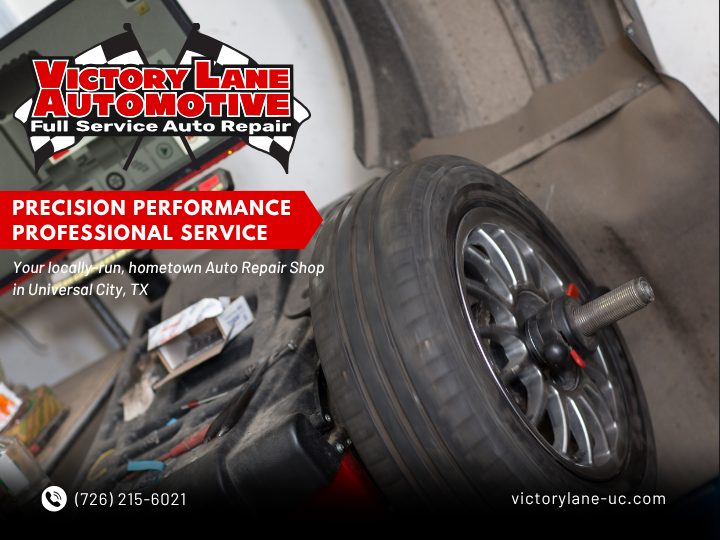
One of the most common reasons a steering wheel shakes is tire imbalance. If one or more tires are no longer balanced correctly, the vehicle can begin vibrating at certain speeds, especially on the highway.
When a tire is out of balance, the weight distribution around that tire is uneven. As it spins faster, that imbalance becomes more noticeable. That movement travels through the front end and often shows up in the steering wheel.
Common signs of tire balance issues include:
- Shaking at higher speeds
- Vibration that starts around a certain speed and gets worse
- No major pull, but noticeable steering wheel shake
- A recent tire replacement or impact with a pothole
Balancing may solve the issue if imbalance is the only cause, but a good shop should still check for underlying tire damage, wheel condition, and suspension wear rather than assuming balance is the whole story.
2. Tire Damage or Uneven Tire Wear
A damaged tire can absolutely cause steering shake. So can a tire with uneven tread wear, separated belts, cupping, or flat spots.
This is where a proper inspection becomes especially important, because a tire may look acceptable at a glance but still have an internal problem affecting how it rolls. A separated belt or irregular wear pattern can create a vibration that balancing alone will not fix.
Some clues include:
- Shaking that gets worse over time
- Visible bulges or unusual tread wear
- Steering vibration after striking a pothole or curb
- Noise along with vibration
- A bouncing or hopping sensation while driving
The tire is where your vehicle meets the road. If the tire is compromised, the rest of the vehicle has to react to that problem every mile you drive.
3. Bent Wheel or Damaged Rim
A bent wheel can create a consistent shake, especially after hitting a pothole, curb, road debris, or rough pavement. Even a small bend can affect how the wheel rotates and how the tire contacts the road.
In and around Universal City, rough pavement, potholes, construction zones, curbs, and repeated impacts from uneven road surfaces can gradually take a toll on wheels and tires. Drivers traveling through Universal City, Schertz, Live Oak, Converse, Selma, Cibolo, Windcrest, and nearby San Antonio-area communities often deal with road conditions that can quietly create vibration issues over time.
A damaged wheel may cause:
- A steering shake at speed
- Repeated loss of air pressure
- Vibration even after balancing
- A noticeable wobble when the wheel is spun on an inspection machine
This is another reason why the right diagnosis matters. If the wheel itself is bent, simply rebalancing the tire will not truly solve the problem.
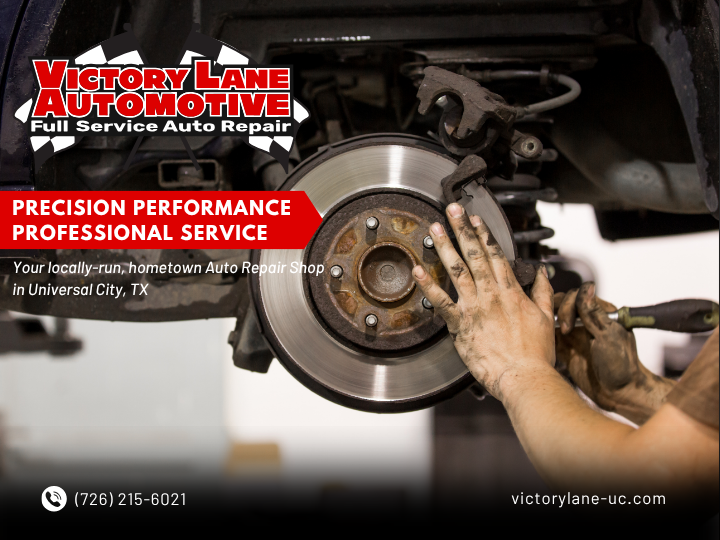
4. Brake Rotor Problems
If your steering shakes mostly when you apply the brakes, your brake system may be involved. Many drivers describe this as a vibration or pulsation in the steering wheel during slowing or stopping.
This often points to brake rotor issues, though the full picture matters. Rotors can develop thickness variation, uneven wear, heat-related distortion, or surface irregularities that affect braking smoothness. When that happens, the braking force is no longer even, and the steering wheel may shake in response.
Warning signs include:
- Steering shake only when braking
- Pulsation in the brake pedal
- Front-end vibration during stops
- Worsening symptoms on downhill braking or in stop-and-go traffic
A trustworthy inspection should also include checking pads, calipers, hardware, wheel bearings, suspension, and tire condition. Brake vibration can be magnified by other worn parts, so the best interest of the customer is served by looking at the whole system rather than forcing a one-part answer.
5. Worn Suspension Components
Your suspension helps keep the tires planted on the road and the vehicle stable as you drive. When key components wear out, loosen up, or lose their ability to control movement, steering shake can follow.
Worn suspension parts may include:
- Ball joints
- Control arm bushings
- Struts or shocks
- Sway bar links
- Suspension mounts
When these parts wear down, the vehicle may no longer handle bumps, turns, braking forces, and road irregularities correctly. That instability can show up as steering vibration, wandering, clunking, uneven tire wear, or a general lack of control.
Suspension problems often build gradually. Many people do not realize how much ride quality and steering confidence they have lost until the issue becomes hard to ignore.
6. Loose or Worn Steering Components
If your steering system has worn parts, looseness in the front end can create shaking, instability, or poor directional control. Components such as tie rods and steering linkage parts are critical to how your vehicle responds to your input.
When those parts wear, symptoms may include:
- Steering wheel shake
- Loose steering feel
- Wandering on the road
- Clunking when turning
- Uneven response from the front end
This is not something to put off. Worn steering parts can directly affect safety, handling, and tire wear. Proper diagnosis is not about creating fear. It is about respecting what the symptom means and addressing it before the condition gets worse.
7. Wheel Alignment Issues
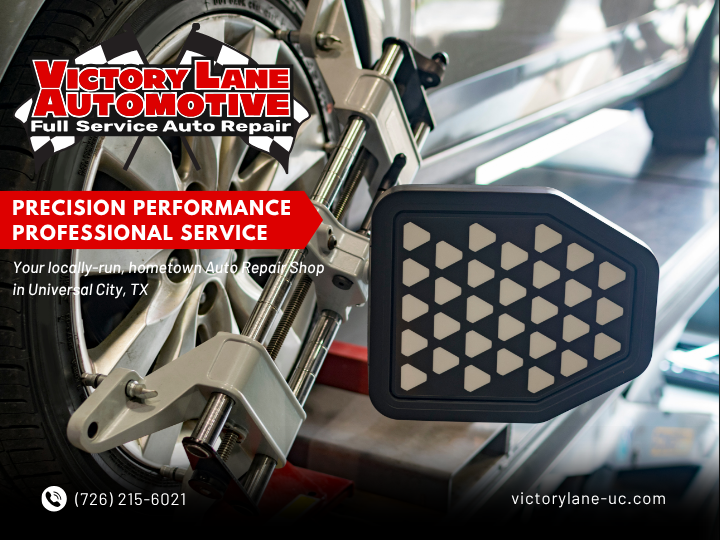
Alignment by itself does not always cause a direct steering wheel shake the way tire balance issues do, but poor alignment can contribute to instability, uneven tire wear, and handling problems that make steering feel off.
If alignment problems are left uncorrected long enough, they can lead to tire wear patterns that do create vibration. In that case, the alignment issue may be part of the story, even if it is not the only cause.
You may notice:
- Pulling left or right
- Uneven tire wear
- Off-center steering wheel
- Vehicle instability at speed
- Steering that feels unsettled or inconsistent
A good inspection looks at both the symptom and the cause chain behind it. The real question is not only what is shaking, but why it started.
8. Wheel Bearing Problems
A failing wheel bearing can sometimes create vibration, looseness, noise, or instability that may be felt through the steering. Wheel bearings help the wheels rotate smoothly, and when they wear out, the results can affect both ride quality and safety.
Possible signs include:
- Humming, growling, or roaring noise
- Vibration that changes with speed
- Looseness in the wheel assembly
- Unsteady handling
Because wheel bearing problems can overlap with tire, brake, and suspension symptoms, inspection matters. The goal should always be accuracy, not assumption.
When the Shaking Happens Tells You a Lot
One of the fastest ways to narrow down a steering shake problem is to pay attention to when it happens.
If It Shakes at Highway Speeds
This often points to:
- Tire balance problems
- Tire damage
- Bent wheels
- Alignment-related tire wear
- Worn front-end parts
If It Shakes When Braking
This often points to:
- Brake rotor issues
- Brake hardware or caliper concerns
- Suspension wear that becomes noticeable during braking
- Tire or wheel issues being amplified under load transfer
If It Shakes All the Time
This may point to:
- Severe tire damage
- Suspension or steering wear
- Wheel bearing issues
- Bent wheel or multiple front-end problems
If It Shakes After Hitting a Bump
This may point to:
- Loose suspension parts
- Worn steering linkage
- Tire or wheel damage
- Existing front-end wear made worse by road impact
These patterns do not replace an inspection, but they do help guide one.
Why You Should Not Ignore Steering Wheel Vibration
A lot of drivers live with steering shake longer than they should. Sometimes they get used to it. Sometimes they hope it will go away. Sometimes they assume it is minor because the vehicle still drives.
The problem is that steering vibration rarely fixes itself. More often, it becomes more damaging and more dangerous over time.
Ignoring the issue can lead to:
- Faster tire wear
- Added stress on suspension and steering parts
- Reduced braking confidence
- Poor handling in emergencies
- Increased driver fatigue
- Less control on wet, uneven, or high-speed roads
When your steering is shaking, your vehicle is communicating that something is not right. Responding early is one of the smartest things you can do for safety, comfort, and long-term vehicle health.
Why Guessing Is a Bad Approach
A lot of unnecessary repairs happen because people try to diagnose steering shake based on internet guesses, past experiences, or the hope that the simplest answer must be the right one.
The truth is that many different problems can produce similar symptoms.
A steering wheel shake could be:
- A balance issue
- A tire issue
- A rotor issue
- A bent wheel
- A tie rod issue
- A control arm problem
- A wheel bearing issue
- A combination of several of those at once
Replacing parts without proper testing can waste time and still leave the real issue unresolved. That is why a customer-first approach matters. The goal should never be to sell a guess. The goal should be to inspect, verify, explain, and solve.
What a Proper Inspection Should Include
If your steering is shaking, a quality inspection should not stop at a quick glance. It should include a real effort to identify the actual cause and rule out related issues.
A thorough steering shake inspection may include:
- Road test to duplicate the symptom
- Checking when the shake occurs
- Inspecting tires for wear, damage, and internal concerns
- Inspecting wheels for bends or runout
- Checking balance history if applicable
- Measuring brake component condition
- Inspecting steering and suspension parts for looseness or wear
- Checking wheel bearings
- Evaluating alignment-related wear patterns
This is what it looks like when a shop truly has the customer’s best interest at heart. Not rushing. Not assuming. Not pushing unnecessary work. Just being honest enough to find the real problem and explain it clearly.
Local Road Conditions Can Make Steering Problems Worse
Vehicles in Universal City and the surrounding area deal with a lot. Between hot Texas temperatures, rough pavement, potholes, construction zones, commuter traffic, curbs, and stop-and-go driving, your tires, brakes, and suspension take repeated stress throughout the year.
Drivers in Universal City, Schertz, Live Oak, Converse, Selma, Cibolo, Windcrest, and nearby communities often deal with:
- Rough pavement and worn road surfaces
- Potholes and sharp impacts
- Construction-related road damage
- Daily commuter traffic
- Frequent braking
- Curbs, driveways, and parking impacts that stress wheels and suspension
- Summer heat that adds stress to tires and front-end components over time
- Sudden heavy rain that can expose worn tires and steering issues faster
All of that can contribute to the kind of wear that leads to steering shake. Even if one pothole did not seem severe at the time, the damage can show up later in the form of vibration, tire wear, bent wheels, or loosened suspension components.
The Difference Between a Temporary Symptom and a Real Fix
A temporary symptom reduction is not the same thing as a real fix.
For example:
- Rebalancing a tire may reduce the shake, but not fix a damaged tire
- Replacing brake parts may help temporarily if suspension wear is still present
- Aligning the vehicle may improve tracking, but not resolve a bent wheel
- Replacing one worn part may still leave multiple others affecting the same symptom
That is why the best repairs are built on understanding, not shortcuts.
A real fix addresses the cause, not just the feeling.
Customer-First Auto Repair Means Telling the Truth
When someone comes in asking why their steering is shaking, they are not just asking for a repair. They are asking for clarity. They want to know if the issue is serious. They want to know if the vehicle is safe. They want to know what matters now, what can wait, and what the next right step is.
That is where trust is built.
Truly having the customer’s best interest at heart means:
- Listening carefully to the symptom
- Inspecting the vehicle thoroughly
- Verifying the cause before recommending repairs
- Explaining findings in plain language
- Helping the customer prioritize wisely
- Respecting safety without using pressure
- Solving the right problem the right way
That is the kind of approach that helps people make confident decisions instead of emotional ones.
Signs You Should Schedule an Inspection Soon
You should not wait to have your vehicle checked if:
- The steering wheel shakes at highway speed
- The shake gets worse while braking
- You recently hit a pothole or curb
- The vehicle feels loose, unstable, or harder to control
- Your tires are wearing unevenly
- You hear clunking, humming, or unusual front-end noises
- The vibration is getting worse over time
Even if the issue feels small now, it is better to know what you are dealing with than to keep driving with uncertainty.
Why Drivers in Universal City Need an Honest Answer
When you search for answers online, you will find all kinds of possibilities. Some will be accurate. Some will not. The hard part is figuring out which one applies to your vehicle.
That is why the right local shop matters. Not because every shaking steering wheel means the same thing, but because every vehicle deserves a careful inspection and an honest explanation.
For drivers in Universal City and surrounding areas like Schertz, Live Oak, Converse, Selma, Cibolo, Windcrest, and nearby communities, steering vibration is something worth addressing early. Whether the cause is tire-related, brake-related, or buried deeper in the steering and suspension system, finding the truth early helps protect both the vehicle and the person driving it.
Final Thoughts
If your steering is shaking, do not ignore it and do not guess at it. A vibration in the steering wheel is a symptom, not a diagnosis. The right next step is to have the vehicle inspected carefully so the real cause can be identified.
Sometimes the solution is straightforward. Sometimes the issue involves multiple wear patterns working together. Either way, the best outcome comes from honesty, inspection, and a repair approach built around what is truly best for the customer.
When a vehicle shakes through the steering wheel, it is asking for attention. Listening early is how you protect safety, preserve the vehicle, and make wise decisions before a small problem becomes a bigger one.
If you are in Universal City or nearby communities and your steering wheel is vibrating, wobbling, or shaking, having it inspected by a trusted local shop can help you get real answers and the right path forward.
You can watch the video